TL;DR: Douglas fir identification (Pseudotsuga menziesii) is easiest from cones with three-pointed bracts sticking out like mouse tails between scales. Needles are soft, flat, and citrus-scented when crushed. Douglas fir is not a true fir — true firs (Abies) have upright cones that fall apart on the tree. Vs spruce: flat friendly fir needles won't roll between fingers; square sharp spruce needles roll easily. Photograph a cone or needle spray and confirm fir tree id with the Tree Identifier app.
🌲 Fir identification shortcut: Mouse-tail cone bracts = Douglas fir. Upright disintegrating cone on branch = true fir. Needle rolls between fingers = spruce, not fir.
Understanding fir names — Douglas fir is not a fir
Common names cause chaos in fir tree identification. Douglas fir is genus Pseudotsuga — "false hemlock" — in family Pinaceae alongside pines, spruces, hemlocks, and true firs. True firs are genus Abies. Both are evergreen conifers with needle leaves and cone fruit, but cone architecture and needle attachment differ fundamentally.
Douglas fir dominates western North American forestry — coastal and Rocky Mountain varieties — and is a major timber species worldwide. People search douglas fir id, identify douglas fir, and fir tree identification interchangeably; this guide clarifies Douglas fir vs true fir vs spruce — the triangle every Pacific Northwest hiker and Christmas tree shopper needs.
Douglas fir identification — key features
Cones — the mouse-tail bracts
Douglas fir cones are the single best ID feature. Cones hang downward, 2 to 4 inches long, oval, light to medium brown. Between each woody scale, a three-pointed bract extends outward — the center point is longest, creating forked-tongue or mouse-tail appearance unique in North American conifers.
Pick up any cone under a western conifer with protruding bracts — you have douglas fir tree identification solved. Cones mature in one season and may litter forest floors abundantly.
Needles
Needles are ¾ to 1¼ inches, soft, flat, two-ranked (comb-like along twig), bright yellow-green to dark green. Tips are pointed but not painfully sharp. Crush needles — sweet, resinous, orange-like scent.
Underside shows two pale stomatal bands but not as stark white as hemlock or true fir. Needles leave round flat scars on twig when pulled — no pegs like spruce.
Bark
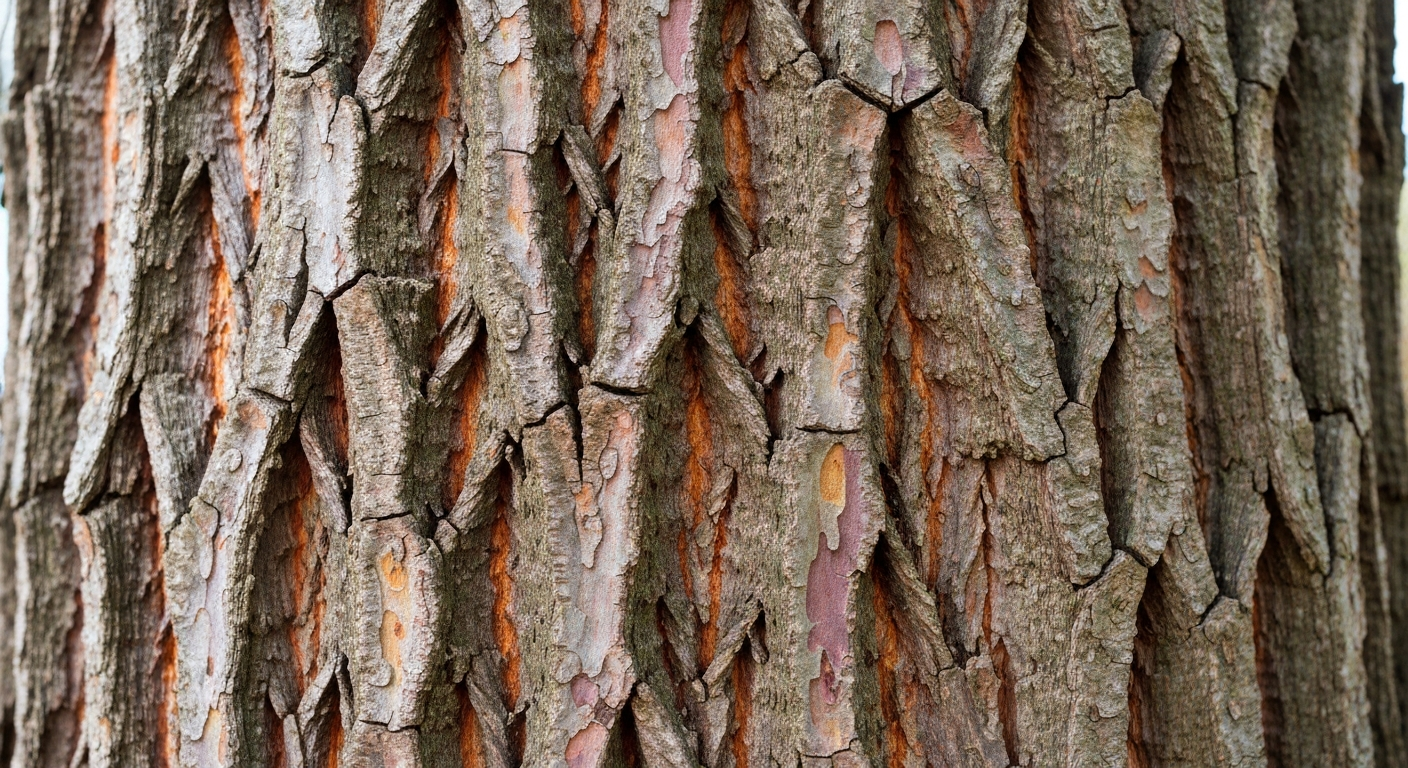
Young trees: smooth, gray-brown, resin blisters. Old trees: massively thick corky bark with deep vertical furrows — among the thickest bark of any conifer, fire-adapted. Bark supports douglas fir id on large trees but always verify with cones in mixed forest.
Form and range
Coastal Douglas fir (P. menziesii var. menziesii) grows to 300 feet — among world's tallest. Interior or Rocky Mountain variety is smaller, bluer-green, slower growing. Both share bracted cones.
True firs (Abies) — fir identification for real firs
True fir tree id uses different cone rules entirely.
Cones: Stand upright on upper branches, cylindrical, often purple or green when young. At maturity, cones disintegrate on the tree — scales fall, leaving a central spike. You rarely find intact true fir cones on the ground — only scale fragments. This alone separates true fir from Douglas fir and spruce.
Needles: Flat, friendly, usually with notched or emarginate tip — slightly flattened or indented at apex. Strong two white stomatal lines on underside in most species. Attach directly to twig with circular scar — no pegs.
Bark: Smooth gray, often with resin blisters — especially balsam fir. Does not develop Douglas fir's massive corky ridges.
Common true firs in North America
Balsam fir (Abies balsamea): Northeast and boreal — Christmas tree classic. Flat needles, white lines below, resin blisters on bark. Upright cones disintegrate.
Grand fir (Abies grandis): Pacific Northwest — needles often twist to show white undersides in two ranks; citrus scent like Douglas fir. Cones upright on tree apex.
White fir (Abies concolor): Mountain West — bluish needles, longer than balsam. Planted ornamentally coast to coast.
Subalpine fir (Abies lasiocarpa): High elevation — narrow crown, dark purple upright cones at top.
Fir identification among true species uses needle color, cone position (always upright), elevation, and range — but the Abies vs Pseudotsuga split comes first.
Fir vs spruce — flat friendly vs square sharp
The classic needle test resolves fir tree identification vs spruce when cones are absent:
Fir needles (Douglas or true): Flat in cross-section. Roll a needle between thumb and finger — it does not roll easily; feels flat. Soft texture — "friendly fir."
Spruce needles (Picea): Square or diamond-shaped in cross-section. Roll between fingers — needle spins easily. Sharp pointed tip — "square sharp spruce" hurts.
Attachment: Spruce needles sit on raised woody pegs — twig feels rough after needles removed. Fir and Douglas fir twigs are smooth with flat round leaf scars.
Cones: Spruce cones hang down like Douglas fir but lack protruding three-pointed bracts — scales are thin, flexible, papery. Spruce cone scales are smoother; Douglas fir scales hide mouse-tail bracts.
When someone asks identify fir tree in a plantation, roll a needle before looking for cones — instant spruce exclusion if it spins.
Douglas fir vs hemlock vs pine
Western hemlock (Tsuga heterophylla): Flat needles with two bold white lines beneath; tiny cones under 1 inch; drooping leader tip. No bracted cones. Often grows with Douglas fir — compare cone size and needle underside.
Pines (Pinus): Needles in bundles (fascicles) of 2, 3, or 5 — never single attached needles. Large woody cones without bracts. See How to Identify Pine Tree for bundle counts.
Seasonal fir tree identification
- Year-round: Douglas fir cones with bracts on ground or tree.
- Spring: True fir purple upright cones at branch tips; Douglas fir new shoots with reddish bud scales.
- Summer: Needle roll test; resin blister check on true fir bark.
- Fall: Douglas fir cones drop; true fir cones crumble on branches.
- Winter: Bud shape — Douglas fir buds are pointed, reddish, very resinous.
For evergreen foliage photography, see Tree Foliage Identification Guide. For bark on old conifers, Tree Bark Identification App Guide helps document furrow patterns.
Coastal vs Rocky Mountain Douglas fir
Varietal differences matter for precise douglas fir id but not genus-level recognition:
- Coastal: Taller, faster growth, darker green needles, thicker bark, wet climate from British Columbia to California.
- Rocky Mountain: Bluer-green needles, slower growth, adapted to drier interior — common from Rockies to Mexico border highlands.
Both produce mouse-tail bract cones. Habitat separates var. menziesii from var. glauca more than any single needle character.
Using Tree Identifier for Douglas fir and fir identification
Tree Identifier recognizes Douglas fir strongly from cone photos showing bracts. Needle spray and bark images work for douglas fir tree identification in western forests.
Best photos: One cone in hand, bracts visible. Needle close-up on twig showing flat arrangement. For true fir, photograph upright immature cone on branch if accessible.
Avoid confusion: Foliage-only photos may return spruce or hemlock — add cone or perform roll test before trusting species-level fir tree id.
Master the mouse-tail cone, the friendly-needle roll test, and the upright true-fir cone habit — three rules that organize most fir identification puzzles in North America.
Frequently asked questions
How do you identify a Douglas fir?
Identify Douglas fir (Pseudotsuga menziesii) by cones with three-pointed bracts sticking out between scales — like mouse tails or forked tongues. Needles are soft, flat, two-ranked along twigs, with pointed tips; they smell citrusy or resinous when crushed. Bark on old trees is very thick, deeply furrowed, corky. Douglas fir is not a true fir — cones hang down with visible bracts; true fir cones stand upright on branches.
What is the difference between Douglas fir and true fir?
Douglas fir (Pseudotsuga) has hanging cones with obvious three-pointed bracts protruding from scales. True firs (Abies) have upright cones that disintegrate on the tree — rarely found intact on the ground. True fir needles are usually notched at the tip and often have two white stomatal lines on the underside. Douglas fir needles are all-around green without paired white lines. True firs have smooth bark with resin blisters; Douglas fir bark becomes thick and ridged.
How do you tell fir from spruce?
Use the mnemonic: friendly fir needles are flat and soft — they won't roll easily between fingers. Spruce needles are square in cross-section, sharp, and roll easily. Fir needles attach singly to twig with small circular leaf scars; spruce needles sit on woody pegs. Fir cones (Douglas or true) differ from spruce's hanging papery scales without protruding bracts.
What do Douglas fir cones look like?
Douglas fir cones are 2 to 4 inches long, oval, hanging downward from branches. Each scale has a distinctive three-lobed bract extending beyond the scale — the middle lobe is longest, creating the mouse-tail look. Cones mature in one season, pale to medium brown. Finding one cone confirms douglas fir id instantly among Pacific Northwest conifers.
What does Douglas fir bark look like?
Young Douglas fir bark is smooth gray-brown with resin blisters. Mature bark is extremely thick — up to 10 inches — with deep corky furrows and rounded ridges, dark brown to gray. Old-growth douglas fir bark is fire-resistant and distinctive. Bark alone can suggest Douglas fir in western forests but cone bracts confirm.
Are Douglas fir and hemlock related?
Both are western conifers often growing together but different families. Hemlock (Tsuga) has tiny cones and flat needles with two white lines beneath — like true fir. Douglas fir has larger bracted cones and lacks paired stomatal bands. For hemlock detail see dedicated guides; fir identification separates Douglas fir by cone bracts first.
Can tree ID apps identify Douglas fir?
Yes — photos of cones with mouse-tail bracts are definitive for douglas fir tree identification. Needle and bark photos also work. Apps may confuse spruce or true fir from foliage alone — include cone when possible. Tree Identifier handles Pseudotsuga menziesii across western North America.
Try Tree Identifier — free on iPhone
Photograph Douglas fir cones or needles and get a species match in seconds.
Download on the App Store