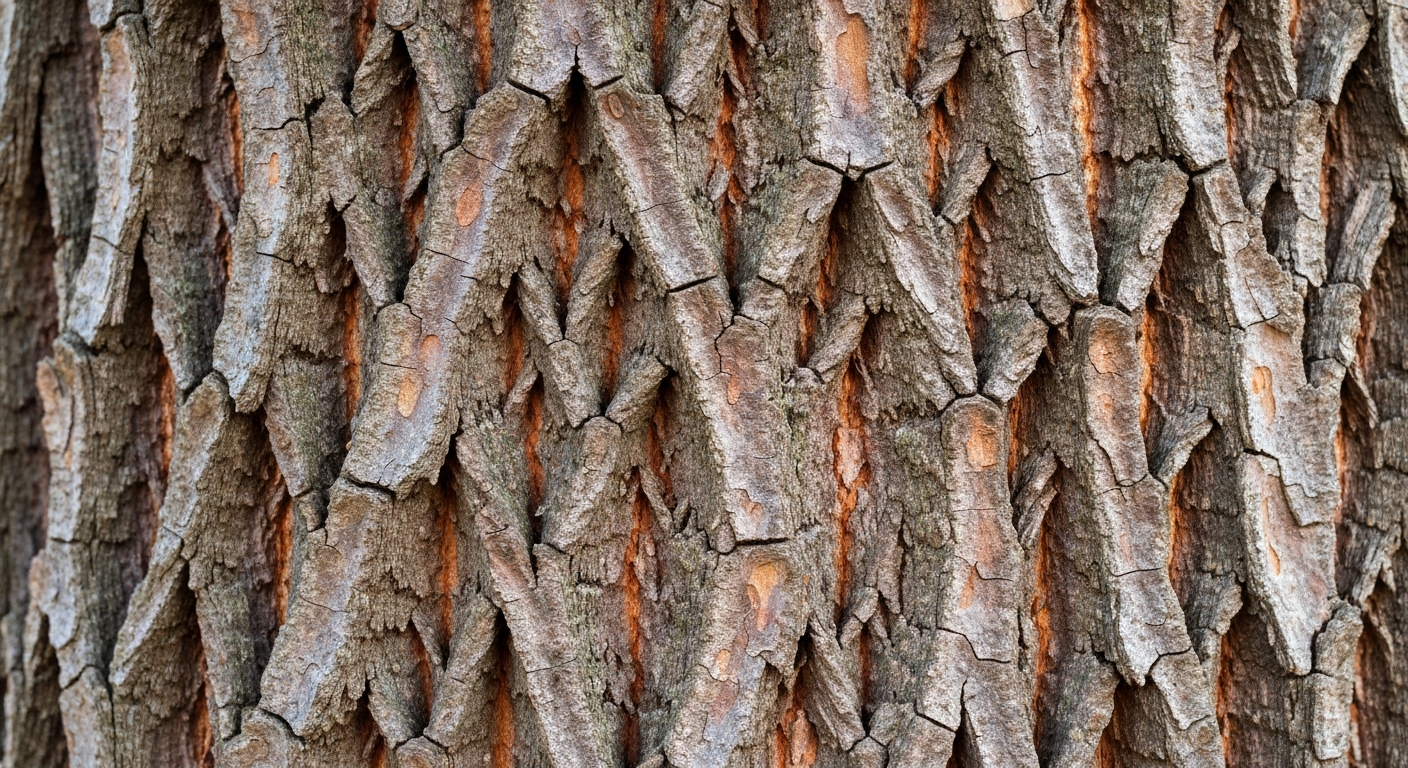
TL;DR: Sycamore tree identification centers on camouflage bark — white, gray, and olive-green patches where outer brown plates peel away — plus large alternate palmate leaves resembling oversized maple leaves and one-inch round seed balls that persist through winter. American sycamore (Platanus occidentalis) lines eastern riverbanks; London plane (Platanus × acerifolia) dominates city streets. Photograph bark or seed balls and confirm with the Tree Identifier app.
🌳 Sycamore identification at a glance: white peeling bark on a huge trunk + large maple-shaped leaves on alternate twigs + round brown seed balls in winter = sycamore or London plane.
Understanding sycamores — genus Platanus
Sycamores belong to genus Platanus, the plane-tree family (Platanaceae) — unrelated to true maples despite similar leaf shape. Only one species is native to eastern North America: American sycamore (Platanus occidentalis). London plane (Platanus × acerifolia) is a hybrid between American sycamore and oriental plane (Platanus orientalis), planted worldwide as a street tree because it tolerates pollution, compaction, and pruning.
Sycamore tree identification matters because these are among the largest deciduous trees in eastern forests — trunks exceeding 10 feet diameter are documented — and the bark pattern is visible from hundreds of feet away in winter woods. Along floodplains they are dominant; in cities they shade entire blocks.
Key genus traits:
- Bark: Exfoliating plates exposing multicolored inner bark — the signature feature.
- Leaves: Large, alternate, palmate with three to five lobes, coarsely toothed margins.
- Fruit: Round ball-like syncarps of achenes on long pendulous stalks — not a true pod.
- Habitat: Moist soils, riverbanks, floodplains; London plane in urban corridors.
- Form: Massive trunk, open irregular crown, often multi-stemmed on flood-scarred individuals.
American sycamore tree identification
American sycamore (Platanus occidentalis) — also called American planetree, buttonwood, or buttonball tree — is native from Maine to Florida and west to Iowa and Texas.
Bark: The most dramatic in North America. On mature trees, outer bark flakes in irregular brown plates revealing smooth inner bark in patches of stark white, creamy yellow, pale green, and gray. The effect looks like a world map or army camouflage. Upper branches and younger trunks show the same pattern at smaller scale. No birch, aspen, or gum matches this combination on a trunk four feet across.
Leaves: Alternate, four to ten inches wide, palmate with usually three to five deep lobes and coarse teeth along margins. Texture is thick and rough above, paler and hairy below when young. Petiole base encloses the next year's bud — a distinctive platanus trait visible where leaf meets twig.
Fruit: Globose ball one to one and a half inches diameter, composed of hundreds of tiny achenes with hair tufts. Typically one ball per stalk on American sycamore (London plane often has two). Balls form in summer, brown and persist through winter, dispersing seeds in spring.
Twigs and buds: Stout twigs with swollen nodes. Terminal bud is conical, single, with one large cap-like bud scale. Leaf scar encircles the bud — a ring around the twig.
Size and form: Can exceed 100 feet tall and 10 feet DBH (diameter at breast height). Crown is open and spreading with large crooked limbs. Often found in pure stands on point bars and levees.
London plane — the urban sycamore
London plane (Platanus × acerifolia) is the sycamore most city dwellers know. Sycamore identification in urban settings is usually London plane unless you are near a natural watercourse with native trees.
Distinguishing traits from American sycamore:
- Leaves slightly smaller with narrower lobes and shallower sinuses — more maple-like at a glance.
- Fruit balls commonly in pairs on the same stalk.
- More consistent upright habit when young; heavily pollarded in European tradition.
- Tolerates drought and root compaction better than native sycamore.
Bark pattern is essentially identical — mottled peeling plates. For most practical purposes, identifying the tree as a plane/sycamore (Platanus) is sufficient. Species split between American and London plane requires fruit stalk number and subtle leaf lobe differences.
Sycamore leaf identification vs maple
Beginners confuse sycamore and maple because both have lobed palmate leaves. Sycamore tree id from leaves alone requires two checks:
- Arrangement: Sycamore leaves are alternate — one leaf per node, staggered along the twig. Maple leaves are opposite — pairs at each node. This is decisive. See Identify Trees by Leaf for arrangement photography.
- Size and texture: Sycamore leaves are typically larger and thicker with a rough sandpapery feel. Red maple leaves rarely exceed four to five inches in urban settings; sycamore leaves often reach eight to ten inches.
Fall color differs: sycamore turns yellow-brown to tan and drops early. Maples often show red and orange. If you find a large lobed leaf on the ground in November, check the tree above for bark — mottled white trunk confirms sycamore.
Sycamore tree identification in winter
Winter is prime sycamore season because bark and seed balls dominate the landscape when other trees are gray and bare.
Bark: White patches gleam against gray woods — sycamores are often the brightest trunks in a winter floodplain. Photograph the mottled pattern at chest height for instant app confirmation.
Seed balls: Tan spheres hanging on stalks at outer branch tips. They resemble old ornaments. London plane may show pairs; American sycamore usually shows singles. Balls break apart in spring releasing wind-dispersed seeds.
Silhouette: Large trees with heavy horizontal limbs and a open vase-to-rounded crown. Upper bark on branches peels like the trunk — smaller white patches visible against sky.
Buds: Large conical buds with a single scale — bigger than most deciduous tree buds. Useful for sycamore sapling identification when bark is not yet mottled.
For winter bark photography tips, see Tree Bark Identification App Guide.
Sycamore sapling identification
Young sycamores lack the dramatic bark of veterans. Sycamore sapling identification relies on:
Leaves: Same large alternate palmate lobed form as mature trees — out of proportion on a six-foot sapling. Leaf size relative to twig thickness is a clue.
Bark: Smooth gray-brown, sometimes with faint flaky patches beginning at base. White mottling develops as diameter increases — usually visible by three to six inches trunk caliper.
Growth rate: Fast — saplings can add several feet per year in moist soil. Colonizes gravel bars after floods.
Seedlings: First-year seedlings have smaller three-lobed leaves but alternate arrangement is present from the start.
Habitat and range
American sycamore is a floodplain specialist — point bars, riverbanks, wet bottomlands from the Atlantic coast to the Great Plains. It tolerates brief inundation and silty soils. In upland plantings it grows but prefers moisture.
London plane appears on streets, in parks, and around plazas globally. In the US it is common in Northeast and Midwest cities, often planted in rows where native sycamore would be too large for narrow tree pits.
Both species hybridize where planted together — intermediate forms occur but are uncommon.
Lookalikes and confusion species
Maples (Acer)
Opposite leaves, smaller size, no peeling bark plates, winged samaras instead of round balls. Sugar maple and Norway maple are the usual leaf-shape confusion — check arrangement.
Sweetgum (Liquidambar)
Star-shaped leaves with five to seven pointed lobes — not rounded palmate lobes. Spiky round seed balls ("gum balls") vs smooth sycamore balls. Bark is furrowed gray, not white-mottled.
White birch and aspen
White bark but thin papery peeling in horizontal strips (birch) or smooth white without green patches (aspen). Neither has large lobed leaves or round seed balls.
American beech
Smooth gray bark — no peeling plates. Elliptical toothed leaves, not lobed. Beech holds dry tan leaves through winter ("marcescence"); sycamore drops leaves cleanly.
Ecological and practical notes
Sycamores provide cavity nesting for owls and wood ducks, and beaver feed on bark and cambium. Lumber ("buttonwood") is hard and difficult to dry — used historically for butcher blocks and veneer.
Anthracnose fungus causes spring leaf drop on sycamores — bare patches in May that refoliate by June. This is common, not a death sentence. London plane was selected partly for anthracnose resistance.
Sycamore balls generate litter complaints in cities — sidewalk crunch underfoot. The tradeoff is shade and bark beauty.
Using Tree Identifier for sycamore
Tree Identifier recognizes sycamore and London plane from bark, seed ball, and leaf photos with high confidence.
Best photos: Bark patch showing white and green inner layers with peeling brown plate — fill the frame. Single seed ball on its stalk against sky. Leaf with twig showing alternate arrangement.
Distance ID: Even a distant trunk photo often works because bark pattern is unique at genus level.
Sycamore tree identification is one of the most satisfying IDs in eastern North America — the bark alone tells the story before you reach the tree.
Frequently asked questions
How do you identify a sycamore tree?
Identify sycamore tree species by camouflage-pattern bark — outer layers peel in irregular plates exposing white, tan, and olive-green inner bark on a massive trunk. Leaves are large, alternate, and palmate with three to five lobes resembling oversized maple leaves. Round seed balls about one inch diameter hang singly or in pairs on long stalks and persist through winter. American sycamore (Platanus occidentalis) is native to eastern riverbanks; London plane (Platanus x acerifolia) is the common street-tree hybrid with similar bark.
What does sycamore bark look like?
Sycamore bark is the primary ID feature — smooth inner bark in patches of creamy white, gray, and greenish brown, with curling outer brown plates shedding in jigsaw shapes. On old trees the trunk looks like military camouflage or a map of continents. No other eastern North American tree combines white peeling plates at this scale on such a large diameter trunk. Young sycamore saplings have smoother tan bark without dramatic mottling yet.
How do you identify sycamore in winter?
Sycamore tree identification in winter relies on bark, persistent seed balls, and branching pattern. The mottled white-and-green bark is visible year-round. Tan spherical seed balls one inch across often hang at branch tips through February. Buds are conical with a single cap-like scale. Large trees show a broad open crown with heavy limbs and exfoliating upper bark on branches as well as the trunk.
What is the difference between American sycamore and London plane?
American sycamore (Platanus occidentalis) has larger, more deeply lobed leaves with wider sinuses and fruit balls usually solitary on stalks. London plane (Platanus x acerifolia), the common urban hybrid, has slightly smaller leaves with narrower lobes, fruit balls typically in pairs, and is more pollution-tolerant. Bark pattern is similar on both — mottled peeling plates. London plane dominates city plantings; American sycamore dominates natural floodplains.
How do you identify a sycamore sapling?
Sycamore sapling identification uses leaf shape and bud form before bark mottling develops. Seedlings and saplings have large alternate palmate leaves with three to five lobes and toothed margins — maple-like but bigger and attached alternately, not oppositely like maples. Bark on saplings under four inches diameter is smooth gray-brown without white patches. Seed balls may appear on saplings only after several years of growth.
Are sycamore leaves like maple leaves?
Superficially yes — both are palmate and lobed. Sycamore leaves are larger, often eight to ten inches wide, with a thicker texture and alternate arrangement on the twig. Maple leaves are opposite. Sycamore leaf bases are often straight or heart-shaped; maple bases are more rounded. Sycamore leaves turn dull brown in fall rather than brilliant red or orange like many maples.
Can tree ID apps identify sycamore?
Yes — sycamore tree id from bark or seed ball photos is highly reliable because the mottled trunk and round fruit are distinctive. Leaf photos work well when size and alternate arrangement are visible. Apps occasionally confuse London plane and American sycamore, which share genus traits — either answer is usually correct at the genus level. Photograph bark at chest height for the fastest match.
Try Tree Identifier — free on iPhone
Photograph sycamore bark or seed balls and get a species match in seconds.
Download on the App Store