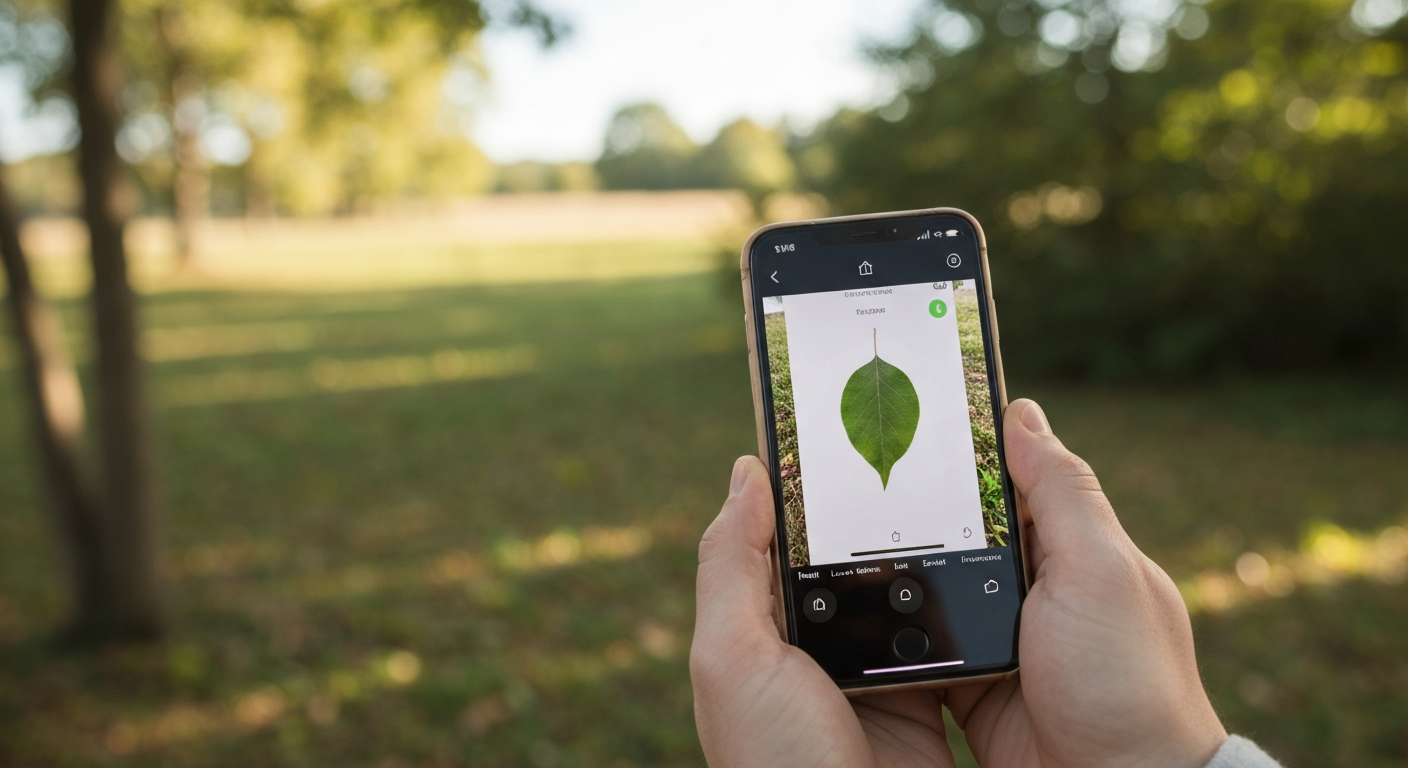
TL;DR: Crabapple fruit identification is straightforward — look for apple-type fruit under 2 inches on a thornless (or nearly thornless) tree with simple, alternate, finely toothed leaves. Spring brings showy white-to-pink rose-family blossoms; summer and fall add small red or yellow pomes. Crabapples belong to genus Malus, same as orchard apples. Tell them from hawthorns by unlobed leaves and lack of branch thorns; tell them from cherries by apple-shaped fruit with calyx scars at the bottom. Confirm with the Tree Identifier app using a fruit-and-leaf photo pair.
🍎 Crabapple identification is really apple identification with a size filter. If the fruit looks like a miniature apple and the leaves are simple with fine teeth, you are in genus Malus — the rest is cultivar or species fine-tuning.
What is a crabapple?
Crabapple is a common name, not a single species. Botanists place crabapples in Malus, the apple genus in the rose family (Rosaceae). A tree is called a crabapple when its fruit stays small — traditionally under 2 inches — and is often too tart to eat fresh. Ornamental crabapples dominate suburban landscapes: compact trees bred for spring flower displays, fall fruit color, and disease resistance.
Wild crabapple species also exist. American crabapple (Malus coronaria) and Siberian crabapple (Malus baccata) appear in native and naturalized contexts. Hundreds of named cultivars — 'Profusion', 'Spring Snow', 'Prairie Fire' — blur the line between wild species and nursery selections.
For crabapple identification in the field, you rarely need cultivar-level precision. Homeowners and hikers usually want to know: Is this a crabapple, a hawthorn, or a cherry? The traits below answer that reliably.
Crabapple fruit identification
Crabapple fruit identification is the most decisive feature when fruit is present — from late summer through winter on many ornamentals.
Size: Diameter under 2 inches (5 cm), often closer to ½ to 1 inch on popular cultivars. Compare to a golf ball or quarter in photos for scale.
Shape: Round to slightly flattened apple shape — wider than cherries, with a distinct calyx remnant (dried flower parts) at the bottom dimple.
Color: Green, yellow, orange, red, or purple depending on species, cultivar, and ripeness. Some trees show mixed colors on one branch.
Attachment: Short fruit stalk (pedicel) connecting directly to twig or spur — like grocery apples, not the branched clusters typical of many hawthorns.
Persistence: Ornamental crabapples often hold fruit into winter, a signature sight in snowy yards: small red spheres on bare gray branches. Birds strip some trees by December; others keep fruit until spring.
Interior: Cut one open — apple structure with core, seeds, and flesh. Hawthorn pomes are similar internally; cherries are single-stoned drupes, not pomes.
Photograph fruit from below to show the calyx scar and from the side with a size reference. Crabapple fruit identification errors drop sharply when scale is visible in the image.
Crabapple leaf identification
Crabapple leaf identification follows the apple pattern shared across Malus:
- Arrangement: Alternate on the twig — one leaf per node, staggered.
- Type: Simple — one blade per petiole, not compound.
- Shape: Ovate to elliptic, wider toward the base or middle, tapering to a pointed tip.
- Margin: Finely serrated — small sharp teeth along the edge. Not deeply lobed (contrast hawthorn).
- Size: Typically 1 to 3 inches long on ornamental trees; wild species may vary.
- Surface: Often glossy dark green above; young leaves may be hairy beneath, becoming smoother with age.
- Petiole: Slender, often with a slight groove; may have small stipules at base early in season.
Crabapple leaf identification alone rarely separates cultivars — 'Profusion' and 'Spring Snow' leaves look alike. Leaves do separate Malus from hawthorn (lobed leaves, thorns) and from cherry (often longer leaves, different bark, drupe fruit).
In early spring, expanding crabapple leaves may appear folded or bronze before turning green — wait for mature summer foliage for clearest margin photos. Link to Identify Trees by Leaf for general leaf photography technique.
Flowers and bloom
Spring bloom is why crabapples are planted. Crabapple identification in April and May can start with flowers alone — then confirm with leaves when they unfold.
Flower structure: Five-petaled roses-family blossoms, typically ¾ to 1½ inches across, in clusters along one-year-old wood. Stamens numerous; center often yellow.
Color: White, pink, rose, red, or purple-red depending on cultivar. Some open dark and fade lighter.
Timing: Mid to late spring — after most magnolias, overlapping with late cherries and early lilacs in many climates.
Scent: Light sweet fragrance on many cultivars — not as heavy as lilac.
Cherry blossoms look similar from a distance. Walk closer: cherry bark is often shiny with horizontal lenticels; crabapple bark is more scaly gray-brown. Cherry fruit is a drupe; crabapple fruit is a small pome.
Bark and winter identification
When leaves and fruit are gone, bark and persistent fruit carry crabapple identification:
Young bark: Smooth, gray-brown, sometimes with lenticels — similar to apple orchard trees.
Older bark: Develops shallow scales and vertical fissures; ornamental trees in landscapes are often only 15 to 25 years old with moderately textured bark.
Twigs: Slender, often with spur shoots — short stubby branches where fruit forms. Spur bearing is classic apple/crabapple architecture.
Thorns: Usually absent on crabapples. A thorny tree with lobed leaves is likely hawthorn, not crabapple.
Winter fruit: Small apples frozen on the branch are among the best crabapple fruit identification signals in January. Photograph fruit plus bark for app confirmation.
Common crabapple species and cultivars
Cultivar names outnumber wild species in yards. These groups cover most sightings:
Ornamental landscape crabapples
Nursery hybrids selected for flower color, fruit persistence, and disease resistance to fire blight and cedar-apple rust. Crown form is often rounded or vase-shaped, 15 to 25 feet tall. Examples include 'Prairie Fire' (red flowers, red fruit), 'Spring Snow' (white flowers, often fruitless or sparse fruit), and 'Profusion' (pink-red flowers, maroon fruit).
American crabapple (Malus coronaria)
Native to eastern North America. Spreading native tree with fragrant white to pink flowers and small yellow-green to red fruit. Leaves slightly narrower than many ornamentals. Found in old fields and woodland edges — not just suburban plantings.
Siberian crabapple (Malus baccata)
Hardy Asian species used in breeding. Small red or yellow fruit, white flowers. Common parent of cold-climate rootstocks and hybrids.
Wild or feral apple seedlings
An abandoned seedling from a thrown apple core can grow into a tree with small tart fruit — functionally a crabapple. Malus domestica seedlings vary wildly. Fruit size under 2 inches and bitter taste place it in crabapple territory even if the parent was a Honeycrisp.
Lookalikes that confuse crabapple identification
Hawthorn (Crataegus)
Hawthorns share Rosaceae pome fruit and white spring flowers. Differences: hawthorn leaves are often lobed; thorns 1 to 3 inches long on branches; fruit usually smaller with more branched stalks. Hawthorn bark on old trees can be scaly and gnarled. If you bleed from a thorn while reaching for fruit, reconsider hawthorn.
Ornamental cherry (Prunus)
Cherries have similar spring pink-white displays. Cherry leaves are usually simple and serrated but often longer and thinner; cherry bark is famously glossy with horizontal lenticels. Cherry fruit is a single pit (cherry), not a core with apple seeds.
Pear (Pyrus)
Ornamental pears ('Bradford') have rounder leaves, often without fine serration, and hard woody pomes that feel grittier than crabapples. Flowers are white in early spring; form is typically pyramidal.
Full-size apple orchard trees
Same genus — large sweet fruit is the obvious split. Orchard trees are pruned for fruit production; crabapple ornamentals for bloom. A neglected orchard tree with small windfalls can mimic crabapple until you measure fruit consistently above 2 inches.
Using Tree Identifier for crabapples
Crabapple identification benefits from multi-feature photos. Tree Identifier handles Malus well when images are clear.
Best photo set: One leaf showing full blade and serrated margin. One fruit with size context (coin, fingers). Optional spring blossom cluster if seasonal.
App limits: Cultivar-level IDs ('Profusion' vs 'Prairie Fire') may not resolve — genus-level crabapple is the realistic goal. Hawthorn and cherry mislabels happen when only distant crown photos are submitted.
Field workflow: Snap leaf, snap fruit, run app, verify no thorns and alternate leaf arrangement manually. Cross-link with What Type of Tree Is This? for the full photo-first method.
Crabapple fruit identification plus leaf margin checks close most yard IDs in one visit.
Frequently asked questions
How do you identify crabapple fruit?
Crabapple fruit identification starts with size: crabapples are apples under about 2 inches (5 cm) in diameter. They hang from short stalks like standard apples, not from hawthorn-style clusters on branched peduncles. Color ranges from green and yellow to red and purple. Many ornamental crabapples hold fruit through winter — small hard apples on bare branches are a strong winter ID cue.
What does a crabapple leaf look like?
Crabapple leaf identification follows the rose family pattern: simple, alternate, oval to elliptic leaves with finely serrated margins and a pointed tip. Leaves are 1 to 3 inches long, often glossy above and slightly hairy when young. Unlike many hawthorns, crabapple leaves usually lack deep lobes. Compare a leaf from your tree to a known apple leaf — they are nearly identical at the species level.
What is the difference between a crabapple and a regular apple tree?
Botanically they are the same genus — Malus. Crabapple usually means a Malus species or cultivar with small fruit, often bitter or astringent, and typically grown for flowers rather than eating. Orchard apples are Malus domestica with large sweet fruit. A seedling apple in an old field can produce small tart fruit and look like a crabapple. Fruit size and tree form — compact, ornamental crown — are practical field distinctions.
How do you tell crabapple from hawthorn?
Hawthorns (Crataegus) have deeply lobed leaves and thorns on the branches. Crabapples have unlobed or shallowly lobed serrated leaves and usually no thorns, though some cultivars have sparse spurs. Hawthorn fruit is a pome like crabapple but often smaller and on branched stalks; hawthorn leaves show more variation with species. Spring flowers on both are white to pink in the rose family — check leaves and thorns when flowers fade.
When do crabapple trees bloom?
Most ornamental crabapples bloom in mid to late spring — often April or May in the northern US, slightly earlier in the South. Flowers appear before or with the leaves, in clusters along branches. Colors range from white to deep pink and red depending on cultivar. Bloom time and flower density are landscape features; for crabapple identification, combine blossom photos with leaf and fruit shots.
Are crabapples edible?
Yes, most crabapple fruit is edible but tart. High pectin makes crabapples excellent for jelly. Never eat fruit from a tree you have not identified — confirm Malus and avoid trees treated with pesticides in ornamental settings. Crabapple fruit identification is for naming the tree, not foraging safety; always verify with multiple traits.
Can tree ID apps identify crabapples?
Yes, when photos show clear leaves, fruit, or distinctive spring blossoms. Apps recognize common ornamental crabapple cultivars and wild Malus species well in North America and Europe. Confusion happens with hawthorn, cherry, and young apple trees. For best results, photograph fruit size next to a coin or your fingers, add a leaf showing the serrated margin, and note whether thorns are present.
Try Tree Identifier — free on iPhone
Photograph crabapple leaves or fruit and get a species match in seconds.
Download on the App Store