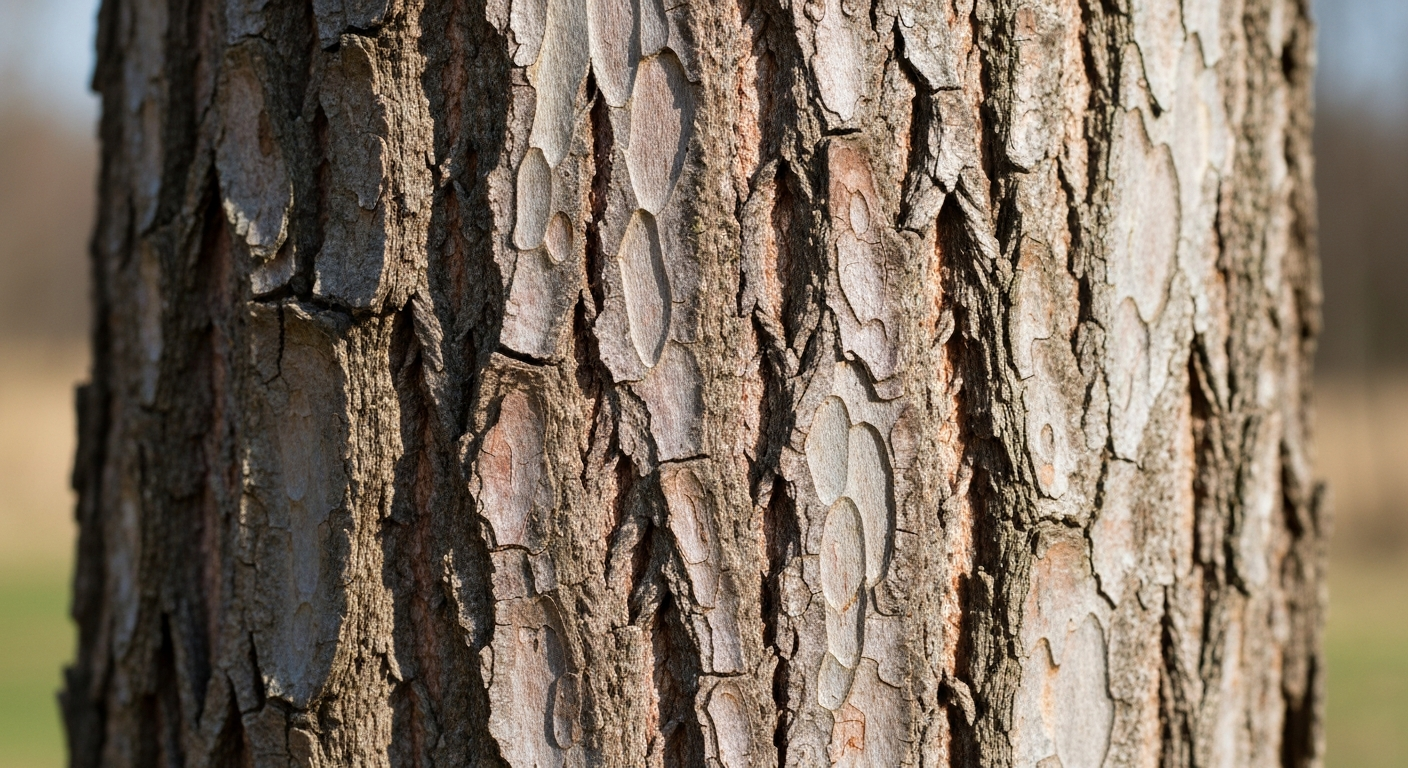
TL;DR: Hickory tree identification starts with pinnately compound leaves — 5 to 9 lance-shaped leaflets on one stalk, alternate on the twig — and hard-shelled nuts in splitting husks. Bark is the species key: shagbark hickory (Carya ovata) has long peeling plates; shellbark hickory (Carya laciniosa) peels in shorter thick curls on huge trunks; pignut hickory (Carya glabra) has tight smooth gray bark; mockernut hickory (Carya tomentosa) has fuzzy leaflets and thick husks. Photograph bark, one compound leaf, and any nuts, then confirm with the Tree Identifier app.
🌰 Hickory tree identification shortcut: compound leaves + large valvate buds + shaggy OR tight gray bark = hickory. Species splits on bark plates, leaflet fuzz, and husk thickness.
Understanding hickories — genus Carya
Hickories belong to genus Carya in the walnut family (Juglandaceae) — cousins of pecan (Carya illinoinensis) and walnut. Eastern North American forests hold shagbark, shellbark, pignut, mockernut, and bitternut hickories. Hickory wood is dense, shock-resistant, and prized for tool handles and smoking meat.
Hickory tree identification matters for foragers seeking sweet nuts, foresters managing timber, and homeowners distinguishing hickory from ash before emerald ash borer concerns. Hickory and ash both have compound leaves — bark and buds separate them.
Genus-level traits:
- Leaves: Pinnately compound, alternate, 5 to 9 leaflets typical.
- Leaflets: Lanceolate, finely serrated margins (except some pignut leaflets nearly entire).
- Buds: Large, valvate — outer scales meet like a clamshell; terminal bud prominent on winter twigs.
- Fruit: Nut enclosed in a husk that splits along sutures at maturity.
- Bark: Species-specific — from shaggy peeling plates to tight interlacing ridges.
- Form: Tall straight trunks, oval crowns, slow-growing.
See How to Identify Nut Trees for broader nut-tree context — hickories are the hard-shelled eastern classics.
Hickory leaf identification
Hickory tree identification by leaves requires a full compound leaf, not a single leaflet.
Arrangement: Alternate on the twig — one compound leaf per node. Not opposite like ash (which also has opposite compound leaves — ash is opposite, hickory is alternate).
Leaflet count: Usually odd-pinnate — leaflets in pairs plus one terminal leaflet at the tip. Shagbark and pignut often five leaflets. Mockernut and shellbark seven to nine.
Leaflet texture: Mockernut leaflets are densely hairy (tomentose) above and below — rough like sandpaper. Pignut leaflets are smoother and often glossy. Shagbark leaflets are hairy on veins beneath but less extreme than mockernut.
Margin: Fine sharp teeth on most species. Pignut may show nearly entire margins on some leaflets — a useful pignut clue.
Rachis: Central stem of the compound leaf — may be hairy or smooth. Walnut rachis is often winged with green tissue between leaflets; hickory rachis is not winged.
Photograph the entire compound leaf against a light sky or white paper. See Identify Trees by Leaf for compound-leaf tips.
Hickory bark identification
Hickory tree bark identification is often the fastest field method on mature trees.
Shagbark hickory: Long vertical plates of bark curling away from the trunk at both ends — the classic shaggy look. Plates can be 1 to 3 feet long on old trees. Visible from 100 yards.
Shellbark hickory: Also peeling but shorter, thicker, more crowded plates on a massive trunk — the tree looks shaggy but stockier. Often in riparian bottomlands.
Mockernut hickory: Tight gray bark with interlacing ridges — not shaggy. Looks like walnut or oak from a distance. Identification hickory tree bark for mockernut means "not peeling" plus fuzzy leaves.
Pignut hickory: Smooth gray when young; mature bark tight with shallow furrows, sometimes with interlaced pattern. Never develops long shaggy plates.
Bitternut hickory (Carya cordiformis): Bonus species — sulfur-yellow buds year-round, tight bark, bitter nuts. Bud color alone IDs bitternut in winter.
For bark photography, see Tree Bark Identification App Guide.
Shagbark hickory tree identification
Shagbark hickory (Carya ovata) is the icon — bark, nuts, and fall color all distinctive.
Bark: Long peeling strips — unmistakable on trees over 20 years old. Young shagbarks are smooth-barked; do not expect shag on saplings.
Leaves: Typically 5 leaflets, each 3 to 6 inches, fine teeth, aromatic when crushed.
Nuts: Round to oval, sweet, husk splits to the base in four sections at maturity. Husk is thin.
Habitat: Upland woods, dry slopes, mixed hardwood forests across eastern US.
Size: 60 to 80 feet, straight trunk when forest-grown.
Shagbark hickory tree identification at a glance: shaggy bark + 5 leaflets + sweet nut = high confidence.
Shellbark hickory identification
Shellbark hickory (Carya laciniosa) — also called big shagbark — is the bottomland giant.
Bark: Shaggy but plates shorter and thicker than shagbark; trunk diameter massive.
Leaves: 7 to 9 large leaflets, sometimes 10 to 12 inches long.
Nuts: Largest hickory nuts — thick husk, four-part split, sweet kernel.
Habitat: Floodplains, river terraces, wet rich soil — not dry ridges.
Shellbark vs shagbark hickory tree identification: habitat (wet vs dry), leaflet count (7-9 vs 5), plate length (short thick vs long curling).
Pignut hickory identification
Pignut hickory (Carya glabra) lacks shaggy bark — the name refers to bitter nuts hogs ate.
Bark: Tight, gray, shallowly furrowed — resembles mockernut bark; leaf and nut characters split them.
Leaves: 5 to 7 leaflets, often smoother margins than other hickories — some leaflets nearly entire.
Nuts: Pear-shaped, thin husk splits only partway or not at all — nut often stays enclosed. Bitter.
Range: Broad eastern US, common in oak-hickory forests.
Pignut hickory tree identification without nuts: smooth-margined leaflets and non-shaggy bark on upland sites.
Mockernut hickory identification
Mockernut hickory (Carya tomentosa) — the name mocks you for how hard the shell is.
Leaves: 7 to 9 leaflets densely pubescent — fuzzy, rough, pale beneath. Largest terminal buds of common hickories.
Bark: Tight dark gray ridges, not shaggy — hickory tree bark identification must pair with fuzzy leaves.
Nuts: Very thick four-ridged husk, hard to crack, small sweet kernel relative to shell volume.
Buds: Large, pale, valvate — visible from distance on winter twigs.
Mockernut vs pignut: fuzz vs smooth leaflets; thick husk vs thin pear-shaped husk.
Hickory nuts and husks
Fruit confirms hickory tree identification in fall.
- Shagbark: Thin husk, splits fully, sweet nut.
- Shellbark: Thick husk, large nut, four-way split.
- Pignut: Pear shape, husk may not open, bitter.
- Mockernut: Thick four-ridged husk, extremely hard shell.
Husks are green when immature, brown when ripe. Splits occur along four sutures. Gather nuts from the ground after squirrels test them — squirrels prefer sweet shagbark and shellbark first.
Hickory vs ash vs walnut
Compound leaves confuse beginners:
Ash: Opposite compound leaves, not alternate. Bark often diamond-patterned (white ash). No hickory nuts.
Black walnut: Alternate compound but rachis is winged with green flange between leaflets. Fruit is large green ball, not four-part husk. Bark is dark brown and furrowed, not shaggy.
Pecan: More leaflets (9 to 17), southern range, elongated nuts in thin husks.
Winter hickory identification
Winter hickory tree identification uses buds and bark:
- Terminal bud: Large, valvate, scaly — mockernut buds are notably big and pale.
- Bitternut: Yellow buds — unique.
- Leaf scars: Three-lobed bundle scar pattern — monkey-face shape on some species.
- Bark: Shagbark still shaggy in winter — best season for bark photos without leaves blocking trunk.
Using Tree Identifier for hickory
Tree Identifier recognizes shagbark, mockernut, pignut, and common hickories from bark, leaf, and nut photos.
Best photos: Trunk bark showing peeling plates (shagbark) or tight ridges. One full compound leaf with leaflet count visible. Nut and husk on ground if available.
Tricky pairs: Pignut vs mockernut without fruit — photograph leaflet undersides for fuzz. Shellbark vs shagbark — include trunk diameter and habitat context in notes.
Hickory tree identification rewards patience — these trees live centuries and grow slowly, but shagbark bark is one of the most memorable sights in eastern forests.
Frequently asked questions
How do you identify a hickory tree?
Identify hickory trees by pinnately compound leaves with 5 to 9 leaflets arranged along a central stem, alternate on the twig. Leaflets are lance-shaped with fine serrations. Hickories produce hard-shelled nuts in a husk that splits. Bark varies: shagbark hickory has long peeling plates; mockernut has tight gray ridges; pignut has smoother gray bark. Buds are large and valvate — scales overlap like a clamshell.
What does hickory bark look like?
Hickory bark identification depends on species. Shagbark hickory (Carya ovata) has long vertical strips of bark peeling outward from the trunk — unmistakably shaggy. Shellbark hickory also peels but in shorter plates on a massive trunk. Mockernut hickory bark is tight, gray, with interlacing ridges — not shaggy. Pignut hickory bark is smooth gray when young, becoming tight furrows with age. Hickory tree bark identification works best on mature trees.
How do you tell shagbark from shellbark hickory?
Shagbark hickory (Carya ovata) has long curling bark plates peeling at top and bottom, often 1 to 3 feet long. Shellbark hickory (Carya laciniosa) peels in shorter, thicker plates on a larger trunk, often in wet bottomlands. Shellbark leaflets usually number 7 to 9 and are larger; shagbark typically has 5 leaflets. Shellbark nuts are larger with a thicker husk.
What is the difference between pignut and mockernut hickory?
Pignut hickory (Carya glabra) has 5 to 7 leaflets, smooth or mostly smooth leaflet margins, and pear-shaped nuts with a thin husk that splits only partway. Mockernut hickory (Carya tomentosa) has 7 to 9 leaflets covered in dense fuzz (tomentose) on the underside, larger buds, and thick four-parted husks. Mockernut leaflets feel rough and hairy; pignut leaflets are smoother.
How many leaflets does a hickory leaf have?
Hickory leaves are pinnately compound with 3 to 9 leaflets depending on species and shoot vigor. Shagbark and pignut often show 5 leaflets. Mockernut and shellbark commonly have 7 to 9. A single terminal leaflet is present at the tip. Count leaflets on a mature leaf from the middle of the crown for hickory tree identification.
Are hickory nuts edible?
Yes — shagbark and shellbark hickories produce sweet pecan-like nuts prized for flavor. Pignut hickory nuts are bitter and named because pigs ate them. Mockernut shells are extremely thick and hard to crack. Hickory tree identification by nut helps: thin-splitting husk with sweet nut inside suggests shagbark; thick four-section husk suggests mockernut.
Can tree ID apps identify hickory species?
Yes when photos show compound leaves, bark texture, or nuts. Hickory tree bark identification photos work well for shagbark — the peeling plates are distinctive. Leaf-only photos may confuse hickory with ash or walnut — hickory leaflets lack the winged rachis of walnut and have larger terminal buds than ash. Tree Identifier handles shagbark and common hickories with clear bark or leaf photos.
Try Tree Identifier — free on iPhone
Photograph hickory bark, compound leaves, or nuts and get a species match in seconds.
Download on the App Store