TL;DR: Oak leaf identification begins with two groups: red oak group leaves have lobes ending in bristle tips (tiny hair-like points); white oak group leaves have rounded lobe tips without bristles. Then count lobes, check sinus depth, and confirm with acorns and bark. Common species: white oak, northern red oak, bur oak, pin oak, and live oak. Photograph one leaf flat on pavement and confirm oak tree id with the Tree Identifier app.
🍂 Oak leaf identification rule: Touch or zoom lobe tips — bristle = red oak group. Rounded = white oak group. Everything else (species name) follows from lobe count and shape.
Understanding oaks — genus Quercus
Oaks are genus Quercus in beech family Fagaceae — roughly 90 species in North America and hundreds worldwide. All produce acorns: nuts seated in a cup-like cap (cupule). Oak leaves are simple and lobed — never compound with separate leaflets like ash or hickory.
Oak tree leaves identification confuses beginners because species within each group look similar. Professional oak species identification uses a two-tier key: (1) red vs white group by bristle tips, (2) species by lobe number, sinus shape, leaf size, acorn, and bark.
Why groups matter biologically: red oak acorns typically mature in two growing seasons and contain bitter tannins. White oak acorns usually mature in one season and are less bitter — historically more important for human and wildlife food. Hybridization is common where species overlap.
Red oak group vs white oak group
Red oak group (section Lobatae)
Leaves have lobes with pointed tips and bristle tips — a tiny extension at each lobe apex visible with a hand lens or phone zoom. Sinuses between lobes are often angular or U-shaped. Includes northern red oak, pin oak, black oak, scarlet oak, southern red oak, and willow oak (narrow unlobed leaves still have bristle tip at leaf apex).
Quick test: Run a finger along lobe tips — bristles catch slightly. Fall color often red to russet.
White oak group (section Quercus)
Lobes end in rounded tips — no bristles. Sinuses vary from shallow (white oak) to deep (bur oak). Includes white oak, bur oak, post oak, chinquapin oak, and live oaks.
Quick test: Lobe tips feel blunt and rounded under magnification.
This single split resolves more oak leaf identification queries than any other character. When people search identify oak tree by leaf, they usually need this bristle-vs-rounded answer first.
White oak (Quercus alba)
White oak is the eastern US reference species for the white oak group.
Leaves: 4 to 8 inches, 7 to 9 rounded lobes, shallow sinuses. Bright green above, paler below, sometimes with tufted hairs. Margins entire on lobes — no teeth between lobes.
Acorns: Oblong, ¾ inch, cup covers roughly one-quarter of nut — warty scales. Mature in one season.
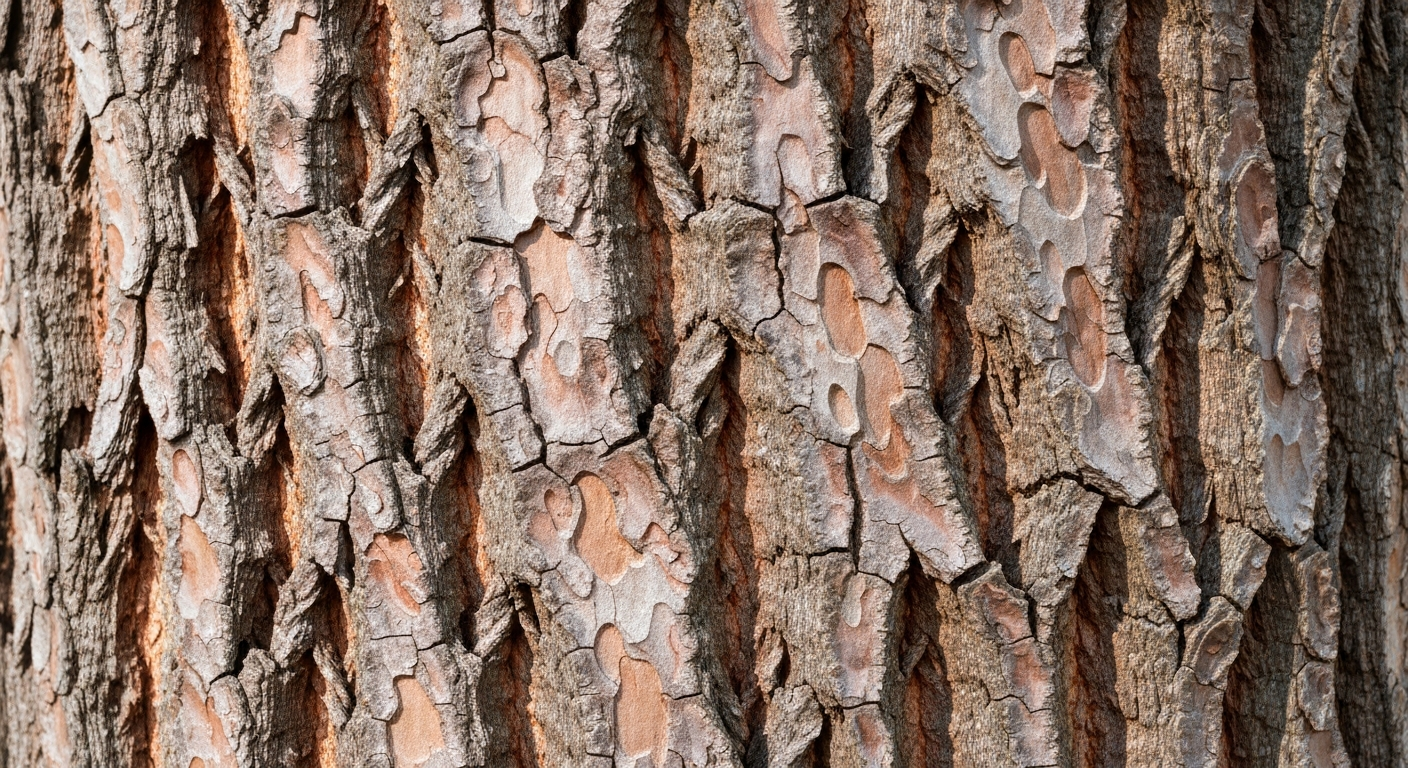
Bark: Pale gray, scaly or flaky plates on mature trees — not deeply ridged like red oak.
Form: Large spreading tree to 100 feet in forest; open-grown specimens have massive horizontal limbs.
White oak leaf identification is the logo oak — rounded lobes, no bristles. Fall foliage can be exceptional wine-red.
Northern red oak (Quercus rubra)
Among the most common eastern forest oaks and a staple of oak tree leaf id guides.
Leaves: 5 to 8 inches, 7 to 11 lobes with pointed tips and bristle tips. Sinuses angular, often forming a U or C shape between lobes. Dull green above, paler below with axillary tufts along midrib.
Acorns: Broad, flat base, cup saucer-shaped covering about one-quarter of nut. Bitter; two-year maturity.
Bark: Dark gray to brown, wide shiny stripes (ridges) separated by paler furrows — "ski track" bark on mature trunks.
Form: Straight trunk, oval crown, fast growth. Planted as street tree in cooler climates.
Northern red oak vs black oak: black oak has deeper sinuses and often hairier inner acorn cup. Scarlet oak has deeper, more finger-like sinuses and smaller acorns.
Bur oak (Quercus macrocarpa)
Bur oak is the white oak group species you cannot forget once seen.
Leaves: Highly variable, up to 12 inches — fiddle or ghost shape. Lower half has small rounded lobes; upper half broad with deep sinuses. All lobe tips rounded (white group).
Acorns: Enormous — among the largest North American acorns — with fringed cup extending halfway or more around the nut. "Macrocarpa" means large fruit.
Bark: Thick, deeply furrowed, corky ridges — fire-resistant.
Range: Great Plains east to Appalachians — prairie-forest transition specialist.
Oak tree leaves identification for bur oak is unique: giant fiddle leaf plus giant acorn. No bristle tips.
Pin oak (Quercus palustris)
Pin oak is a red oak group landscape standard in wet clay soils.
Leaves: 3 to 6 inches, 5 to 7 deep lobes with bristle tips. Sinuses very deep — nearly cut to midrib — giving a skinny, feathery silhouette. Lobe tips pointed.
Acorns: Small, ½ inch, cup tight and shallow. Two-year maturity.
Form: Distinctive pyramidal crown with descending lower branches, horizontal middle branches, and upright upper branches — "pin" branches on trunk.
Bark: Smooth gray on young trees; shallow fissures with age.
Pin oak vs scarlet oak: scarlet oak has deeper, narrower lobes and more vibrant scarlet fall color. Pin oak holds brown leaves into winter (marcescence) on young trees.
Live oak (Quercus virginiana and relatives)
Live oaks break the deciduous oak mental model — evergreen in coastal Southeast.
Leaves: Elliptic to oblong, 2 to 5 inches, often unlobed or with a rounded tip — no bristles (white oak group). Leathery, glossy dark green above, pale fuzz below. Edges may roll slightly.
Form: Massive horizontal limbs draped in Spanish moss (not part of oak — an epiphyte). Iconic Savannah and Gulf Coast avenue trees.
Acorns: Elongate, tapered, cup scaly.
Live oak leaf identification: evergreen, unlobed or barely lobed, white oak group — no bristle tip. Differs from laurel oak (red group, bristle tip, deciduous).
Oak leaf identification step by step
- Confirm oak: Simple lobed leaf (or live oak evergreen simple leaf) plus acorns if available.
- Group split: Bristle tips on lobes = red oak group. Rounded lobe tips = white oak group.
- Lobe count and sinuses: Pin oak = deep sinuses; white oak = shallow; bur oak = fiddle shape.
- Size and texture: Leathery evergreen = live oak. Huge leaf = bur oak.
- Acorn check: Size, cup fringe, one-year vs two-year crop on branch.
- Bark: Ski-track ridges = red oak; scaly pale plates = white oak; corky furrows = bur oak.
See Identify Trees by Leaf for general leaf photography. For lobe and sinus vocabulary, Tree Anatomy Glossary defines margin types.
Common oak identification mistakes
Maple vs oak: Maple leaves are opposite on twigs; oak leaves are alternate. Maple lobes lack bristle tips but maple saplings can confuse — check twig arrangement.
Scarlet vs red vs black oak: All red group with bristles — sinus depth and acorn cup hairiness separate them. Photograph leaf beside acorn when possible.
Post oak vs white oak: Both white group. Post oak has cross-shaped leaf — three terminal lobes often larger, forming a Maltese cross silhouette.
Willow oak: Red group but leaf looks unlobed — narrow and willow-like. Bristle tip still present at leaf apex; acorns confirm oak tree id.
Bark and winter oak tree identification
When leaves are absent, bark and marcescent leaves help:
- Red oak bark: Wide dark ridges, pale furrows — striped appearance.
- White oak bark: Flaky, light gray scales.
- Pin oak: Retains dead brown leaves on lower branches through winter.
- Acorn litter: Under-tree cups and nuts persist into spring.
Tree Bark Identification App Guide covers bark photo technique. Oaks are among common backyard trees in the US — learning local species pays off quickly.
Using Tree Identifier for oak leaf identification
Tree Identifier excels at oak tree leaves identification when one leaf fills the frame, lobe tips are in focus, and lighting is even.
Best practice: Lay leaf flat, photograph upper surface, ensure lobe tips visible at margins. Add acorn photo in second scan if species-level ID matters.
Group check: Even if the app returns a species name, verify bristle vs rounded tips yourself — hybrid oaks and planted cultivars occasionally surprise.
Oak leaf identification is the gateway skill for eastern and central US forestry, hiking, and yard work. Master the red-white split, learn five local species, and you'll name most oaks on your block.
Frequently asked questions
How do you identify an oak tree by its leaves?
Identify oak trees by simple lobed leaves — no leaflets. First split red oak group (black/red/scarlet oak section) with pointed lobes ending in bristle tips from white oak group with rounded lobes lacking bristles. Then count lobes, check sinuses (deep vs shallow), and note leaf base. Acorn shape and bark confirm oak species identification.
What is the difference between red oak and white oak leaves?
Red oak group leaves have pointed lobes with tiny bristle tips at lobe ends — even when lobes look rounded from a distance. White oak group leaves have rounded lobe tips without bristles. Red oak acorns mature in two seasons and often have hairy inner cup; white oak acorns mature in one season with smoother cups. Oak leaf identification uses bristle tips as the primary group key.
What does a white oak leaf look like?
White oak (Quercus alba) leaves are 4 to 8 inches long with 7 to 9 rounded lobes and shallow sinuses. Lobe tips are rounded — no bristles. Upper surface is bright green; underside often pale or lightly hairy. Fall color is burgundy to red-purple. White oak leaf identification is the classic rounded-lobe oak people picture on logos.
How do you identify red oak leaves?
Northern red oak (Quercus rubra) leaves have 7 to 11 lobes with pointed tips and bristle tips at each lobe end. Sinuses are angular, often shaped like a U or C between lobes. Leaves are 5 to 8 inches, dull green above, paler below with small tufts of hair in vein axils. Red oak tree leaves identification relies on bristle tips plus sharp lobe points.
What oak has the biggest leaves?
Bur oak (Quercus macrocarpa) has among the largest oak leaves — up to 12 inches — with a distinctive shape: narrow base with small lobes and a broad middle with deep sinuses. Massive fringed acorn cups are a bur oak signature. Oak tree leaf id for bur oak is unmistakable once you see the fiddle-shaped leaf and giant acorn.
How do acorns help oak species identification?
Acorns vary by species: white oak produces sweet-tasting oblong acorns in one year; red oak acorns are often broader, bitter, maturing in two years. Bur oak has huge acorns with fringed cups; pin oak has small acorns with tight saucer cups. Acorn size, cup scale pattern, and maturity timing confirm oak leaf identification when leaves are ambiguous.
Can tree ID apps identify oak trees?
Yes — oak leaf identification is among the best-suited tasks for tree ID apps because lobed leaves are distinctive. Photograph one leaf flat showing lobe tips (bristle vs rounded) and margin. Apps handle common US oaks well. Include acorn or bark photo when possible for species-level oak tree id.
Try Tree Identifier — free on iPhone
Photograph oak leaves or acorns and get a species match in seconds.
Download on the App Store