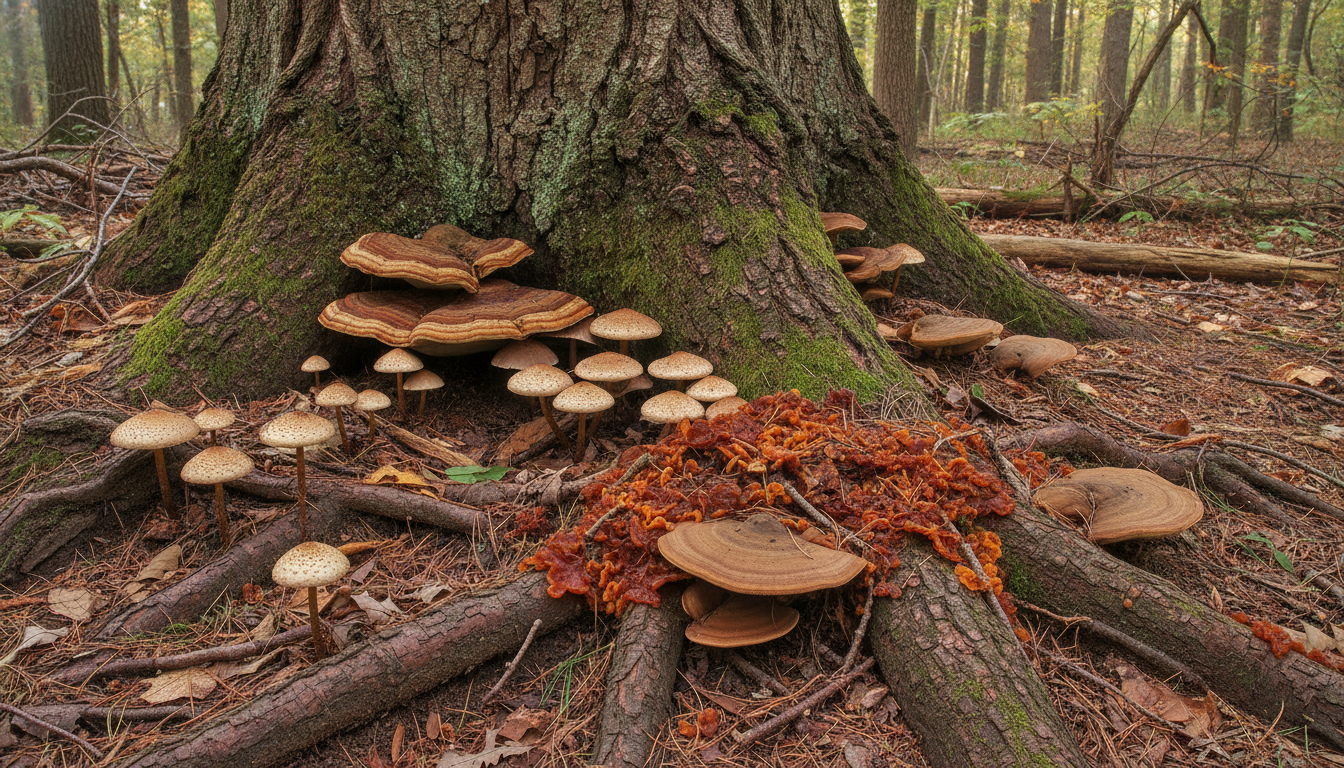
Trees are magnificent, resilient organisms, yet they are not immune to the challenges posed by nature. Among the most common threats to tree health are fungal infections, which can range from harmless decomposers to aggressive pathogens capable of causing significant damage or even death. Understanding and performing accurate tree fungus identification is a crucial skill for any homeowner, gardener, or nature enthusiast dedicated to preserving the vitality of our arboreal companions.
Fungi play a complex role in forest ecosystems. Some are beneficial, forming symbiotic relationships with tree roots that aid in nutrient absorption. Others are saprophytic, breaking down dead wood and returning vital nutrients to the soil. However, a significant number are parasitic, attacking living trees and causing various diseases that weaken their structure, impede growth, or lead to their demise. Early and accurate tree fungus identification can be the difference between saving a tree and losing it entirely.
This comprehensive guide will equip you with the knowledge needed to identify common tree fungi, understand their impact, and determine when professional intervention is necessary. We'll explore the visual cues, typical locations, and characteristic damage patterns associated with various fungal invaders. For those looking for an even easier way to identify these organisms, the Tree Identifier app offers a powerful tool, allowing you to simply snap a photo and receive instant identification, including many common fungi.
Why Is Tree Fungus Identification So Important?
The health of your trees directly impacts the safety and aesthetics of your property. Ignoring signs of fungal infection can lead to several serious consequences:
- Structural Weakness: Many fungi cause wood decay, hollowing out trunks and branches, making the tree prone to breakage, especially during storms. This poses a significant safety risk to people and property.
- Disease Spread: Fungal spores can easily spread from an infected tree to healthy ones, potentially leading to widespread issues across your landscape or even into neighboring properties.
- Economic Loss: Removing a large, diseased tree can be costly. Early detection and intervention can often prevent the need for expensive tree removal services.
- Ecosystem Impact: Healthy trees contribute to biodiversity, air quality, and local wildlife habitats. Preserving them helps maintain a balanced ecosystem.
- Aesthetic Decline: Diseased trees often look unhealthy, with discolored leaves, dying branches, and unsightly fungal growths, diminishing the beauty of your yard.
Types of Tree Fungi and Their Common Appearances
Fungi manifest in various forms, and recognizing these different structures is the first step in effective tree fungus identification.
1. Conks and Bracket Fungi (Polypores)
These are perhaps the most recognizable signs of internal wood decay. Conks are shelf-like or hoof-shaped growths that protrude directly from the tree trunk or branches. They are the fruiting bodies of fungi that typically cause white rot or brown rot inside the tree's woody tissues.
- Appearance: Hard, woody, leathery, or corky texture. Can be flat, shelf-like, or hoof-shaped. Colors vary widely, from white, gray, and brown to vibrant oranges and reds. The underside often has pores, not gills.
- Location: Primarily found on the trunk and larger branches, often at old wound sites or where branches have broken off.
- Impact: Indicates significant internal decay, weakening the tree's structural integrity.
2. Mushrooms (Gilled Fungi)
While many mushrooms grow in soil, some emerge directly from tree wood, particularly at the base of the trunk or from roots. These often belong to aggressive pathogens.
- Appearance: Typically have a cap and a stalk, with gills on the underside of the cap. Can be solitary or grow in large clusters.
- Location: Often found at the base of the tree, indicating root rot, or on logs and stumps.
- Impact: Mushrooms growing directly from living tree tissue, especially at the base, are strong indicators of root or butt rot, which can destabilize the tree.
3. Cankers
Cankers are localized, sunken, dead areas on stems, branches, or trunks. They are often caused by fungi that invade through wounds.
- Appearance: Sunken, discolored lesions, often with cracked bark or oozing sap. Can be circular, elongated, or irregular in shape.
- Location: Anywhere on the bark, from twigs to the main trunk.
- Impact: Can girdle branches or stems, cutting off nutrient and water flow, leading to dieback. Severe cankers on the main trunk can kill the tree.
4. Molds, Mildews, and Rusts
These are typically superficial fungi that affect leaves, young shoots, and sometimes fruit.
-
Appearance:
- Powdery Mildew: White, powdery patches on leaves and young stems.
- Sooty Mold: Black, soot-like coating on leaves, often associated with insect honeydew.
- Rusts: Small, orange, yellow, or reddish pustules on leaves, stems, or even cones.
- Location: Primarily on leaves and young growth.
- Impact: Usually aesthetic, but severe infections can weaken the tree, reduce photosynthesis, and stunt growth.
Key Features for Accurate Tree Fungus Identification
To accurately identify a tree fungus, you need to be a careful observer. Here are the critical features to consider:
-
Location on the Tree:
- Roots/Base: Fungi here often indicate root rot (e.g., Armillaria).
- Trunk: Conks or cankers on the main trunk suggest significant internal decay or disease (e.g., Ganoderma).
- Branches: Cankers or bracket fungi on branches can lead to branch dieback.
- Leaves/Twigs: Powdery mildew, sooty mold, or rusts typically affect foliage.
-
Appearance of the Fruiting Body:
- Shape: Shelf-like, hoof-shaped, mushroom (cap and stem), crust-like, spherical.
- Color: White, yellow, orange, brown, black, grey. Note any changes in color with age.
- Size: From tiny specks to large brackets spanning feet.
- Texture: Woody, leathery, soft, slimy, powdery, velvety, hairy.
- Underside: Gills (like typical mushrooms), pores (small holes, common in polypores), teeth, or smooth. This is a crucial detail for many identifications.
-
Growth Habit:
- Solitary or Clustered: Does it grow alone or in groups?
- Tiered: Are there multiple shelves growing one above the other?
- Spreading: Is it a crust-like growth spreading across the bark?
-
Host Tree Species:
Knowing the specific tree species is incredibly helpful, as many fungi have preferred hosts. For example, some fungi are common on oaks, while others might be found on maples or conifers. If you're unsure about your tree species, check out our guide on how to identify trees by leaf or learn more about specific species like the Alder tree. The Tree Identifier app can help you identify both the tree and the fungus!
- Seasonality: Some fungi are more prevalent at certain times of the year.
Common Tree Fungi and Their Impact: A Closer Look
Here's a table summarizing some frequently encountered tree fungi and their characteristics:
| Fungus Name | Common Appearance | Typical Location | Impact on Tree |
|---|---|---|---|
| Ganoderma spp. (Artist's Conk, Varnish Shelf) | Large, woody, shelf-like conks; often with a reddish-brown top and white underside. | Base of trunk, roots, sometimes higher on trunk. | Causes significant root and butt rot; weakens the tree structurally. |
| Armillaria mellea (Honey Fungus) | Clusters of honey-colored mushrooms with rings on stems; white fan-like mycelial mats under bark. | Base of trunk, roots, spreading through soil. | Aggressive root rot, can kill trees quickly; forms black rhizomorphs ('shoestrings'). |
| Laetiporus sulphureus (Chicken of the Woods) | Bright orange/yellow, shelf-like, overlapping brackets; soft and fleshy when young. | Trunks and branches of various hardwoods (oaks, cherries). | Causes brown cubical rot; can be edible, but indicates decay. |
| Fomes fomentarius (Tinder Fungus, Hoof Fungus) | Hard, hoof-shaped, greyish-brown conks with concentric growth rings. | Trunks of hardwoods (birch, beech). | Causes white rot; often on dead or severely weakened trees. |
| Phellinus igniarius (False Tinder Fungus) | Similar to Fomes, but usually darker, more rounded, and often cracked on top. | Trunks of hardwoods. | Causes white rot; very hard, perennial conk. |
| Pleurotus ostreatus (Oyster Mushroom) | Shelf-like, fan-shaped clusters of greyish-white to tan mushrooms with gills. | Dead or dying hardwoods (oaks, aspens). | Saprophytic, but can opportunistically attack weakened trees; causes white rot. |
| Sooty Mold | Black, powdery coating on leaves, resembling soot. | Leaves, especially where honeydew from aphids/scale insects is present. | Aesthetic damage; reduces photosynthesis if severe. |
| Powdery Mildew | White, flour-like patches on leaves, buds, and young shoots. | Leaves of various trees (oaks, maples, lilacs). | Reduces photosynthesis, can distort leaves; rarely fatal. |
It's important to remember that a single photograph may not always be enough for definitive tree fungus identification, especially for less common or newly emerging growths. Factors like the age of the fruiting body, environmental conditions, and the specific host tree can influence appearance. When in doubt, multiple angles and close-up shots are best, or consult with a professional.
When to Call an Arborist for Tree Fungus Identification
While basic tree fungus identification can be done by a keen observer, there are situations where professional help is not just recommended, but essential:
- Large or Numerous Fungal Growths: If you see many conks, large mushrooms, or extensive cankers, it often indicates significant internal decay or disease, warranting an expert assessment.
- Signs of Structural Weakness: Cracks in the trunk, leaning, dead branches, or general decline in tree vigor alongside fungal presence are red flags.
- Tree Proximity to Structures: If an infected tree is near your home, garage, driveway, or any area with high foot traffic, its potential failure poses a serious safety risk. An arborist can assess the risk and recommend mitigation.
- Rapid Decline: If your tree's health deteriorates quickly, with widespread leaf discoloration, wilting, or sudden branch dieback, a quick diagnosis is critical.
- Uncertain Identification: If you're unsure about the type of fungus or its potential impact, a certified arborist has the expertise to correctly identify the pathogen and recommend appropriate action.
- Treatment Beyond Basic Care: Many serious fungal diseases require specific treatments, pruning techniques, or even removal, which are best handled by professionals.
Arborists can use tools like resistographs or sonic tomography to assess internal decay that isn't visible from the outside, providing a comprehensive understanding of the tree's health and stability.
Using the Tree Identifier App for Fungus Identification
The Tree Identifier app simplifies the process of tree fungus identification. Designed with user-friendliness in mind, it leverages advanced image recognition technology to help you quickly identify various tree species and, importantly, many common fungi that affect them.
Here’s how it works:
- Snap a Photo: When you encounter a suspicious growth on a tree, simply open the app and take a clear picture of the fungus. Focus on its distinctive features – shape, color, texture, and how it's attached to the tree.
- Instant Analysis: The app's AI algorithms analyze your photo against a vast database of fungal species.
- Receive Identification: Within seconds, you'll receive a potential identification, often with detailed information about the fungus, its typical host trees, and its potential impact on tree health.
- Learn More: The app provides additional resources, helping you understand whether the fungus is harmful, benign, or indicates a serious underlying issue.
This tool is invaluable for quick checks in your backyard or during nature walks, empowering you with information that can guide your next steps in tree care.
Conclusion
Effective tree fungus identification is a vital component of responsible tree care and property management. By understanding the various forms fungi can take, observing their key characteristics, and recognizing the signs of potential danger, you can proactively protect your trees from severe damage and ensure the safety of your surroundings.
Remember, not all fungi are foes, but knowing which ones to monitor or address is crucial. Whether you're using detailed observation skills or leveraging the power of modern technology like the Tree Identifier app, your efforts in understanding tree health contribute significantly to a healthier, safer, and more beautiful environment. Don't hesitate to consult with a certified arborist when faced with complex or potentially dangerous fungal infections. Your trees will thank you for it!