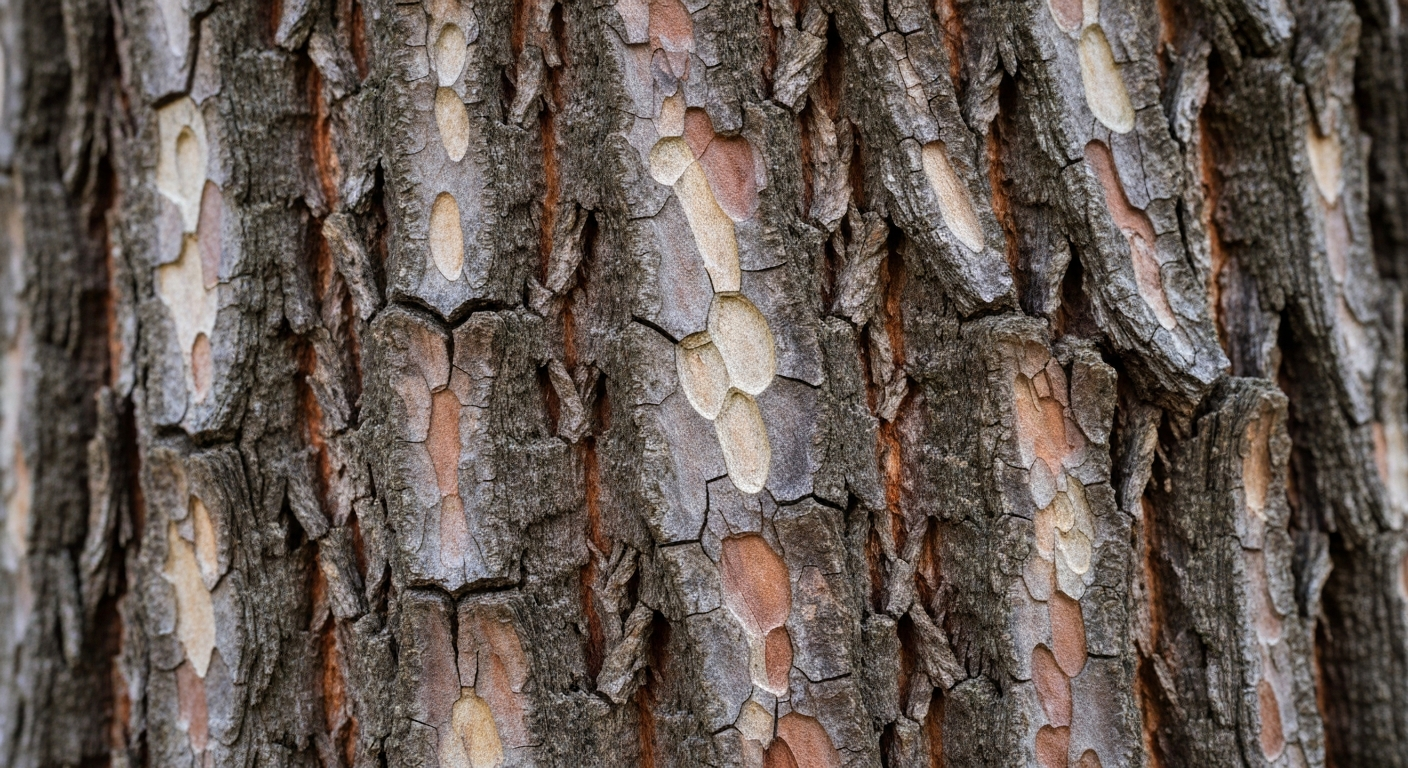
TL;DR: Wood identification starts with end grain — pore size and arrangement (ring-porous, diffuse-porous, or resin canals) name the genus faster than face grain alone. Add color, weight, scent, and hardness. On firewood, bark on unsplit rounds enables firewood identification by bark before you split. For american basswood identification, look for pale soft diffuse-porous wood with no odor. Photograph bark on standing or round logs with Tree Identifier, then confirm species on the split face.
🪵 Wood identification rule: end grain tells the truth — face grain shows figure, but pores and growth rings in the cross-section separate oak, maple, pine, and basswood.
Why wood identification matters
Wood identification serves carvers choosing basswood blocks, homeowners sorting a firewood delivery, woodworkers matching replacement lumber, and ecologists tracking storm-felled species. Unlike living tree ID where leaves and bark are accessible, lumber and split logs demand a different trait set — grain anatomy visible only on cut surfaces.
Search volume for wood identification reflects practical needs: Is this oak or ash in the stove? Is this pallet pine or poplar? Can I carve this found board? The same botanical families that define leaf ID define wood anatomy — you are reading the tree's vascular architecture in cross-section.
This guide covers field and workshop methods without requiring a microscope — though a 10x hand lens dramatically improves accuracy on end grain.
Core wood anatomy for identification
Three end-grain features drive most wood identification decisions:
Pore pattern (hardwoods)
Hardwood vessels appear as pores in end grain.
- Ring-porous: Large pores clustered in earlywood of each ring — oak, ash, elm, chestnut. A bold row of dots marks each annual ring.
- Diffuse-porous: Pores similar size throughout rings — maple, birch, poplar, basswood, cherry. Even texture without a pore row.
- Semi-ring-porous: Intermediate — walnut, some hickories show gradual pore transition.
Resin canals (softwoods)
Conifers lack pores; instead look for resin canals — small dark lines in end grain — and transition from earlywood ( wider, lighter) to latewood (narrower, darker) within each ring. Pine, spruce, fir, and cedar each show subtle differences in canal size and latewood proportion.
Rays
Rays are starch-conducting lines visible as flecks on quarter-sawn faces and as lines on end grain. Oak shows prominent wide rays ("fleck"); maple shows finer rays; basswood rays are very fine and inconspicuous.
See Tree Anatomy Glossary for xylem and phloem context that underlies these patterns.
Step-by-step wood identification workflow
- Observe the piece: Round log, split firewood, or milled board? Bark present?
- Bark pass (if available): Run firewood identification by bark on unsplit rounds — see section below.
- Cut or split: Expose fresh end grain. Weathered gray ends hide pore detail — shave or split a new surface.
- Hand lens on end grain: Ring-porous or diffuse-porous? Resin canals?
- Face grain: Color contrast heartwood vs sapwood, grain straightness, figure.
- Weight: Heft the piece — oak and hickory are heavy; pine and poplar are light.
- Scent: Fresh-cut oak smells tannic; pine smells resinous; basswood is neutral.
- Hardness: Fingernail test along grain.
- Confirm: Cross-check with species range and source context — yard tree vs commercial lumber grade stamp.
Firewood identification by bark
Bark is most useful on unsplit rounds and standing deadwood before seasoning checks the surface.
Birch: White to tan papery horizontal peeling strips. End grain diffuse-porous, faint pores.
Oak: Gray furrowed bark with blocky ridges on red oak group; tighter furrows on white oak. Ring-porous end grain with wide rays.
Hickory: Shagbark hickory has hanging shaggy plates — unmistakable. End grain semi-ring-porous, very hard.
Maple: Gray platy or furrowed bark depending on species. Diffuse-porous end grain; hard maple resists fingernail.
Ash: Diamond-pattern furrowed bark on mature trees. Ring-porous like oak but straighter grain and less heartwood color contrast.
Pine: Scaly plate bark with resin smell when scratched. End grain shows resin canals and distinct earlywood/latewood bands.
Sweetgum: Corky ridges on smaller branches; furrowed gray on trunk. Diffuse-porous hardwood — splits poorly compared to oak.
After splitting, bark identification becomes secondary — end grain confirms. Photograph bark on mystery rounds and run Tree Bark Identification before splitting if the log is still identifiable.
American basswood identification
American basswood (Tilia americana) — also called American linden — is a premier carving and turning wood. Basswood identification in a stack of pale boards:
Color: Cream to pale white heartwood and sapwood — minimal contrast. Among the lightest native hardwoods visually.
Grain: Straight, fine, even texture. Face grain looks almost featureless — no bold ray fleck like oak.
Weight: Light — a basswood board feels noticeably lighter than maple of the same size.
Hardness: Soft — fingernail dents easily along grain. Carvers call it "knife wood."
End grain: Diffuse-porous with very fine pores, growth rings often subtle. Rays extremely fine — hard to see without magnification.
Scent: Little to no odor when dry; fresh-cut may smell faintly sweet.
Bark on logs: Gray, deeply furrowed, rope-like ridges on mature trees — useful for american basswood identification on round firewood before splitting to pale soft wood.
European linden (Tilia cordata) lumber is similar; landscape plantings may produce yard wood matching basswood anatomy.
Common hardwood profiles
Oak (Quercus)
Ring-porous with prominent earlywood pore rows. Red oak group: open pores, pinkish tan heartwood. White oak group: pores often plugged with tyloses (whitish fill), heartwood gray-brown. Heavy, tannic scent. Wide ray flecks on quarter-sawn faces.
Maple (Acer)
Diffuse-porous, fine even pores. Hard maple: cream color, heavy, resists denting. Soft maple: slightly lighter weight, similar pores — separation requires experience or chemical tests beyond field ID.
Cherry (Prunus)
Diffuse-porous, pinkish brown heartwood darkening with light exposure. Fine straight grain, medium weight, faint almond scent when fresh.
Poplar / tuliptree (Liriodendron)
Diffuse-porous, pale greenish to yellow heartwood in tuliptree; poplar can be nearly white. Soft, light, used for paint-grade trim. Indistinct grain.
Walnut (Juglans)
Semi-ring-porous, rich chocolate brown heartwood, medium weight, distinctive scent. High-value furniture wood.
Hickory (Carya)
Semi-ring-porous to ring-porous, very hard and heavy, pale sapwood wide. Shagbark species identifiable from bark on logs.
Common softwood profiles
White pine (Pinus strobus)
Light weight, low latewood proportion, small resin canals, creamy color. Soft — fingernail dents deeply.
Yellow pine / southern pine group
Heavier, wide latewood bands, larger resin canals, stronger pine odor.
Spruce and fir
Similar to pine but resin canals smaller and less obvious; fir lacks resin canals in some species. Soft, light, construction framing stock. See species guides for living-tree needle ID.
Cedar (Thuja, Juniperus)
Pinkish to red-brown heartwood, aromatic scent, lightweight. Eastern red cedar heartwood is rot-resistant.
Face grain, figure, and lumber context
Face grain alone misleads — curly figure appears in maple and birch; quarter-sawn oak shows ray fleck mistaken for ash. Always pair face observation with end grain.
Commercial lumber may carry grade stamps (SPIB, NLGA) identifying species group but not always exact species. Reclaimed wood mixes species — end grain is essential.
Stained or painted wood defeats color ID — scrape a hidden edge to expose raw end grain.
Seasoning and weathering effects
Fresh-split wood shows true color and pores. Seasoned firewood darkens uniformly; bark sloughs off. UV grays all faces — end grain on a newly split piece from the interior of a round is the best sample.
Rot and stain fungi obscure patterns — cut below discolored zones when possible.
Safety and ethical notes
Never burn poison ivy vines mixed in firewood — urushiol in smoke causes lung irritation. Identify vines before bucking. Oleander and yew wood is toxic — rare in North American firewood but relevant for imported ornamental trim.
Do not harvest wood from protected trees — identification for curiosity on found material is fine; cutting requires permission.
Using Tree Identifier with wood
Tree Identifier excels on bark photos from standing trees and unsplit firewood rounds where bark is intact. It does not replace end-grain analysis for milled lumber.
Workflow: Photograph bark on each mystery log before splitting. Label splits with chalk matching app results. Split one round, examine end grain, confirm or correct the bark ID.
For living trees that will become lumber, standard leaf and bark photo ID names the species before the chainsaw runs — the best time for wood identification is when the tree still has leaves.
Wood identification is learnable anatomy — one hand lens and a split face turn a mystery stick into a named species.
Frequently asked questions
How do you identify wood tree species?
Identify wood tree species by examining end grain for pore pattern (ring-porous vs diffuse-porous), growth ring width, color of heartwood vs sapwood, weight in hand, and scent when fresh-cut. Bark on round logs adds genus-level clues. For milled lumber, ray flecks, grain figure, and hardness (fingernail test) separate oak, maple, ash, pine, and basswood. A hand lens on end grain is the single most powerful tool for wood identification.
How do you identify firewood by bark?
Firewood identification by bark works on unsplit rounds before seasoning. White papery peeling strips suggest birch. Deep furrows with blocky ridges suggest oak or black gum. Smooth gray bark may be beech or young maple. Shaggy hanging plates are shagbark hickory. Corky ridges on branches indicate sweetgum. Match bark to a living tree ID guide, then confirm after splitting by checking end-grain pores and scent.
What does basswood wood look like?
Basswood identification in lumber: very pale cream to white heartwood and sapwood with little contrast, straight fine grain, soft and lightweight, no noticeable odor when dry. End grain shows diffuse-porous fine pores with inconspicuous growth rings — similar to soft maple but lighter in weight. American basswood identification (Tilia americana) wood is favored for carving because it cuts cleanly and holds detail.
How do you tell oak from ash wood?
Oak end grain is ring-porous — large earlywood pores form a distinct row in each annual ring. Ash is ring-porous too but rays are more prominent and oak often shows wider color contrast between heartwood and sapwood on red oak. Ash splits straight with pronounced growth rings; oak grain is more varied. Oak smells slightly tannic when fresh; ash is mostly neutral. Both are heavy hardwoods.
Can you identify wood without cutting it?
Partially — bark, leaf litter under a standing dead tree, and adjacent living sprouts can suggest species on round firewood. Milled lumber requires at least one cut face to see end grain — the definitive feature. Bark alone on seasoned split firewood is unreliable because checks and weathering obscure patterns. Split one round to expose end grain for confirmation.
What is the fingernail hardness test for wood?
Press a fingernail into the wood face along the grain. Softwoods (pine, spruce, fir) dent easily. Basswood and poplar dent with moderate pressure. Hard maple and oak resist denting. The test separates carving woods from furniture hardwoods in the field but is not species-specific — combine with end-grain pore pattern for wood identification.
Can tree ID apps identify wood species?
Apps trained on bark and leaves work on standing trees and unsplit logs with bark intact. They generally cannot identify milled lumber from grain photos alone — end-grain macro photography is specialized. Photograph bark on firewood rounds before splitting and use Tree Identifier for genus-level match, then confirm with end-grain characteristics after splitting.
Try Tree Identifier — free on iPhone
Photograph bark on firewood rounds or standing trees before you split — identify the species first.
Download on the App Store