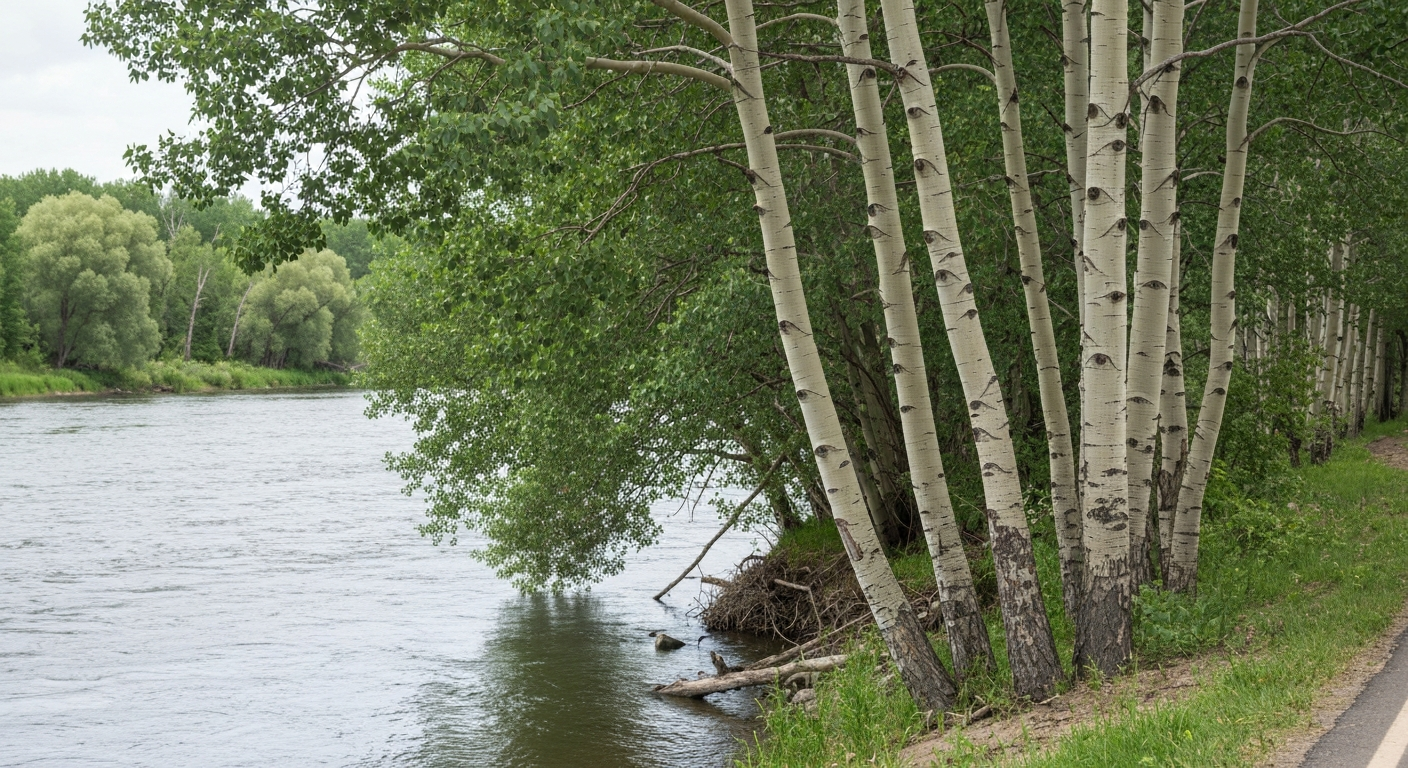
TL;DR: Birch tree identification hinges on bark first, then doubly serrate leaves and catkins. Paper birch peels chalky white in sheets; yellow birch is bronze-yellow with wintergreen-scented twigs; river birch peels in shaggy salmon layers; gray birch stays dull white without free peeling and shows black triangles under branches. All have alternate double-toothed leaves and dangling catkins. Aspen lookalikes have rounder trembling leaves and non-papery bark. Photograph bark and one full leaf, then confirm with the Tree Identifier app.
🟤 Birch bark identification rule of thumb: peels in white sheets = paper birch · bronze curls + wintergreen twig scent = yellow birch · shaggy salmon = river birch · dull white, non-peeling, black chevrons = gray birch.
Birch basics — genus Betula
Birches (Betula) are deciduous trees and large shrubs in the birch family (Betulaceae), related to alders, hop-hornbeams, and hazels. Across North America, birch tree identification usually means separating four widely encountered species: paper birch, yellow birch, river birch, and gray birch. Water birch and sweet birch appear regionally; the same bark-leaf-catkin framework applies.
Shared birch traits:
- Leaves: Alternate, simple, typically doubly serrate — each primary tooth bears smaller teeth.
- Catkins: Male catkins often visible in winter as slender dangling cylinders; female catkins are upright to spreading and shed winged nutlets.
- Bark: Horizontal lenticels; many species peel or mark dramatically — the heart of birch bark identification.
- Twigs: Slender; some species aromatic when scratched.
For leaf vocabulary (serrate, doubly serrate, petiole), see the tree anatomy glossary. For general leaf photo strategy, use the identify trees by leaf guide.
Paper birch tree identification
Paper birch (Betula papyrifera), also called white birch or canoe birch, is the iconic northern white-barked tree.
Bark: Bright chalky white on mature trunks, peeling in thin papery horizontal sheets. Inner bark layers may show pale orange. Do not strip living trees — peeling wounds them and is unnecessary for ID. Young paper birch bark starts dark reddish-brown before whitening.
Leaves: Ovate to triangular-ovate, 2 to 4 inches, doubly serrate, dull green above. Tips pointed; bases rounded to slightly heart-shaped or wedge-shaped.
Form: Medium tree, often single-trunked in forests; multi-stem clumps appear in open or planted settings.
Range: Across Canada and the northern US — New England, Great Lakes, Rockies, and Alaska. Prefers cool climates; struggles in hot southern lowlands.
Catkins: Classic dangling male catkins in spring; wind-pollinated like other birches.
When people search birch tree identify or birch tree id after a northern hike, paper birch is often the first match — but gray birch can fool you if you only glance at “white bark.”
Yellow birch identification
Yellow birch (Betula alleghaniensis) is a major northern hardwood forest tree, valuable for timber and maple-syrup country ecology.
Bark: Shiny bronze, yellowish-gray, or silver-bronze, peeling in thin tight curls rather than large white sheets. Older trunks become reddish-brown and plated. Horizontal lenticels remain visible on smoother areas.
Wintergreen scent: Scratch a twig or crush a young stem — yellow birch smells distinctly of wintergreen (methyl salicylate). Sweet birch (B. lenta) shares this scent; yellow birch’s curly bronze bark usually separates them where ranges overlap.
Leaves: Ovate, finely doubly serrate, 3 to 5 inches, with a more rounded outline than gray birch’s sharp triangle.
Form: Can become a large forest tree with a straight trunk.
Range: Northeast, Appalachians, and Great Lakes region — cooler moist forests.
Yellow birch rarely looks “white birch” from a distance. Birch tree identification in mixed northern hardwoods should always include a bark check and a twig sniff for wintergreen.
River birch identification
River birch (Betula nigra) is the heat-tolerant birch of the South and Midwest — and the most planted ornamental birch in US landscapes.
Bark: Dramatic peeling in thick, shaggy, cinnamon-to-salmon curls. Multi-colored patches of tan, brown, and cream create a textured trunk that landscapers love. Does not become chalky paper-white like paper birch.
Leaves: Rhombic-ovate (diamond-ovate), doubly serrate, glossy green, often with a wedge-shaped base.
Habitat: Native to floodplains, streambanks, and wet soils — hence “river” — but planted widely in yards far from water.
Range: Eastern and central US, farther south than paper birch.
Form: Often multi-trunked in cultivation; attractive peeling bark low on the stems.
If you see a peeling birch in a suburban Mid-Atlantic or Southern yard, river birch is the default birch tree identification answer until proven otherwise.
Gray birch identification
Gray birch (Betula populifolia) is a pioneer species of poor soils, burned sites, and abandoned fields in the Northeast.
Bark: Chalky white to gray but does not peel in free papery sheets like paper birch. Characteristic black triangular or chevron-shaped patches appear below branch bases — a textbook gray birch mark.
Leaves: Distinctly triangular with a long tapering tip — more “poplar-like” than other birches (the species name populifolia nods to that). Doubly serrate margins remain.
Form: Often multi-stemmed, smaller, shorter-lived than paper birch.
Range: Northeastern US and adjacent Canada.
Paper vs gray is the critical white-bark split in New England birch tree identification: peeling sheets vs non-peeling dull white with black triangles.
Identification birch tree leaves — a closer look
Leaf clues support bark when trunks are young or painted by lichen:
- Double serration: Run a finger along the margin — you should feel coarse teeth, each with finer notches.
- Arrangement: Always alternate on birches (not opposite).
- Shape spectrum: Gray birch most triangular; paper intermediate; yellow more ovate; river diamond-ovate.
- Fall color: Yellow to gold is common; not as red as maples or sumacs.
Pair leaf photos with bark whenever possible — identification birch tree leaves alone can confuse beginners with cherry, aspen, or hornbeam until margins and petioles are checked carefully. More foliage strategy: how to identify tree foliage.
Catkins — spring and winter cues
Male catkins on many birches form in fall and elongate in spring, dangling like soft spikes that release pollen. Female structures are smaller and produce winged seeds later. Catkins alone rarely give species ID, but they confirm you are in Betulaceae rather than a random white-barked lookalike. In winter, visible male catkins plus bark often finish birch tree id before leaves return.
Related reading for dangling spring structures: our catkin-focused posts and best photo for tree ID tips for capturing slender structures without blur.
Birch sapling identification
Birch sapling identification is harder because mature peeling patterns are incomplete.
- Check for horizontal lenticels even on dark young bark.
- Confirm doubly serrate leaves once foliage appears.
- Scratch twigs — wintergreen suggests yellow or sweet birch.
- River birch often shows early salmon peeling on young stems.
- Gray birch saplings already lean triangular in leaf outline.
Seedlings in nurseries may be labeled; wild saplings in mixed regeneration beds need patience and multiple cues. When asking what type of tree is this, include a sapling-wide shot plus a leaf close-up.
Birch vs aspen — the main lookalike
Quaking aspen (Populus tremuloides) and bigtooth aspen share pale bark with birch in northern landscapes and cause endless mix-ups.
Aspen leaves: Round to ovate with finely crenate (rounded) teeth — not sharply doubly serrate triangles. Petioles are flattened, so leaves tremble in light wind.
Aspen bark: Smooth pale green-white to cream with black scars, but it does not peel in papery birch sheets. Texture feels different up close.
Birch leaves: More triangular/ovate with double teeth; petioles not flattened like quaking aspen.
Ecology: Both colonize disturbed northern sites — habitat overlap is real.
If the leaf shivers on a flat stem and the bark does not peel papery-white, think aspen. If bark peels in sheets or bronze curls and teeth are double-sharp, think birch. Poplar relatives are covered further in our poplar tree guide and backyard context in common backyard trees.
Regional cheat sheet
- Boreal / northern New England / Canada: Paper and yellow birch dominate forests; gray on poor sites.
- Appalachians: Yellow birch in cool coves; paper at elevation northward.
- Midwest floodplains and southern yards: River birch native and planted.
- Suburban landscapes nationwide: River birch cultivars are the peeling “birch” you see far south of paper birch’s comfort zone.
Photographing birch for apps
Tree Identifier excels when birch bark fills part of the frame and a leaf shows the margin clearly. Avoid harsh noon glare on white bark — slight overcast or shade preserves lenticel detail. For gray vs paper, photograph the branch-base bark marks. Add a catkin shot in spring.
Birch tree identification becomes straightforward once you treat bark as the primary key and leaves as confirmation. Master the four common patterns — white sheets, bronze curls, salmon shag, and dull white with black chevrons — and you will rarely confuse birches with each other or with trembling aspens again.
Frequently asked questions
How do you identify a birch tree?
Birch tree identification combines bark, leaves, and catkins. Most birches have thin peeling or marked bark with horizontal lenticels, alternate simple leaves with doubly serrate (double-toothed) margins, and slender dangling male catkins. Paper birch is chalky white and peels in sheets; yellow birch has bronze-yellow bark that peels in thin curls and smells of wintergreen when twigs are scratched; river birch has salmon-tan peeling bark in shaggy layers; gray birch has chalky white non-peeling bark with black triangular patches below branches.
What does birch bark look like?
Birch bark identification is species-specific. Paper birch: bright white, peels in papery sheets. Yellow birch: shiny bronze to yellowish-gray, peels in thin curly strips. River birch: cinnamon to salmon, peels in thick shaggy curls — common in landscapes. Gray birch: dull white to gray, does not peel freely, marked with black chevrons at branch bases. All typically show horizontal lenticels (breathing pores).
How do you identify birch leaves?
Identification birch tree leaves: alternate, simple, typically ovate to triangular with a pointed tip and doubly serrate margins — each big tooth has smaller teeth. Paper and gray birch leaves are often more triangular; yellow birch more ovate with fine double teeth; river birch rhombic-ovate with double teeth. Aspen leaves are rounder with flatter teeth and tremble on flattened petioles — a key lookalike split.
What is the difference between paper birch and gray birch?
Paper birch (Betula papyrifera) has bright white bark that peels in large sheets and usually a single or few main trunks. Gray birch (Betula populifolia) has duller white bark that does not peel readily, prominent black triangular patches below branches, and often a multi-stemmed clump form on poor soils. Leaves of gray birch are distinctly triangular with a long tapering tip.
How do you identify a birch sapling?
Birch sapling identification uses young bark color, leaf shape, and twigs. Saplings may lack mature peeling sheets — look for horizontal lenticels, doubly serrate leaves, and slender twigs. Scratch yellow birch twigs for wintergreen scent. River birch saplings often show early salmon peeling. Gray birch saplings already show triangular leaves. Compare with aspen saplings, which have flatter petioles and rounder leaves.
How do you tell birch from aspen?
Aspens (Populus) have rounder leaves with finely crenate teeth, flattened petioles that make leaves tremble, and bark that is smooth pale green-white to gray but does not peel in papery birch sheets. Birch leaves are more triangular or ovate with doubly serrate margins; birch male catkins are slender and birch bark shows clear horizontal lenticels and species-specific peeling. Quaking aspen is the most common birch lookalike in the North.
Can a tree ID app identify birch?
Yes — birch tree id apps work best with a bark close-up plus a full leaf showing the double-toothed margin. Paper and river birch bark photos are especially distinctive. Include catkins in spring if present. Tree Identifier matches common North American birches reliably from clear bark and leaf shots.
Try Tree Identifier — free on iPhone
Photograph peeling bark and a double-toothed birch leaf to match paper, river, yellow, or gray birch in seconds.
Download on the App Store