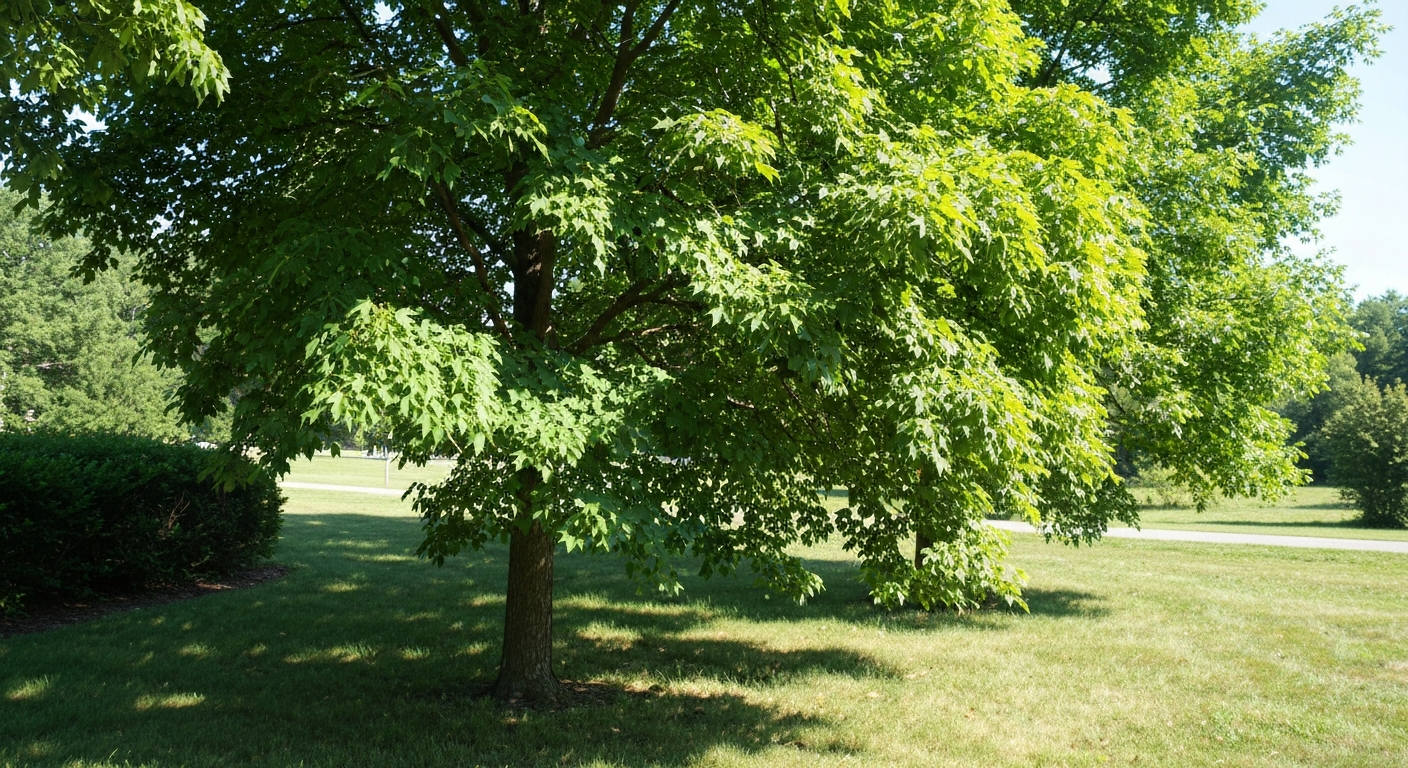
TL;DR: Box elder identification hinges on a paradox: Acer negundo is a true maple with opposite compound leaves — not the simple palmate leaves most maples show. Look for 3 to 7 coarsely toothed leaflets, paired V-shaped samaras, pale furrowed bark, and irregular multi-stemmed form. It mimics ash (also opposite compound) and three-leaflet forms mimic poison ivy — check samaras and opposite vs alternate stem arrangement. Confirm with the Tree Identifier app. See also our maple tree identification guide for typical Acer species.
🍃 Box elder identification surprise: compound leaves + opposite arrangement + maple samaras = Acer negundo. Ash has paddle samaras; poison ivy has alternate leaves.
What is box elder — name vs biology
Box elder (Acer negundo) carries one of the most misleading common names in North American trees. "Box" may reference weak box-like wood; "elder" suggests Sambucus elders — unrelated shrubs with opposite compound leaves and berry fruit. Botanically, box elder is a maple in genus Acer, family Sapindaceae.
Box elder identification trips up everyone who learned "maples have star-shaped lobed leaves." A. negundo broke that rule — it is the common maple with pinnately compound leaves, more like ash than sugar maple at first glance.
Range: Widespread across North America — floodplains, riverbanks, disturbed soil, shelterbelts, and weedy lots from Canada to Mexico. Fast-growing, short-lived, often ignored until box elder bugs invade a sunny wall in October.
Opposite compound leaves — the core character
Box elder leaf architecture defines box elder identification:
Arrangement: Leaves are opposite on the twig — two compound leaves per node, directly across from each other. This is maple arrangement, shared with ash but not with alternate-leaved trees.
Compound form: Pinnately compound — one petiole with 3, 5, or usually 5 to 7 leaflets (sometimes 9 on vigorous shoots). Leaflets are coarsely serrated, often with irregular lobes or extra teeth near the base — ash-like but messier.
Leaflet shape: Ovate to lance-shaped, 2 to 4 inches long, bright green above, paler below. Terminal leaflet often larger than lateral leaflets.
Three-leaflet shoots: Young growth or stressed branches may produce only three leaflets — the poison ivy confusion zone. Always check whether the compound leaf itself is opposite on the stem (box elder) or alternate (poison ivy).
Odor: Crushed leaves sometimes smell rank or unpleasant — not a universal field mark but memorable when present.
Photograph the twig showing two compound leaves emerging opposite each other. See Identify Trees by Leaf for opposite vs alternate diagrams.
Box elder samaras — proof it is a maple
Samaras settle box elder identification when foliage alone suggests ash.
Form: Paired maple samaras — two seeds with papery wings joined at the base. Wings spread in a V or wide U, smaller than sugar maple samaras.
Color and timing: Green ripening to tan-brown; hang in drooping clusters; mature in fall and spin to the ground.
Contrast with ash: Ash samaras are single paddles — one wing, not paired maple helicopters. A handful of fruit ends ash vs box elder debate instantly.
For samara terminology across maples, see acer tree identification and tree seed pods guide.
Bark, form, and winter ID
Box elder bark and silhouette support box elder identification when leaves are gone:
Bark: Pale gray to brown-gray, smooth on young stems becoming shallowly furrowed and ridged on older trunks. Not the tight diamond furrows of ash. Young bark may look almost greenish-gray.
Form: Irregular, often multi-trunked, leaning, asymmetrical crown — "weed tree" architecture on disturbed sites. Can reach 50 to 60 feet but often shorter and broken-topped.
Buds: Opposite, small, conical — maple buds, not the large sooty black buds of ash.
Winter twigs: Opposite leaf scars; bundle scars within the scar pattern differ from ash — advanced character. Photograph buds in late winter for app ID.
For bark methods, see Tree Bark Identification App Guide.
Box elder vs ash — the main lookalike
Ash (Fraxinus) and box elder share opposite compound leaves — the classic box elder identification challenge.
| Feature | Box elder (Acer negundo) | Ash (Fraxinus) |
|---|---|---|
| Leaflets | 3–7, coarsely toothed, may be lobed | 5–11, oval, fine teeth, no lobes |
| Fruit | Paired V-shaped maple samaras | Single paddle samaras in clusters |
| Bark (mature) | Pale, shallow furrows | Tight diamond ridges, gray |
| Buds | Small, pale maple buds | Large, often dark terminal bud |
| Branching | Irregular, messy | Stouter, more upright on forest trees |
When in doubt, find fruit or photograph buds. Ash decline from emerald ash borer makes correct ID ecologically relevant — do not remove a maple thinking it is dying ash without samara check.
Box elder vs poison ivy — safety-critical confusion
Three-leaflet box elder shoots resemble poison ivy (Toxicodendron radicans). Box elder identification here is a safety skill.
Box elder: Woody tree or shrub with opposite compound leaves on the stem. Leaflets attach to one rachis; the whole compound leaf is opposite its partner across the twig. No urushiol rash from box elder itself.
Poison ivy: Vine, shrub, or ground cover with alternate leaves — one compound leaf per node, not opposite pairs. Famous "leaves of three" on an alternate stem. Causes dermatitis.
Field rule: Stand back and photograph the stem where leaves attach. Opposite pairs of compound leaves = box elder or other opposite tree (elderberry, staghorn sumac has toothed leaflets on pinnate leaves but alternate on some sumacs — sumac is alternate). Poison ivy = alternate.
Never touch a three-leaflet plant for a close-up until arrangement is confirmed through zoom or stick test from a distance.
Box elder bugs — a living ID clue
Box elder bugs (Boisea trivittata) are half-inch insects with red edges on a black body. Adults and nymphs feed on box elder seeds, leaves, and flowers — occasionally on other maples.
In fall, they congregate on warm south-facing walls, windowsills, and siding — often hundreds at once. Homeowners discover box elder identification through bug invasions, not botany class.
Bug presence strongly suggests a nearby Acer negundo — search the yard for the irregular pale-barked tree shedding samaras. Bugs do not prove ash.
Ecology and why box elder persists
Box elder thrives where other trees struggle — flooded soil, compacted fill, drought after establishment. Fast growth, abundant seed, and tolerance of disturbance make it a pioneer species on riverbanks and construction sites.
It is weak-wooded — branches break in ice and wind. Landscapers rarely plant it deliberately except in windbreaks and reclamation. Female trees produce heavy seed crops; some municipalities consider it a nuisance weed.
Ecologically, box elder supports box elder bugs (harmless to structures mostly), birds eating samaras, and early pollen for bees. Box elder identification on restoration sites marks recent disturbance or wet soil.
Cultivars and regional variation
Wild box elder is green-leaved; horticulture selected variants:
'Variegatum': White-margined leaflets — ornamental but reverts.
'Flamingo': Pink new growth — landscape curiosity.
Acer negundo subspecies and varieties: Western populations may show finer leaflets; Arizona box elder forms exist in the Southwest. Box elder identification at subspecies level needs range maps; genus-level ID uses compound opposite leaves plus samaras regardless.
Box elder in the maple family context
Box elder is not an evolutionary outlier floating alone — it is a maple that retained compound leaves while most Acer shifted to simple palmate blades. Molecular phylogeny places A. negundo in Acer section Negundo, distinct from sugar maple and red maple clades.
For typical maple ID — simple opposite palmate leaves — use how to identify maple tree. Box elder is the exception you memorize once, then recognize everywhere on floodplains.
Seedlings show opposite compound true leaves early — see seedling identification for juvenile characters.
Using Tree Identifier for box elder
Tree Identifier recognizes box elder from compound leaf and samara photos.
Best photos: Twig with two opposite compound leaves clearly visible. Samara cluster in fall. Avoid three-leaflet-only close-ups without stem context — app and human both need arrangement.
Ash confusion: Add samara or bud photo if app returns ash — paired samaras flip the result to Acer negundo.
Poison ivy safety: Use zoom; do not hand-hold leaves on ambiguous three-leaflet shoots until opposite arrangement is confirmed.
Box elder identification rewards checking fruit and stem architecture — the maple that disguises itself as something else until samaras give it away.
Frequently asked questions
How do you identify box elder?
Identify box elder (Acer negundo) by opposite compound leaves with 3 to 7 leaflets — unusual for a maple — and paired V-shaped samaras. Bark is pale gray-brown, often furrowed on older trees. Form is irregular, often multi-stemmed. Crushed leaves may smell unpleasant. It is a true maple (Acer) despite compound leaves, not an ash or elder.
Is box elder a maple tree?
Yes. Box elder is Acer negundo — a maple species with compound leaves instead of the typical simple palmate maple leaf. It produces maple samaras and has opposite bud arrangement. The name box elder is misleading; elder (Sambucus) is an unrelated shrub. Box elder belongs in maple identification guides.
How do you tell box elder from ash?
Both have opposite compound leaves, but box elder leaflets are often coarsely toothed or lobed and may have a slight maple scent or unpleasant odor when crushed. Ash leaflets are usually oval with fine teeth and no lobes. Box elder produces paired maple samaras; ash produces single paddle-shaped samaras. Box elder bark is lighter and may be warty on young stems; ash bark is tight furrowed diamond pattern on mature trees.
Can box elder be confused with poison ivy?
Yes, when box elder has three leaflets it resembles poison ivy — both can show three-part compound leaves. Box elder is a woody tree or shrub with opposite leaves on the stem; poison ivy is a vine or low shrub with alternate leaves. Box elder has opposite leaflet arrangement on opposite compound leaves; poison ivy leaflets are alternate on the rachis. Never touch ambiguous three-leaflet plants without checking leaf arrangement on the main stem.
What do box elder samaras look like?
Box elder samaras are paired, small, with wings spreading in a V or U shape — classic maple helicopter seeds but smaller than sugar maple. They hang in clusters and ripen in fall. Samaras confirm box elder as a maple even when leaflets look ash-like.
What are box elder bugs?
Box elder bugs (Boisea trivittata) are red-and-black insects that feed on box elder seeds and congregate on sunny walls in fall. Their presence on or near a tree is a strong box elder identification clue — they rarely infest ash or maple species other than Acer negundo and occasionally other maples.
Can tree ID apps identify box elder?
Yes, when photos show compound leaves with opposite arrangement or samaras. Apps may confuse box elder with ash without samara or bud photos. Tree Identifier recognizes Acer negundo from foliage and fruit across its wide North American range.
Try Tree Identifier — free on iPhone
Photograph box elder leaves or samaras and confirm Acer negundo in seconds.
Download on the App Store