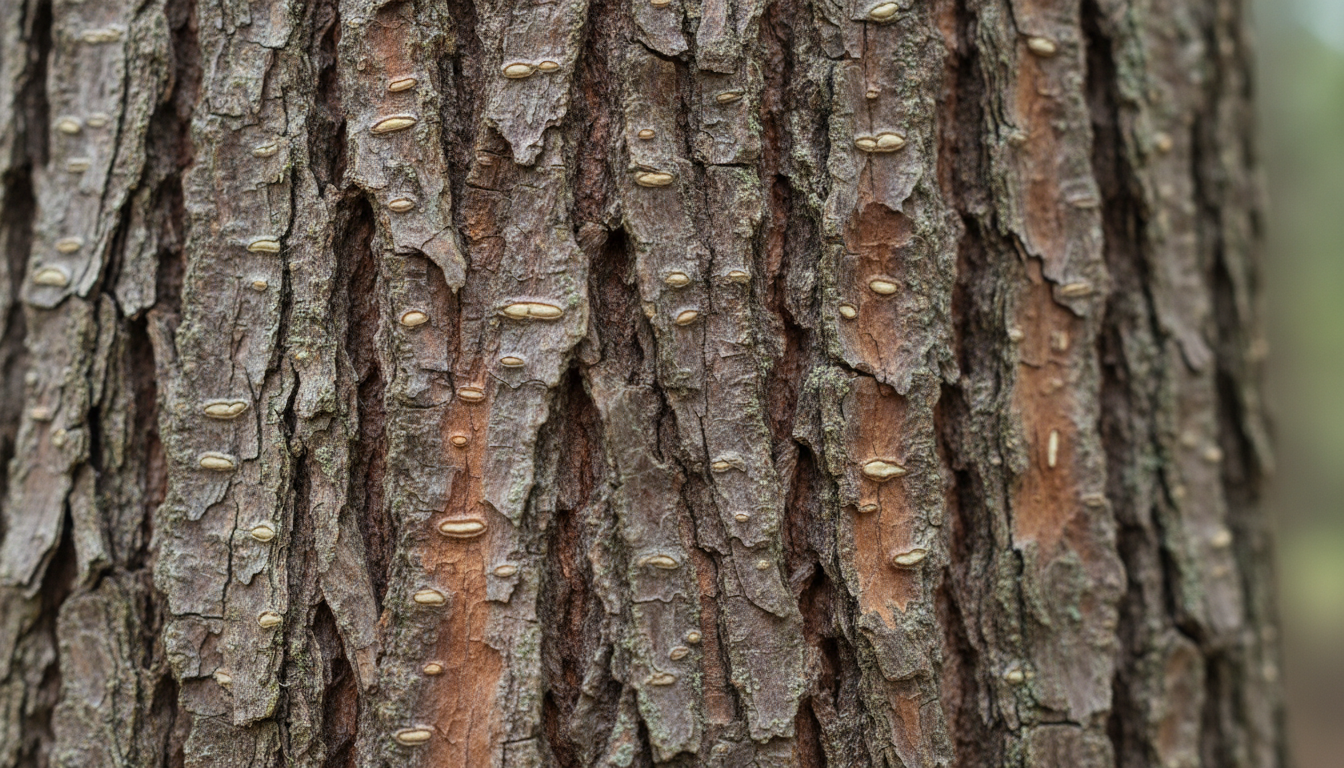
TL;DR: Hackberry identification rests on warty, corky bark ridges on gray trunks, simple leaves with an asymmetrical base and three veins rising from the leaf attachment, and small round purple-black berries in fall. Common hackberry (Celtis occidentalis) is a tough street and floodplain tree across eastern and central North America. It is often confused with elm — separate them by fruit (fleshy berry vs flat winged samara) and by hackberry bark identification characters. Photograph bark and a full leaf, then confirm with the Tree Identifier app.
🟤 Fast hackberry tree identification: gray bark with corky warts or ridges + leaf base that is uneven left-to-right + tiny purple berries. If fruit is a flat winged disc, you likely have elm — not hackberry.
Understanding hackberry — genus Celtis
Hackberries belong to genus Celtis, once placed with elms in Ulmaceae and now often treated in Cannabaceae (the hemp family) based on genetic work. Field observers still compare them constantly with elms because leaf shape overlaps. Common hackberry (Celtis occidentalis) is the primary species for hackberry identification east of the Rockies.
Growth form is a medium to large deciduous tree — often 40 to 60 feet in open sites, taller on rich floodplains — with a rounded or irregular crown and slender zigzag twigs. Urban foresters plant hackberry for drought tolerance, salt and wind resistance, and wildlife value. That means hackberry tree identification is as much a backyard skill as a bottomland woods skill. See also 10 Most Common Backyard Trees in the US for other frequent yard species.
Key genus-level traits:
- Leaves: Simple, alternate, ovate to lance-ovate, toothed, often rough above, with a conspicuously asymmetrical base.
- Venation: Three primary veins diverge from the leaf base — a strong Celtis character.
- Bark: Gray with corky warts, knobs, or ridges — the signature of hackberry bark identification.
- Fruit: Small spherical drupes ripening purple to blackish, solitary or few on slender stalks.
- Twigs: Slender, zigzag; pith often chambered or discontinuous when sliced carefully.
Other North American relatives include sugarberry (Celtis laevigata) in the South and netleaf hackberry (Celtis reticulata) in the West. This guide focuses on common hackberry while noting where those species diverge.
Hackberry bark identification
Bark is the character that makes hackberry famous. If you learn only one winter trait, learn this.
Young and middle-aged trunks: Relatively smooth gray bark broken by scattered corky projections — wart-like bumps that can elongate into irregular ridges. Press gently: cork feels spongy compared with hard elm bark plates.
Mature trunks: Deeper furrows and ridges develop, but corky texture often persists between furrows or on upper limbs. The overall look is "bumpy gray" rather than "tight diamond furrows" of some ashes or "blocky plates" of mature black cherry.
What bark is not: Hackberry does not shed large mottled plates like sycamore. It does not peel in paper curls like birch. Corky wings on young twigs of sweetgum are a different structure in a different place — do not confuse sweetgum twig wings with trunk warts of hackberry.
Hackberry bark identification works year-round and is often enough for a confident genus call on street trees. Photograph a trunk section in raking light so warts cast small shadows — that photo style helps apps and human keys alike. Tips in Best Photo for Tree ID cover bark framing.
Hackberry leaf characters
Leaves seal the ID when bark is ambiguous on very old or damaged trunks.
Shape: Ovate to oblong-lanceolate, typically 2 to 5 inches long, tapering to a long tip (acuminate apex).
Base: Strongly asymmetrical — one side of the leaf base meets the petiole higher than the other. This uneven base is shared with many elms, so it is necessary but not sufficient for hackberry identification.
Margin: Single-toothed to irregularly toothed; teeth may be coarser toward the tip.
Surface: Often sandpapery or slightly scabrous above; underside paler with raised veins.
Three basal veins: Stand a leaf in good light and look at the petiole attachment. Three strong veins diverge from the base — unlike the single midrib-dominated pattern of most elms. This venation cue is one of the best leaf splits for hackberry tree identification vs elm.
Photograph one full leaf flat against a notebook, including the base. Leaf-first methods are covered in Identify Trees by Leaf and Tree Foliage Identification Guide.
Berries and seasonal clues
Fruit turns hackberry identification from "probable" to "certain."
Appearance: Round drupes about 1/4 to 3/8 inch wide, ripening from green to orange-red to deep purple or nearly black. Flesh is thin over a hard stone; stalks are slender.
Timing: Late summer into fall; fruit often persists into winter and feeds birds — cedar waxwings and robins strip trees quickly in some years.
Arrangement: Usually solitary or in small numbers in leaf axils — not long grape-like clusters, not dense elderberry umbels.
If you see purple berries on a tree with corky warty bark, you almost certainly have hackberry. If you see flat papery winged seeds (samaras), rethink elm. That fruit contrast is the cleanest summer/fall separation.
Hackberry vs elm — the main lookalike
Elm confusion drives most mis-IDs. Both can be urban trees with asymmetrical leaf bases and toothed margins. Use a checklist:
- Bark: Hackberry = corky warts/ridges on gray. American elm = diamond-pattern furrowed bark without corky warts. Siberian and other elms vary but lack classic hackberry cork knobs.
- Leaf veins: Hackberry = three basal veins. Elm = pinnate side veins off one midrib, often with parallel ladder-like spacing.
- Fruit: Hackberry = fleshy purple drupe. Elm = flat winged samara, often notched.
- Disease context: Dutch elm disease shaped elm canopies for decades; hackberry remains common where elms declined — but presence alone is not an ID character.
For dedicated elm characters — samaras, vase shape, leaf doubly serrate margins — see How to Identify Elm Tree. When both species grow on the same street, bark-first hackberry bark identification prevents mix-ups.
Related Celtis species
Sugarberry (Celtis laevigata)
Southern and southeastern relative with narrower, often smoother, less harshly toothed leaves and bark that may be less dramatically warty. Fruit similar. If you are on the Gulf Coast or southern Atlantic plain, consider sugarberry when leaves look "cleaner" and thinner than Midwestern common hackberry.
Netleaf hackberry (Celtis reticulata)
Western species of canyons and dry slopes with strongly netted vein patterns on smaller, thicker leaves. Bark still corky. Hackberry identification in the Intermountain West often points here rather than C. occidentalis.
Dwarf or thicket hackberries
Several shrubby Celtis taxa form thickets on limestone or dunes. Use shrub vs tree habit plus local floras; for woody shrubs generally, see Shrub Identification Guide.
Habitat, form, and urban clues
Common hackberry likes:
- Floodplain woods and river terraces
- Limestone-derived soils and dry uplands
- City streets, parking-lot islands, and windy yards
Form is often irregular — not the classic American elm vase. Branches can be crooked; witches'-broom clusters of dense twigs appear on some trees (often associated with powdery mildew or mites) and are a frequent visual tag once you know the species, though not required for ID.
Hackberry is a wildlife tree: fruit for birds, leaves for butterfly larvae (including hackberry emperors), and cavity potential in older wood. That ecological role does not change the ID characters, but it explains why the species is kept in urban plantings.
Winter and twig characters
Without leaves, lean on bark and buds:
Buds: Small, triangular, pressed against the twig; not large and valvate like magnolia.
Twig zigzag: Alternate leaves leave a slight zigzag outline on fine twigs.
Persistent fruit: Dark dried drupes may cling into winter — a gift for hackberry tree identification after leaf drop.
Pith: Chambered or interrupted pith is a technical character used in keys; do not destroy street trees to check it — use bark and any remaining fruit instead.
Anatomy terms (drupe, samara, alternate, asymmetrical base) are defined in the Tree Anatomy Glossary.
Step-by-step hackberry identification
- Scan the trunk: Gray bark with corky warts or ridges? Strong yes for Celtis.
- Check a leaf base: Uneven left-to-right attachment plus three basal veins?
- Feel the leaf surface: Often slightly rough above.
- Seek fruit: Small purple-black round berries vs elm samaras.
- Note region: Midwest/Northeast/Plains → likely common hackberry; Deep South → consider sugarberry; arid West → netleaf.
- Compare elm: If still unsure, photograph fruit type — berry vs winged seed ends the debate.
If you only have a blurry whole-tree shot, ask What Type of Tree Is This? style follow-ups and get a bark close-up before deciding.
Using Tree Identifier for hackberry
Tree Identifier recognizes common hackberry reliably when corky bark or fruit is visible.
Best photos: Trunk bark filling the frame so warts are obvious. One full leaf including the asymmetrical base. One cluster or solitary berry if present. Avoid photos of only distant canopy — elm and hackberry silhouettes overlap.
App tips: Submit bark + leaf together when possible. If the first result is elm, check whether your bark photo actually shows corky projections; a second bark shot in side light often flips the match to hackberry.
Hackberry identification rewards bark literacy. Once corky warts, three basal veins, and purple drupes click together, Celtis occidentalis becomes one of the easiest urban trees to name — and one of the easiest to separate from elm.
Frequently asked questions
How do you identify a hackberry tree?
Hackberry identification uses three strong characters together: bark with corky warts or ridges on a gray background, simple leaves with an asymmetrical (uneven) base and three main veins from the leaf base, and small round purple-black berries on short stalks in fall. Common hackberry (Celtis occidentalis) is a medium to large deciduous tree of eastern and central North America. Twigs are slender; the crown is often rounded and irregular. Once you learn hackberry bark identification, winter recognition is reliable even without leaves.
What does hackberry bark look like?
Hackberry bark identification focuses on distinctive corky projections — warty bumps, ridges, or irregular cork plates — scattered over otherwise smoothish gray bark on young and middle-aged trunks. Older trees develop deeper furrows but often keep corky texture. The bark does not peel in large sheets like sycamore or paper birch. If a gray urban tree has bumpy cork ridges that feel spongy when pressed, suspect hackberry before elm.
How do hackberry leaves differ from elm?
Both hackberry and elm can have asymmetrical leaf bases and toothed margins, which causes confusion. Hackberry leaves typically show three prominent veins arising from the base (palmate-like venation at the base), a long tapering tip, and a sandpapery or slightly rough upper surface on many trees. Elm leaves also have uneven bases but usually a single strong midrib with parallel side veins and often a more doubly toothed margin. Elm fruit is a flat winged samara; hackberry fruit is a fleshy berry. Fruit type settles hackberry tree identification vs elm when both are present.
Are hackberry berries edible?
Common hackberry berries (drupes) are thin-fleshed, sweet when ripe, and historically eaten, but this guide is for identification — not foraging advice. Confirm positive hackberry identification first, harvest only from clean sites if you choose to research food uses elsewhere, and never assume every purple berry on a similar leaf is safe. Birds relish the fruit; that is a field clue, not a permission slip to eat unknown berries.
Where do hackberry trees grow?
Common hackberry (Celtis occidentalis) ranges across much of the eastern and central United States into southern Canada — floodplains, limestone soils, urban streets, and fence rows. It tolerates drought, wind, and city conditions, so hackberry tree identification is a frequent backyard and street-tree skill. Related species such as sugarberry (Celtis laevigata) occur farther south and east with smoother leaves and less warty bark.
What are the corky ridges on hackberry?
The corky warts and ridges are normal bark development — not a disease. They start as small raised bumps and can elongate into irregular corky ridges on the trunk and larger limbs. Hackberry bark identification in winter often relies entirely on these cork features plus the overall gray tone. Similar corky wings appear on sweetgum twigs, but sweetgum wings are on young twigs, not the mature trunk pattern of hackberry.
Can tree ID apps identify hackberry?
Yes. Tree Identifier recognizes common hackberry from bark close-ups showing corky warts, from leaf photos that capture the uneven base and tip, and from berry clusters in fall. Best results combine two photos — bark plus leaf or bark plus fruit — because elm lookalikes share leaf asymmetry. Hackberry identification confidence rises sharply when the app sees the warty bark character.
Try Tree Identifier — free on iPhone
Photograph hackberry bark, leaves, or berries and get a species match in seconds.
Download on the App Store