TL;DR: Pecan tree identification centers on Carya illinoinensis — a large hickory with pinnately compound leaves bearing 9 to 17 curved (falcate) lanceolate leaflets, oval thin-shelled nuts in fall, and gray ridged bark. Pecan is both a native bottomland tree of the central and southern US and a major orchard crop. Identifying pecan trees means separating pecan from shagbark hickory, bitternut hickory, and walnut by leaflet count, curvature, bud color, and nut shape. Photograph a full compound leaf, fallen nuts, or bark and confirm with the Tree Identifier app.
🥜 Pecan leaf identification shortcut: count 9 to 17 leaflets and look for the sickle curve on each leaflet — falcon-wing profile is pecan's best foliar character.
Pecan in the hickory family
Pecan is a hickory — genus Carya, walnut family (Juglandaceae). It is North America's most economically important native nut tree, domesticated from wild bottomland populations into global orchards.
Pecan shares the hickory blueprint:
- Leaves: Pinnately compound, alternate, large.
- Nuts: True nuts enclosed in a green husk that splits at maturity.
- Buds: Large terminal buds with overlapping scales — color helps split species.
- Wood: Hard, dense, pale — valued for smoking and furniture.
- Habitat: Native forms favor river floodplains; cultivars tolerate managed orchard soils.
For the broader nut-tree context, see How to Identify Nut Trees — pecan is the flagship southern hickory in that guide.
Pecan tree identification — overall characters
Carya illinoinensis grows 70 to 100 feet in the wild, often with a straight trunk and spreading crown in open bottomlands. Orchard trees are trained shorter for harvest.
Leaves: 12 to 20 inches long, pinnately compound with 9 to 17 leaflets (typically 11 to 13). Leaflets are lanceolate, long-acuminate, finely serrated, and distinctly curved or falcate — the outer edge bows like a scimitar.
Nuts: Oval to oblong, pointed at ends, thin shell relative to other hickories. Clusters of 3 to 11 nuts common on cultivated trees.
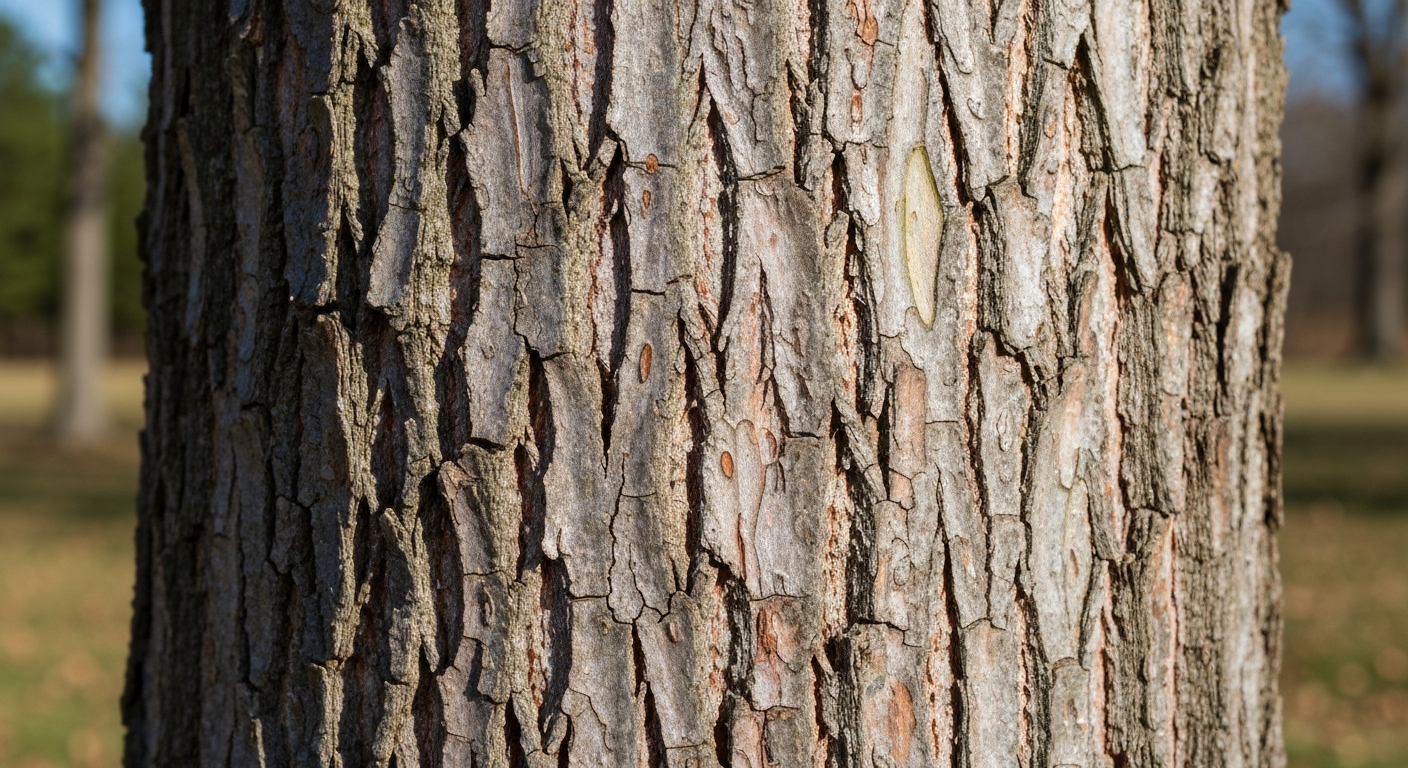
Bark: Gray-brown, interlacing ridges; may become slightly shaggy on very old wild trees but never the long exfoliating plates of shagbark hickory.
Form: Tall straight trunk on floodplain veterans; orchard form is shorter with scaffold branches.
Pecan leaf identification in detail
Pecan leaf identification is the year-round character when nuts are absent.
- Count leaflets: 9 to 17 — more than shagbark hickory (usually 5) or shellbark (usually 7).
- Curve test: Hold a leaflet profile — pecan leaflets bend along the long axis. Bitternut leaflets are straighter.
- Margin: Fine sharp teeth — not entire.
- Rachis: Leaf stem may be slightly hairy; leaflet attachment alternate with one terminal leaflet.
- Size: Individual leaflets 4 to 7 inches long, narrower than walnut leaflets.
- Fall: Yellow to brown; leaves drop in autumn exposing large buds.
Photograph one entire compound leaf laid on pavement — full rachis visible for leaflet counting. See Identify Trees by Leaf for compound-leaf photography.
Pecan nut identification
Pecan nut identification peaks in September through November when husks split and nuts fall.
Immature fruit: Green oval husks in clusters at branch tips — husk is thin relative to walnut.
Ripe husk: Splits into four valves, dries brown, releases nut.
Nut shell: Smooth brown, oblong, pointed at both ends — pecan silhouette is elongated, not round like a hickory pignut.
Kernel: Two-lobed edible seed with convoluted surface — commercial grade varies by cultivar.
Wild vs cultivated: Wild river-bottom pecans are smaller; orchard 'Desirable' and 'Pawnee' types produce large uniform nuts.
Collect nuts with husks attached for photos — husk splitting pattern confirms hickory family and narrows to pecan vs walnut (walnut husks are thicker and rounder).
Bark and winter characters
Winter pecan tree identification uses bark, buds, and silhouette when leaves are gone.
Bark: Gray, ridged and furrowed in a diamond-ish pattern on mature trunks. Not chalky white like birch, not shaggy-plate like shagbark hickory.
Buds: Large, ovoid, with multiple scales — pecan buds are brown, not sulfur-yellow like bitternut hickory.
Twigs: Stout, gray-brown, may show three-lobed leaf scar — monkey-face pattern common in Juglandaceae.
Silhouette: Tall open crown on wild trees; orchard rows are unmistakable in agricultural regions.
For bark photo technique, see Tree Bark Identification App Guide.
Pecan vs other hickories
Shagbark hickory (Carya ovata)
Five leaflets (sometimes 7), straighter wider leaflets, bark with long hanging shaggy plates peeling outward. Nuts rounder, thick-shelled. Upland and mixed forest — less strictly bottomland than pecan.
Shellbark hickory (Carya laciniosa)
Usually 7 large leaflets, shaggy bark like shagbark but scales tighter. Swampy bottomlands — overlaps pecan habitat. Leaflets fewer and larger than pecan.
Bitternut hickory (Carya cordiformis)
7 to 9 leaflets, sulfur-yellow buds — instant ID in winter. Nuts bitter, thin-shelled but rounder than pecan. Common upland hickory.
Water hickory (Carya aquatica)
Southern bottomland specialist; 7 to 9 narrow leaflets; bitter nuts. Shares wetland habitat with pecan — leaflet count and nut bitterness split them.
Pecan tree identification in hickory country requires leaflet count plus curvature plus nut shape — two of three usually suffice.
Pecan vs walnut
Black walnut (Juglans nigra) has fewer leaflets (11 to 23 but wider and not falcate), thick round husks that stain fingers black, and dark deeply furrowed bark. Butternut has sticky hairy twigs and oblong sticky fruit. Pecan leaflets are more numerous, narrower, and curved; pecan husks split cleanly without black stain.
Native range and orchards
Wild pecan identification context:
Native range: Mississippi River basin and southern river systems — Iowa to Indiana south to Texas, Mexico, and Gulf states.
Habitat: Deep rich moist soil on floodplains — often with sycamore, cottonwood, and oak.
Orchards: Georgia, Texas, New Mexico, Arizona, and other states grow pecan commercially far outside native range — geometric rows are a habitat clue.
Cultivars: Grafted trees may show sudden trunk diameter change at graft union — orchard clue, not wild.
Link floodplain neighbors: Cottonwood Tree Identification often shares riparian zones with pecan — different leaves, same moisture.
Using Tree Identifier for pecan
Tree Identifier recognizes pecan from compound leaf, nut, and bark photos across orchard and native ranges.
Best photos: Full compound leaf showing all leaflets and curvature. Fallen nut with split husk. Terminal bud close-up in winter.
Challenges: Leaf-only photos may return generic hickory — include leaflet count by capturing entire rachis.
Orchard context: Row planting and graft unions support pecan over wild hickory in ambiguous cases.
Pecan tree identification pays off in fall when nuts litter the ground — one curved leaflet and one oval nut confirm America's native dessert hickory.
Frequently asked questions
How do you identify a pecan tree?
Identify pecan (Carya illinoinensis) by pinnately compound leaves with 9 to 17 curved lanceolate leaflets — leaflets bend like a falcon's wing in profile. Nuts are oval, thin-shelled, in clusters of 3 to 11. Bark is gray and may become slightly shaggy on mature trees but less than shagbark hickory. Pecan is a large bottomland tree native to the South and planted in orchards nationwide.
What do pecan leaves look like?
Pecan leaves are pinnately compound, 12 to 20 inches long, with 9 to 17 leaflets per leaf. Each leaflet is lance-shaped, long-pointed, finely serrated, and characteristically curved or falcate — the sickle bend is the best pecan leaf identification character. Leaflets are alternate along the rachis with one terminal leaflet. Upper surface is dark green; underside paler and may be hairy along veins.
How do you identify pecan nuts?
Pecan nut identification: oval to oblong nuts, pointed at both ends, thin brown shell with dark mottling when ripe. Nuts split from a green husk that dries and splits into four sections in fall. Wild pecans are smaller than improved orchard cultivars. Bitternut and pignut hickory nuts are rounder and bitter — not commercial pecan shape.
What is the difference between pecan and hickory?
Pecan is a hickory — genus Carya. Pecan (Carya illinoinensis) has more leaflets (9 to 17) that are curved and falcate; shagbark hickory (Carya ovata) has 5 leaflets and shaggy peeling bark; bitternut hickory (Carya cordiformis) has 7 to 9 leaflets and sulfur-yellow buds. Pecan nuts are elongated and thin-shelled; most other hickory nuts are rounder and thicker-shelled.
Where do pecan trees grow?
Native pecan range follows river bottomlands from Iowa and Illinois south to Texas and Mexico, east to Alabama and Mississippi. Commercial orchards extend far beyond native range — Georgia, New Mexico, Arizona plantings are common. Pecan prefers deep moist soil but tolerates cultivation with irrigation.
What does pecan bark look like?
Young pecan bark is smooth gray with lenticels. Mature bark develops interlacing ridges — gray-brown, sometimes slightly shaggy on very old trees but never the long hanging plates of shagbark hickory. Orchard trees may show mechanical damage at trunk base from harvesting equipment.
Can tree ID apps identify pecan?
Yes — compound leaves with curved leaflets and oval nuts are distinctive. Apps may return hickory genus when fruit is absent — photograph leaflet curvature and count. Tree Identifier handles pecan tree identification in native and orchard contexts across the US.
Try Tree Identifier — free on iPhone
Photograph pecan leaves, nuts, or bark and get a species match in seconds.
Download on the App Store