TL;DR: Trees with black berries identification starts with fruit architecture — long cherry racemes, flat elderberry cymes, mulberry aggregates, or small axillary buckthorn clusters — then confirms with leaf arrangement and bark. Common candidates: black cherry, chokecherry, elderberry, invasive buckthorns, mulberry, viburnum, and hackberry. Dark fruit color alone never proves a species or edibility. This is an identification guide only — not foraging advice. Photograph cluster + leaf + bark and confirm with the Tree Identifier app.
🫐 ID, not dinner: Black or purple berries on woody plants include edible species and toxic or invasive lookalikes. Use this article to name the plant. Do not eat wild berries based on color, habit, or a single photo match.
Why black berries confuse beginners
Late summer and fall fill fence rows with dark fruit. People search trees with black berries identification because the fruit looks similar from ten feet away — small, round, purple-black — while the plants behind those fruits belong to unrelated families. Cherry is a rose-family tree; elderberry is opposite-leaved and compound; buckthorn is often an invasive shrub; mulberry builds blackberry-like aggregates; viburnum holds fruit in branched clusters on opposite leaves.
Successful ID uses a fixed checklist every time:
- Fruit structure: Single drupes in a long raceme? Aggregate "berry"? Flat multi-branched cluster?
- Leaf arrangement: Opposite or alternate?
- Leaf type: Simple or pinnately compound?
- Bark and form: Tree trunk vs multi-stem shrub; platey, smooth, or fissured bark.
- Region and invasiveness: Buckthorn dominance in Midwest woods is a landscape clue.
Vocabulary for raceme, cyme, opposite, and drupe lives in the Tree Anatomy Glossary. Leaf-first practice is in Identify Trees by Leaf.
Black cherry — tall tree with hanging dark fruit
Black cherry (Prunus serotina) is one of the most common answers when a tall tree drips nearly black fruit in elongated clusters.
Fruit: Small spherical drupes in unbranched racemes, ripening red then black. Each fruit is a single stone fruit — smooth skin, not an aggregate.
Leaves: Alternate, simple, finely toothed, lance-oblong, often with small glands on the petiole near the blade. Undersides may show brownish hair along the midrib on some trees.
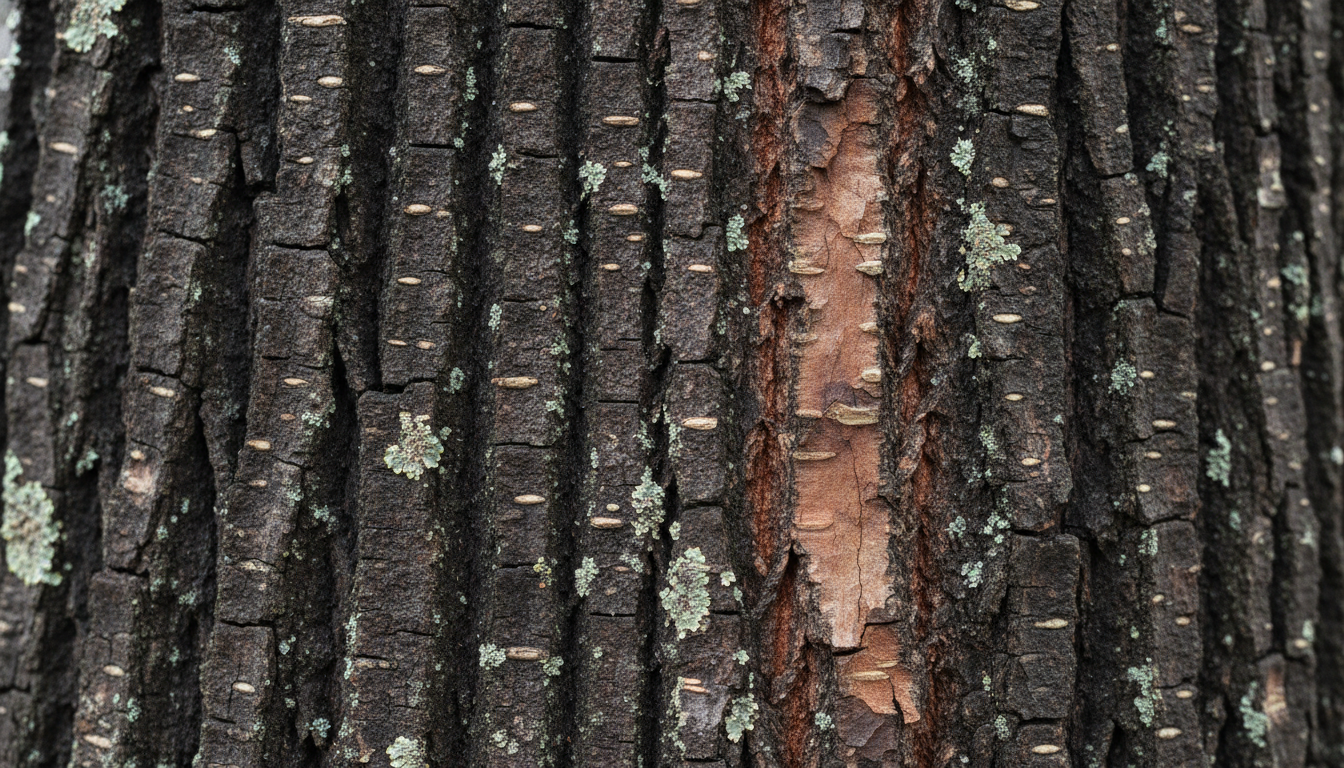
Bark: Young bark smooth with horizontal lenticels (cherry family look); mature bark breaks into dark, scorched, platey scales — a classic eastern forest character.
Form: Medium to large tree of woods, fence rows, and yards.
Deeper cherry characters — flowers, cultivars, and other Prunus — are covered in How to Identify Cherry Tree. For trees with black berries identification, black cherry is the tall platey-bark default in eastern deciduous forests.
Chokecherry — shrubby cousin with dark fruit
Chokecherry (Prunus virginiana) also bears dark purple to black drupes in racemes, so fruit alone overlaps black cherry.
Form: Usually a large shrub or small thicket-forming tree, not a towering forest canopy tree.
Leaves: Broader and more oval than black cherry, sharply toothed; glands may be present on the petiole.
Bark: Remains smoother longer; lacks the large mature black plates of old black cherry.
Habitat: Forest edges, roadsides, northern and western ranges into colder climates.
Chokecherry vs black cherry is a size-and-bark problem as much as a fruit problem. Photograph the whole plant habit plus bark when doing trees with black berries identification on Prunus.
Safety note for ID context: Prunus leaves and pits contain cyanogenic compounds; wilted leaves are a livestock risk. That is toxicity context for recognition — not a cooking guide.
Elderberry — opposite compound leaves, flat clusters
American elderberry (Sambucus canadensis / S. nigra subsp. canadensis) and related elders produce dense clusters of small dark berries that beginners often call "black berry trees."
Leaves: Opposite and pinnately compound — usually 5 to 9 leaflets. Opposite compound foliage instantly separates elderberry from cherry, buckthorn, and mulberry.
Fruit: Many tiny berries on a flat-topped or rounded branched cluster (cyme/umbel-like). Clusters are broader than long compared with cherry racemes.
Form: Multi-stemmed shrub, sometimes tree-sized in ideal sites, with soft pithy young stems.
Lookalike caution: Other plants have dark clustered fruit. Always confirm opposite compound leaves before naming elderberry. Red-berried elder species exist in some regions — fruit color variants do not change the leaf rule.
Elder foliage details appear in related leaf guides; for woody shrubs generally, use Shrub Identification Guide. Unripe elder fruit and other plant parts are discussed in foraging literature as requiring caution — again, this post stops at identification.
Buckthorn — invasive shrubs with black berries
Common buckthorn (Rhamnus cathartica) and glossy buckthorn (Frangula alnus) invade woodlands across much of the northern US and Canada. They fruit heavily with black berries and are frequent hits in trees with black berries identification searches — even though they are usually shrubs.
Common buckthorn: Mostly alternate (sometimes subopposite) simple leaves, finely toothed, with veins curving toward the tip; twigs often end in a small thorn. Dioecious — female plants bear abundant black berries along stems.
Glossy buckthorn: Alternate simple leaves with glossy upper surfaces and mostly entire margins; no terminal thorn; berries ripen from red to black.
Why ID matters: Buckthorns displace native understories. Land managers remove them. Do not plant them. Do not confuse them with elderberry — buckthorn leaves are simple, not compound.
Edibility: Treat buckthorn fruit as not for eating. Laxative effects and poor food value are widely reported. Identification goal: recognize and avoid spreading seed.
Mulberry — aggregate fruits that turn black
White mulberry (Morus alba, often invasive) and red mulberry (Morus rubra) produce multiple fruits that look like elongated blackberries when ripe — dark purple to black.
Fruit: Aggregate of many tiny drupelets, not a single smooth cherry-like drupe. Short-stalked in leaf axils, not long hanging racemes.
Leaves: Alternate, toothed, often lobed on vigorous shoots (mitten or multi-lobe shapes) while other leaves on the same tree stay unlobed — variability is a mulberry hallmark.
Sap: Broken twigs exude milky latex.
Form: Small to medium trees of yards, alleys, and disturbed woods.
Mulberry vs black cherry is settled by fruit type: aggregate "blackberry-like" vs smooth single drupes in long clusters. For backyard context, see Common Backyard Trees in the US.
Viburnum — opposite leaves, branched fruit clusters
Several viburnums hold dark fruit at maturity. Nannyberry (Viburnum lentago) and related species produce bluish-black drupes in branched clusters.
Leaves: Opposite, simple — never pinnately compound like elderberry.
Fruit: Drupes in rounded or pyramidal clusters; color may pass through yellow or pink stages before darkening.
Form: Shrubs or small trees of forest edges and plantings.
Opposite simple leaves + dark drupes suggests viburnum over cherry (alternate) and elderberry (compound). Fine species ID among viburnums needs leaf tip shape, petiole glands, and regional keys — start with the genus-level split for trees with black berries identification.
Other dark-fruited woody plants worth knowing
Hackberry
Small purple-black solitary drupes on warty-barked trees — covered in dedicated hackberry guides. Cluster architecture is not elder-like; fruits are scattered, not in huge flat heads.
Black gum / tupelo
Some Nyssa species produce dark blue drupes. Leaves are simple and alternate with smooth or sparsely toothed margins; fall color is brilliant red. Fruit is usually few per stalk, not massive elder clusters.
Privet
Invasive privets (Ligustrum) bear black berries on opposite-leaved shrubs. Small entire leaves and dense thicket habit differ from native viburnums. Another "do not eat / do not plant" ID target in many regions.
Foliage sorting across these groups is easier with Tree Foliage Identification Guide.
Toxic and dangerous lookalikes — recognition only
Dark fruit is a terrible toxicity filter. Examples of why trees with black berries identification must stay conservative:
- Pokeweed (Phytolacca americana) is herbaceous, not woody, with magenta stems and hanging dark berry racemes — toxic. Beginners still photograph it as a "berry tree."
- Nightshades and other garden escapes may show dark berries on weak woody bases.
- Buckthorn fruit is the wrong foraging target even when abundant.
- Unripe or misidentified elder and cherry lookalikes cause annual poison-control questions.
Rules for this guide:
- Never eat based on berry color.
- Never eat based on a single app suggestion.
- Never assume birds eating fruit means humans can.
- If your goal is food, use certified local foraging instructors and multiple printed keys — outside the scope of this article.
We emphasize characters that separate taxa so you can label plants correctly for landscaping, ecology, invasive control, and curiosity.
Field workflow for black-berried woody plants
- Step back: Tree or multi-stem shrub? Height and trunk count.
- Leaf arrangement: Opposite pairs → elderberry, viburnum, privet territory. Alternate → cherry, mulberry, buckthorn, hackberry territory.
- Compound check: Opposite + pinnately compound → elderberry until proven otherwise.
- Fruit architecture: Long raceme of smooth drupes → Prunus. Flat many-branched head of tiny berries → elder. Aggregate blackberry-like → mulberry. Small axillary clusters on invasive shrubs → consider buckthorn.
- Bark: Dark plates → mature black cherry. Warty cork → hackberry. Smooth young cherry-family bark → could be young Prunus.
- Photograph: Cluster close-up, full leaf (both surfaces if possible), bark, whole plant. See Best Photo for Tree ID.
If you are still stuck, work through What Type of Tree Is This? with those four photos in hand.
Using Tree Identifier for dark-fruited species
Tree Identifier and similar tools speed trees with black berries identification when cluster shape and leaves are clear.
Best photo set:
- Fruit cluster filling the frame (show whether raceme, cyme, or aggregate)
- One leaf attached to the twig so opposite vs alternate is obvious
- Bark on any stem thicker than an inch
- Optional wide shot of the whole plant
App limits: Similar dark berries can return close genus guesses. Read the leaf arrangement in your own photo before accepting a name. For invasive buckthorn, confirm simple leaves and local abundance. For more on mobile ID workflows, see App to Identify Trees.
Reminder: A correct scientific name still is not permission to eat fruit. Identification and foraging are different skills.
Master trees with black berries identification by refusing to stop at color. Match cluster architecture to opposite/alternate and simple/compound leaves, then use bark and form. Black cherry, chokecherry, elderberry, buckthorn, mulberry, and viburnum each leave a different fingerprint — once you see those fingerprints, dark fruit stops being a mystery and becomes a starting clue.
Frequently asked questions
What trees have black berries?
Common woody plants with black or dark purple berries include black cherry (Prunus serotina), chokecherry (Prunus virginiana), American and European elderberry (Sambucus), common buckthorn and glossy buckthorn (invasive), red and white mulberry when fully ripe (actually multiple fruits that turn blackish), and several viburnums such as nannyberry. Hackberry also bears small purple-black drupes. Trees with black berries identification always pairs fruit with leaves and bark — berry color alone is never enough for a safe name.
How do you identify black cherry trees by fruit?
Black cherry produces small round drupes in elongated clusters (racemes) that ripen from red to nearly black. Leaves are simple, finely toothed, with tiny glands on the petiole. Mature bark breaks into dark scorched-looking plates. Flowers are white racemes in spring. Compare with chokecherry, which is usually shrubby with different bark and leaf shape. See dedicated cherry guides for deeper characters — fruit cluster shape plus bark plates are the field keys.
How can you tell elderberry from buckthorn?
Elderberry (Sambucus) has opposite, pinnately compound leaves and flat-topped or rounded clusters of many small berries. Buckthorns have simple leaves (alternate on common buckthorn, often subopposite on glossy buckthorn) and berries in smaller axillary clusters along stems. Buckthorns are invasive in many regions and should be noted for removal, not food. Compound opposite leaves vs simple leaves is the fastest split for trees with black berries identification between these two.
Are all black berries on trees edible?
No. Berry color does not equal edibility. Some black or dark fruits are traditionally eaten when correctly identified and prepared; others are mildly to highly toxic, and some invasives are best left alone. This article teaches identification characters only — it is not foraging, recipe, or safety-certification advice. Never eat a wild berry based on color or an app result alone.
What shrubs have black berries that look like trees?
Chokecherry, elderberry, buckthorn, and some viburnums often grow as large multi-stemmed shrubs that people call trees. Form alone misleads. Use leaf arrangement (opposite vs alternate), compound vs simple leaves, and fruit cluster architecture. Shrub-focused keys help when the plant is shorter than canopy height.
How do you tell mulberry from black cherry?
Mulberry "berries" are aggregate fruits — many tiny drupelets fused like a blackberry — on short stalks from leaf axils, with milky sap in broken twigs and variable lobed or unlobed leaves. Black cherry fruits are smooth single drupes in long hanging racemes, with non-milky twigs and finely toothed unlobed leaves plus platey dark bark on older trunks. Fruit structure (aggregate vs single drupe) ends most confusion.
Can tree ID apps identify trees with black berries?
Yes, when photos show fruit cluster shape plus leaves. Tree Identifier works best if you capture the whole cluster architecture, a clear leaf (compound vs simple, opposite vs alternate), and bark when possible. Apps assist trees with black berries identification but do not authorize eating anything — always verify with multiple characters.
Try Tree Identifier — free on iPhone
Photograph dark berry clusters with leaves and get a species match in seconds.
Download on the App Store