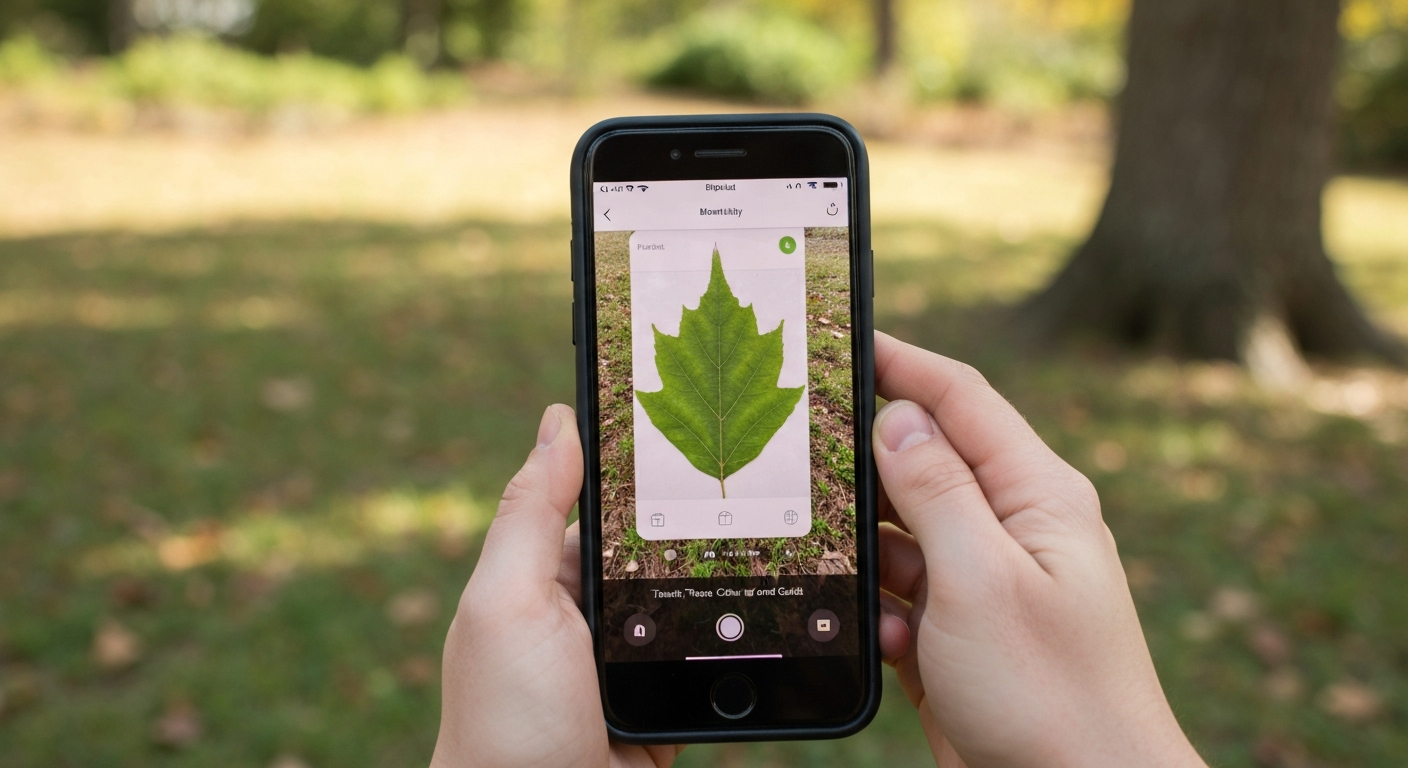
TL;DR: Tree id by bark is one of the most reliable winter skills — and a strong summer backup when leaves are too high to reach. Start at chest height on the main trunk and classify bark into five types: smooth (beech, young cherry), furrowed (oak, walnut), plated (pine, mature oak), peeling (birch, sycamore, shagbark hickory), and lenticel-marked young stems (cherry, birch). Note color, pattern direction, and age changes. Photograph a sharp, evenly lit patch and confirm with the Tree Identifier app or your regional tree bark identification chart.
🪵 Bark ID rule: Texture + color + pattern at chest height on the main trunk. Twigs and root flare bark look different — do not mix them in one ID.
Why bark identification of trees matters
Leaves get all the attention in spring and summer, but bark is always visible. Bark identification of trees shines when:
- Winter walks: Deciduous canopies are bare; bark and buds carry the ID.
- Tall trees: Leaves are 60 feet up — trunk bark is at eye level.
- Storm damage: Fallen branches may lack diagnostic leaves; the standing trunk still has bark.
- Logging and forestry: Harvested logs are identified by bark and wood character.
- Urban forestry: Park staff mark species on maps using bark from the sidewalk.
Tree id by bark is not a single magic feature — gray furrowed bark describes dozens of species. The skill is building a pattern library: plates vs ridges vs sheets, warm vs cool color, vertical vs horizontal structure. Pair bark with growth form, habitat, and buds whenever possible. See Tree Anatomy Glossary for bark layer terminology (cork, phloem, cambium).
The five bark texture types
Most field guides organize pictures of tree bark for identification into a handful of texture classes. Learn these first — then drill into species within each class.
1. Smooth bark
Smooth bark lacks deep furrows or loose plates. It can feel almost like skin — cool, tight, uninterrupted.
Classic examples: American beech (Fagus grandifolia) — smooth gray bark that stays smooth into old age; hornbeam — smooth gray with muscle-like fluting on the trunk; young sweetgum before cork ridges develop; many tropical and subtropical species.
ID tips: Smooth bark on a large forest tree in eastern North America strongly points to beech. Carvings and bear claw marks on beech trunks are common because the surface invites damage — do not carve living trees.
Age caveat: Many trees start smooth and develop furrows with age. A smooth 4-inch sapling is harder than a smooth 24-inch beech.
2. Furrowed bark
Furrowed bark has vertical or diagonal grooves (furrows) separated by ridges. Depth and ridge shape matter.
Classic examples: White ash — tight diamond-pattern furrows; black walnut — deep irregular furrows; mature sugar maple — long vertical plates with furrows between; cottonwood — thick gray furrows on massive trunks.
ID tips: Ash furrows often form a crosshatch or diamond net. Walnut furrows are deep and dark chocolate brown. Maple plates are thinner and lighter gray than oak.
Furrowed bark is the most common category — tree id by bark here needs a second feature (buds, form, or nearby leaves).
3. Plated bark
Plated bark breaks into blocky or flaky sections like armor plates — distinct edges you can often fit a knife tip under.
Classic examples: White oak — thick irregular plates, light gray; ponderosa pine — jigsaw puzzle plates with cinnamon scent; mature loblolly pine — flat scaly plates; persimmon — blocky charcoal plates resembling alligator hide.
ID tips: Oak plates are thick and rugged; pine plates are thinner and resinous. Persimmon blocks are small and deeply divided.
4. Peeling bark
Peeling bark tree identification is some of the most satisfying field work — strips, sheets, or curls detach from the trunk.
Classic examples: Paper birch — horizontal white papery sheets; river birch — cinnamon peeling curls on young trunks; sycamore — cream, green, and brown camo patches as outer bark flakes; shagbark hickory — long vertical strips curling outward at top and bottom like a shag haircut.
ID tips: Note what color is underneath the peel. River birch shows salmon-pink inner bark. Sycamore shows smooth cream beneath mottled plates. Shagbark hickory strips are narrow and woody, not papery.
Peeling on species that normally have tight bark — red maple, elm — may mean sunscald, injury, or disease. Context separates normal peeling from pathology.
5. Lenticels and young-stem bark
On young trees and smooth-barked species, lenticels — gas-exchange pores — dominate bark identification of trees.
Appearance: Horizontal pale dashes (cherry, birch), round dots (elderberry stems), or scattered corky spots.
Classic examples: Black cherry young trunks — metallic bronze-brown with horizontal lenticels like pinstripes; birch — white with dark lenticel lines; serviceberry — smooth gray with lenticels on stems.
Lenticel patterns fade as heavy cork develops. Photograph stems under 6 inches diameter for lenticel-focused ID.
Bark color — quick reference
Color alone is weak — sun bleaching, algae, and moisture shift tones. Use color as a secondary filter after texture.
- White to cream: Paper birch, aspens (often with black scars), sycamore patches.
- Gray: Beech, maple, ash, oak — most common forest default.
- Red-brown to cinnamon: River birch, ponderosa pine (with vanilla/butterscotch scent when warm), red pine.
- Dark brown to black: Black walnut, wild cherry on mature trunks, some willows when wet.
- Green: Algae and moss on north-facing bark — not species color, but sycamore and ash often look green-mottled.
- Orange: Pacific madrone — smooth peeling orange bark; also some diseased bark, so confirm species traits.
Build pictures of tree bark for identification in your woods — the same species looks warmer and drier on a south-facing ridge than cool gray in a damp ravine.
How to photograph bark for ID
A bark identifier — human or app — needs usable photos. Follow the same principles as Best Photo for Tree ID, adapted for trunk texture:
- Height: Chest to eye level on the main trunk — avoid root flare buttress bark and upper branch bark in the same ID.
- Fill the frame: Bark texture should occupy most of the image — 12 to 18 inches of trunk surface.
- Even light: Overcast days reduce harsh shadow in furrows. Side sun can exaggerate depth — useful if consistent.
- Sharp focus: Tap to focus on a ridge mid-frame. Blur destroys plate edges apps need.
- Scale: Include a hand, glove, or known object for size — plate size separates oak from pine.
- Second photo: Step back for whole-trunk form; add a bud photo in winter.
For peeling bark tree identification, photograph both the loose edge and the attached surface — inner bark color is diagnostic on birch and sycamore.
Tree bark identification chart — building your own
Commercial tree bark identification charts group species by texture type. A regional chart beats a generic national poster because oak bark in Texas differs from oak bark in Maine.
DIY chart workflow:
- Walk a familiar park or backyard with common backyard trees labeled mentally.
- Photograph five texture categories on trees you already know from leaves.
- Print or save a phone album: Smooth / Furrowed / Plated / Peeling / Lenticel.
- Add one sentence per species — "shaggy strips, not papery" for shagbark hickory.
Charts fail when users match one gray furrowed trunk to "oak" and stop. Always ask: plate size, furrow depth, peeling yes/no, and what species grow here per Identify Trees by Leaf knowledge.
Species spotlights — bark that names the tree
American beech — smooth gray
Unmistakable smooth light gray bark on trunks often 2 feet diameter — still smooth. Marcescent tan leaves in winter are a bonus clue. See Beech Tree Identification for full species detail.
Paper and river birch — peeling white and cinnamon
Paper birch peels in horizontal white sheets; river birch peels in curling cinnamon-pink layers on multi-trunk forms. Peeling bark tree identification rarely confuses these two when color is accurate.
Shagbark hickory — peeling strips
Long stiff gray strips curling away from the trunk at both ends — woody, not papery. Often found with oak-hickory forest leaf litter. Nut husks on the ground confirm in season.
Sycamore — mottled camouflage
Green-white-tan patches as outer bark flakes off, exposing smooth inner cream bark. Often on floodplains and riverbanks. Bark looks like army camo from 30 feet.
White oak — thick plates
Light gray rugged plates with deep furrows — bark feels hard and permanent. Acorn caps with bumpy scales below the tree confirm in fall.
Wild cherry — lenticels on bronze youth
Young trunks look like polished bronze with horizontal lenticel stripes. Mature bark breaks into small dark scaly plates — lenticels fade. Bark smells faintly almond when scratched — cyanogenic compounds; do not ingest.
Pine — flaky plates and resin
Pine bark identification uses plate size, color, and species-specific furrow patterns plus needles. Ponderosa smells like vanilla or butterscotch in warm sun on mature bark. See Pine Tree Identification.
Winter bark walks — step-by-step
Winter is the best season to practice tree id by bark seriously:
- Pick a trail with mixed hardwoods. Edge habitat gives more species per mile.
- Classify texture first — smooth, furrowed, plated, peeling — before guessing species.
- Look up at architecture: vase-shaped elm, horizontal beech branches, pine whorls.
- Check buds on a twig sample at shoulder height — opposite vs alternate, scale shape.
- Photograph bark + buds and run through a tree bark identifier app.
- Log five species per walk; repeat the same trail monthly — bark looks different wet vs frozen.
Pair this walk with Tree Foliage Identification in summer on the same route — bark and leaf memory lock together permanently.
Common bark ID mistakes
- Root flare vs trunk: Buttress bark is often darker, wetter, and more furrowed than chest-height bark.
- Algae as color: North side green does not mean "species is green."
- Juvenile vs mature: Smooth young red maple becomes furrowed — age matters.
- Generic oak: Many oaks share plated gray bark — need acorns, leaf shape, or bud detail.
- One photo only: Apps and humans both need context — form and buds break ties.
- Ignoring conifers: Pine, spruce, and fir bark differ systematically — do not lump as "pine bark."
Using a tree bark identifier app
Tree Identifier accepts bark photos as primary input — especially useful for distinctive plates, peeling sheets, and smooth beech.
When apps excel: Shagbark hickory, paper birch, sycamore, American beech, ponderosa pine — texture is species-specific.
When apps struggle: Generic gray furrows on young hardwoods — upload a bud or leaf photo as second image if the app supports multi-photo ID.
Pro workflow: Bark photo first, whole-tree silhouette second, bud close-up third. Cross-check app suggestion against your tree bark identification chart and local range maps.
For dedicated bark tooling tips, see Tree Bark Identification App Guide and App to Identify Trees.
From bark to full ID — putting it together
Tree id by bark is a gateway skill, not the final word. Strong identifiers chain evidence:
Bark texture narrows to a group → buds split maples from ashes → form separates elm vase from beech wide crown → habitat rules out swamp species on a dry ridge → fruit or nuts confirm oak species in fall.
When someone asks what type of tree is this with only a bark photo, answer with confidence tiers: "definitely birch family peeling" vs "hardwood with furrows — likely oak or ash, need buds."
Practice on common backyard trees where you know the answer — bark memory builds faster with verified reps.
Frequently asked questions
How do you identify a tree by bark?
Identify trees by bark by noting texture (smooth, furrowed, scaly, peeling), color (gray, white, cinnamon, green), and pattern (vertical plates, horizontal lenticels, diamond furrows). Photograph bark at chest height on the main trunk, include a scale object, and compare to a tree bark identification chart. Bark identification of trees works best when combined with buds, form, and habitat — especially in winter when leaves are absent.
What is the easiest tree to identify by bark?
American beech has unmistakable smooth gray bark that stays smooth into old age — one of the easiest bark IDs in eastern forests. White birch shows bright papery peeling white bark. Sycamore has mottled camouflage bark that flakes in plates. These three are beginner-friendly because the bark pattern is unique and visible from a distance.
Can you identify trees by bark in winter?
Yes — winter is prime season for tree id by bark because deciduous trees have dropped leaves and bark is fully exposed. Focus on furrow depth, plate shape, peeling layers, and bud arrangement on the same trunk. Photograph bark and terminal buds together. A tree bark identifier app handles winter bark photos well when texture is sharp and evenly lit.
What does peeling bark indicate on a tree?
Peeling bark is a normal species trait on river birch, sycamore, paper birch, shagbark hickory, and some cherries — not necessarily disease. Peeling bark tree identification uses which direction bark peels (horizontal sheets vs vertical curls), underlying color, and whether peeling starts at a young or old age. Bark that suddenly peels on a previously tight-barked species may signal injury or disease — context matters.
What are lenticels on tree bark?
Lenticels are small pores in bark that allow gas exchange — they appear as dots, dashes, or horizontal lines on young stems and smooth-barked trees. Cherry and birch show prominent horizontal lenticels on twigs and young trunks. Lenticel pattern helps bark identification of trees when bark is still relatively smooth before heavy cork develops.
Is there a tree bark identification chart I can use?
Yes — field guides and extension publications publish tree bark identification charts organized by bark type: smooth, furrowed, scaly, peeling. Build your own photo chart from local trees. Pair any chart with a bark identifier app that matches photos to species. Charts work best for your bioregion — bark color varies with age and sun exposure.
Do tree bark identifier apps work?
Modern tree bark identifier apps recognize bark texture and pattern when photos are clear, close, and well lit. They work best on mature trunk bark with distinctive plates or peeling — weaker on generic gray furrows shared by many species. Combine app results with bud photos and tree form. Tree Identifier accepts bark photos and cross-checks against leaf and form data when available.
Try Tree Identifier — free on iPhone
Photograph bark texture and get a species match in seconds — works in winter when leaves are gone.
Download on the App Store