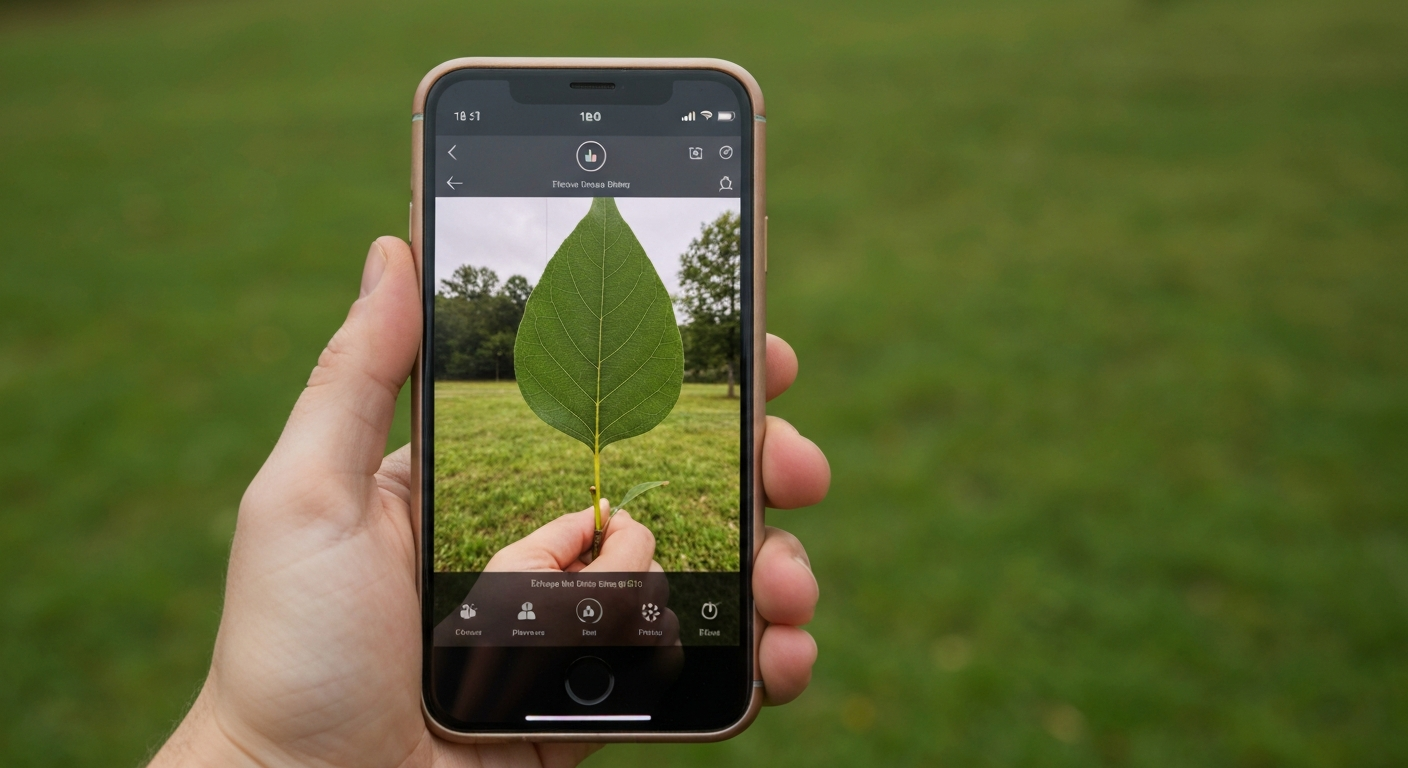
TL;DR: Identifying Osage orange trees (Maclura pomifera) is easiest when huge wrinkled green hedge apples litter the ground. Without fruit, look for glossy elongated leaves with milky sap, stout thorns, and vivid orange inner bark or freshly cut wood. Trees often line old Midwestern and Southern fence rows as living hedges. Photograph fruit or thorned leafy twigs and confirm with the Tree Identifier app.
🟠 Osage orange field code: brain-textured green hedge apple OR (thorns + milky sap + orange wood). Not citrus. Not edible for most people. Often a linear fence-row silhouette.
Why identifying Osage orange trees is memorable
Few North American trees produce a fruit as cartoonishly large and weird as the hedge apple. That alone would make identifying Osage orange trees easy — but the species also packs thorns, latex sap, and wood so orange it dyes history. Also called bois d’arc, bodark, horse apple, and hedge tree, Maclura pomifera sits in the mulberry family (Moraceae) with mulberries and figs, not with citrus.
Native range centers on the Red River region of Texas, Oklahoma, and Arkansas, yet plantings and escapes spread Osage orange across the Midwest, Great Plains, and beyond. If you hike old farm country, you will meet it as a wall more often than as an isolated specimen tree.
Hedge apple fruit — the definitive cue
Female trees produce compound syncarp fruits: dense spheres 3 to 6 inches across (sometimes larger) with a convoluted bumpy surface like a green brain. Fresh fruits are firm and heavy. Latex bleeds from cuts. Smell is resinous citrus-pith, not sweet orange juice.
Ripening late summer into fall, fruits drop intact and litter pastures, creating the classic “who threw all these green brains?” mystery that sends people into identifying Osage orange trees searches. Squirrels and some wildlife may dig seeds; pulp is not a human dessert — sticky and bitter, though historical uses of seed oil and wood abound.
Male trees lack hedge apples. Identifying Osage orange trees that never fruit requires leaf, thorn, and bark characters below. Dioecy means an entire male hedge row may never show fruit yet still be Maclura.
Fruit-based ID methods compare with other odd yard fruits in nut tree identification (different architecture) and general decision help in What Type of Tree Is This?.
Thorns, leaves, and milky sap
Twigs zigzag slightly and typically bear stout, sharp thorns at nodes — serious enough to snag denim. Leaves are alternate, simple, glossy green above, lance-ovate to elongated, with pointed tips. Broken petioles or leaf blades ooze milky latex that sticky-fingers confirm Moraceae affinity.
Leaf margins are usually entire or nearly so. Fall color can be a clear yellow before drop. Seedlings and vigorous sprouts can be particularly thorny.
Identifying Osage orange trees without fruit:
- Check for thorns at leaf bases.
- Break a leaf — look for milky sap.
- Note glossy elongated leaf shape.
- Confirm with orange wood or fence-row habit when possible.
Leaf comparison skills: Identify Trees by Leaf.
Orange bark and wood
Mature outer bark is deeply furrowed, orange-brown to grayish, with interlacing ridges. Scratch or cut carefully into living wood and a bright orange-yellow flash appears — one of the most dramatic woody colors among common US trees. Fence posts, archery bows (bois d’arc = bow wood), and dye lore all track that pigmented heartwood.
Identifying Osage orange trees from cut firewood piles often happens when orange wood and density show up — Osage orange is extremely hard and rot-resistant. Avoid reckless cutting on living trees for ID; use fallen sticks when available.
Bark study terms sit in the Tree Anatomy Glossary.
Hedge-row history and landscape form
In the nineteenth century, before barbed wire became cheap, prairie and plains settlers planted Osage orange in tight rows and pruned them into living livestock barriers. Thorned density stopped cattle. Many of those hedges remain as twisted, multi-stemmed lines tracing property edges and section roads.
Form clues for identifying Osage orange trees:
- Linear plantings along fields and lanes.
- Multiple crooked trunks and dense branch tangles.
- Old pollard or hedge-pruning scars.
- Open pastures with solitary fruiting monsters that escaped hedge culture.
Urban yards may host single ornamental or shade trees — sometimes thornless male cultivars that puzzle people expecting hedge apples. Thornless cultivars still show glossy leaves and orange wood; lack of fruit plus cultivar labels explain missing balls.
Landscape context among farm and backyard species: common backyard trees.
Lookalikes and confusion
Citrus: Name confusion only. Citrus leaves often show winged petioles and different fruit structure; citrus is not Midwestern hedge-row hardwood.
Mulberry: Same family, milky sap, but lobed leaves common, small berry fruits, no huge hedge apples, milder thorns (if any).
Hawthorn: Thorns and fruit, but fruits are small pomes, leaves toothed/lobed differently, no orange Maclura wood flash.
Persimmon: Blocky bark, tomato fruits, no milky Maclura sap pattern or hedge apples.
Once you have held a hedge apple, misidentification nearly ends. Without fruit, thorns + latex + orange wood still set Osage orange apart from most thorn trees.
Seasonal calendar
- Spring: Leaf-out; inconspicuous flowers on males and females.
- Summer: Expanding green fruits on females; dense glossy foliage.
- Fall: Heavy fruit drop; yellowing leaves; best identifying Osage orange trees moments for beginners.
- Winter: Thorned zigzag twigs; furrowed bark; orange wood on broken branches.
Winter ID is intermediate difficulty — photograph thorns and bark, and note fence-row ecology.
Safety and practical notes
Thorns puncture shoes and tires lore is real enough for soft shoes. Latex can irritate sensitive skin — wash after sap contact. Falling hedge apples are heavy; do not stand under fruiting crowns in high winds during drop season. Fruit and sap are not foraging targets for most people.
Identifying Osage orange trees for removal, bowyers, or nostalgia is common; whatever the goal, positive ID comes first.
Using Tree Identifier
Tree Identifier nails Osage orange from hedge apple photos almost every time. For males or winter trees, send thorned leafy twigs or a clear bark-plus-thorn composition. Add a second photo if sap is visible on a torn leaf.
Best photo set when identifying Osage orange trees:
- Whole hedge apple with scale (hand or boot).
- Surface texture close-up of the wrinkled fruit skin.
- Leaf and thorn in one frame.
- Optional: freshly broken branch showing orange wood.
Photo technique help: Best Photo for Tree ID. App overview: App to Identify Trees.
Identifying Osage orange trees connects natural history to settlement history — living barbed wire with orange wood and green brains rolling across autumn pastures. Once you know the suite, every old fence line in Osage orange country tells a clearer story.
Frequently asked questions
How do you identify an Osage orange tree?
Identifying Osage orange trees relies on large bumpy green hedge-apple fruits (infallibly distinctive), stout sharp thorns on twigs, shiny elongated leaves with milky sap when broken, and bright orange inner bark or freshly cut wood. Trees are often multi-stemmed along old fence lines. Female trees fruit; males pollinate without hedge apples. Winter ID leans on zigzag thorned twigs and orange wood when sampled carefully.
What is a hedge apple?
A hedge apple is the fruit of Osage orange (Maclura pomifera) — a large, heavy, grapefruit-sized to softball-plus green ball with a brain-like wrinkled surface. Also called horse apple or hedge ball. The fruit is generally considered inedible for people (sticky latex, bitter). Identifying Osage orange trees from fruit alone is nearly certain when those green wrinkled balls litter a pasture or roadside.
Does Osage orange have thorns?
Yes. Twigs typically carry stout, sharp thorns at leaf nodes. Thorniness varies with cultivar and shoot vigor, but wild-type hedgerow trees are notably mean to cattle and hikers. Thorns plus milky sap plus glossy leaves form a strong vegetative suite for identifying Osage orange trees when fruit is absent.
What does Osage orange bark look like?
Outer bark on mature trunks is orange-brown to gray-brown with interlacing ridges and furrows, sometimes shreddy. Freshly cut wood and inner bark flash vivid orange-yellow — a famous character behind names like bodark (bois d’arc). That orange color beneath the surface is a reliable confirming trait for identifying Osage orange trees.
Why were Osage orange trees planted as hedges?
Before widespread barbed wire, settlers planted dense, thorned Osage orange hedges as living fences that livestock would not push through. Rows still mark Midwestern section lines and farm edges. Spotting a linear wall of twisted, thorny trees often starts identifying Osage orange trees before you find a single fruit.
Is Osage orange the same as orange citrus?
No. Osage orange is Maclura pomifera in the mulberry family (Moraceae), native to a limited south-central range and widely planted elsewhere. It is not related to sweet orange citrus. The name references the fruit’s color and old use for orange dye-like pigment in wood, not citrus flavor.
Can a tree ID app identify Osage orange?
Yes — hedge apple fruit photos are among the easiest matches in any tree app. Leaf-and-thorn photos also work well. Tree Identifier recognizes Maclura from fruit, glossy leaves, and thorned twigs; include fruit whenever available for instant confidence when identifying Osage orange trees.
Try Tree Identifier — free on iPhone
Photograph hedge apples, thorns, or orange bark and confirm Osage orange in seconds.
Download on the App Store