TL;DR: Nut tree ID in North America means learning the walnut family — black walnut, hickories, and pecan — by compound leaves, bark, and what drops in fall. Walnut has many fine-toothed leaflets and round staining husks; shagbark hickory has five leaflets and shaggy bark; pecan has many narrow leaflets and elongated nuts. Check alternate (not opposite) leaf arrangement first. Photograph the full compound leaf, a nut or husk, and trunk bark, then run nut tree ID through the Tree Identifier app.
🥜 Nut tree ID shortcut: alternate + compound + nuts on the ground = Juglandaceae. From there, leaflet count and bark texture deliver walnut vs hickory vs pecan quick ID in under a minute.
What counts as a nut tree for ID purposes
In everyday nut tree ID, we mean hardwood trees in family Juglandaceae that produce edible or recognizable nuts enclosed in husks:
- Walnuts: Juglans — black walnut, butternut, English walnut (planted).
- Hickories: Carya — shagbark, shellbark, pignut, mockernut, bitternut, and others.
- Pecan: Carya illinoinensis — commercially important hickory with distinct nut shape.
All share alternate branching, large pinnately compound leaves, and nuts that mature in husks. They are not closely related to chestnuts (Fagaceae) or hazelnuts (Betulaceae) — different leaf forms entirely.
This guide focuses on walnut vs hickory vs pecan quick ID — the trio most hikers, homeowners, and foragers encounter across the eastern and central US.
Step 1 — confirm you are looking at a nut tree
Before species-level nut tree ID, eliminate common lookalikes:
- Leaf arrangement: Walnut family = alternate leaves (one leaf per node, staggered). Ash also has compound leaves but opposite arrangement — two leaves per node. That single observation removes half of confusion with ash.
- Leaf type: Pinnately compound — one stalk, many leaflets. Not palmately compound like horse chestnut.
- Fruit on ground: Hard nut inside a husk — not a samara (maple, ash), not an acorn (oak).
- Smell test: Black walnut and many hickories smell spicy-aromatic when crushed. Tree of heaven smells foul — see our tree of heaven identification guide.
Once Juglandaceae is confirmed, move to walnut vs hickory vs pecan quick ID characters below.
Black walnut — nut tree ID profile
Black walnut (Juglans nigra) is the dominant wild walnut across much of eastern North America — valuable timber and messy fall husks on sidewalks.
Leaves: 15 to 23 leaflets, sometimes more on vigorous shoots. Leaflets are lance-shaped, 2 to 4 inches, with fine sharp teeth along the entire margin. Overall leaf length 12 to 24 inches.
Smell: Crushed leaf is aromatic — citrus-spice, cleaner than tree of heaven's rank odor.
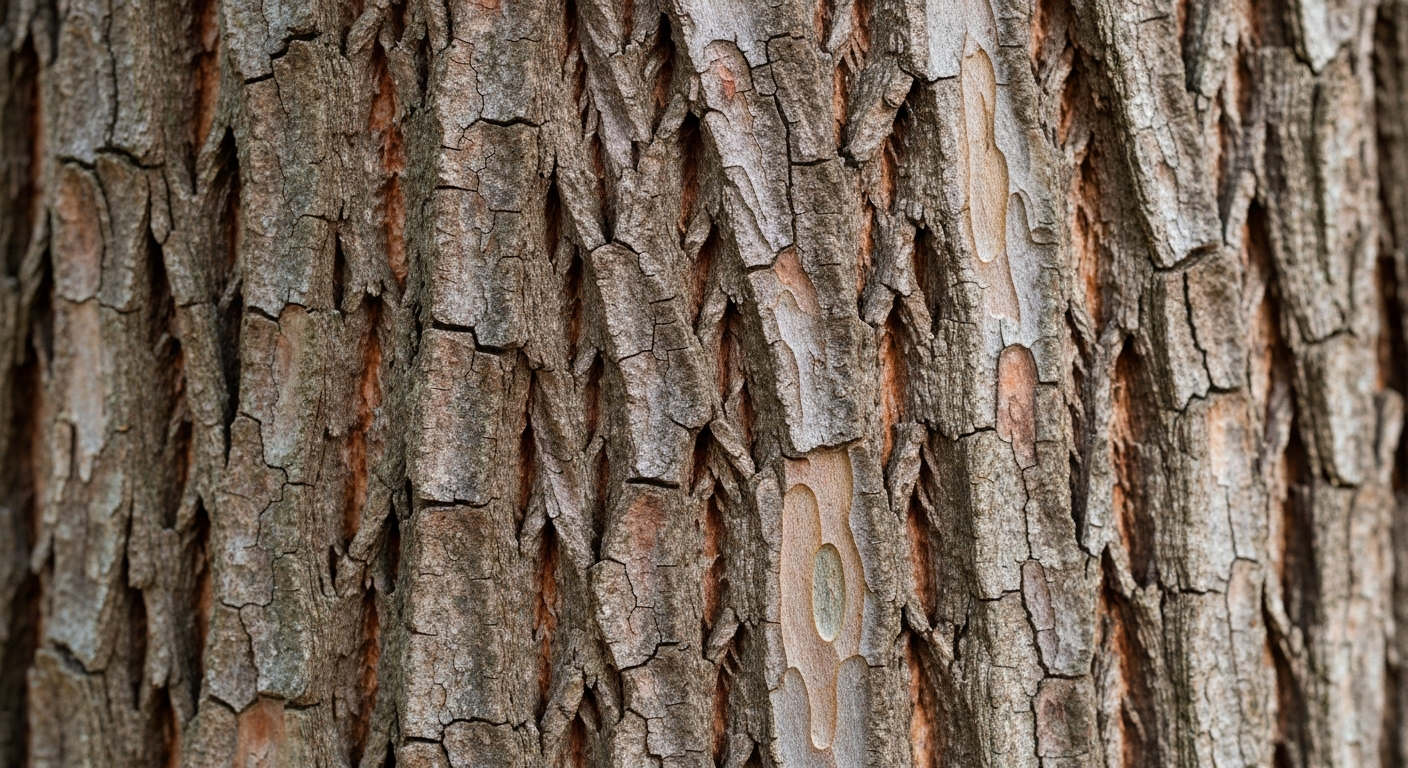
Bark: Dark brown to gray, deeply furrowed in diamond ridges — rough but not peeling in long shaggy strips.
Nuts: Round, golf-ball size, thick green husk that rots black and stains skin. Husks are messy and aromatic.
Twigs: Stout; pith solid and chocolate brown in cross-section. Leaf scar looks like a monkey face — upper lobe bumps are "eyes."
Form: Large tree to 100 feet; straight trunk in forest; shorter and wider in open yards.
Black walnut nut tree ID peaks in October when husks litter lawns. Photograph one husk split open showing the corrugated nut shell inside.
Hickory nut tree ID — shagbark and friends
Hickories (Carya) split into two rough groups for field nut tree ID: true hickories (shagbark, mockernut, pignut) and pecan hickories (pecan, bitternut, water hickory).
Shagbark hickory (Carya ovata)
The poster child for hickory nut tree ID — edible nuts and unmistakable bark.
Leaves: Usually 5 leaflets — occasionally 7 on strong shoots. Leaflets larger than walnut — 3 to 6 inches — with coarse teeth.
Bark: Long vertical plates peeling outward at top and bottom — shaggy, like strips curling away from trunk. Visible from fifty feet away.
Nuts: Round, thick four-valved husk splitting partly open; sweet nut inside ribbed shell.
Range: Eastern US into Midwest; upland and mixed forest.
Mockernut and pignut hickories
Mockernut (Carya tomentosa): 7 to 9 leaflets, fuzzy undersides, very hard thick husk — "mock" because nut is small for husk size. Bark tight, not shaggy on mature trees.
Pignut (Carya glabra): 5 to 7 leaflets, pear-shaped or small round nut, husk often stays closed or splits poorly — bitter or variable edibility. Smooth gray bark when young, network ridges when old.
Bitternut hickory (Carya cordiformis)
Yellow buds in winter — a standout hickory nut tree ID cue. 7 to 9 leaflets, sulfur-yellow terminal bud scales. Nuts bitter. Bark tight, gray, with subtle interlacing ridges. Common in mixed woods; tolerates wetter soil than shagbark.
Pecan — hickory with a paycheck
Pecan (Carya illinoinensis) is a pecan-hickory group species — nut tree ID treats it as hickory botanically, pecan commercially.
Leaves: 9 to 17 leaflets — more than shagbark, narrower and often curved like a falcon's wing. Leaflets may appear slightly sickle-shaped.
Bark: Gray-brown, ridged and furrowed when mature — not shaggy like shagbark. Orchard trees show smoother bark from youth.
Nuts: Elongated, thin-shelled relative of other hickories; husk splits cleanly in four sections at maturity.
Habitat: River bottoms, alluvial soil, planted widely in orchards across the South, Midwest, and into the Southwest.
Pecan vs walnut quick ID: Pecan leaflets are fewer but longer and more slender than black walnut's crowded fine-toothed leaflets; pecan nuts are elongated, walnut nuts round.
Walnut vs hickory vs pecan quick ID chart
Use this at a glance after confirming alternate compound leaves:
- Black walnut: 15+ leaflets, fine teeth, dark furrowed bark, round nut, spicy smell, monkey-face leaf scar.
- Shagbark hickory: 5 large leaflets, shaggy peeling bark, round sweet nut, thick husk.
- Pecan: 9–17 narrow leaflets, elongated nut, river bottom or orchard, smooth-ridged bark.
- Bitternut hickory: 7–9 leaflets, yellow buds, bitter nut, tight bark.
- Tree of heaven (not a nut tree): Basal gland teeth, foul smell, samaras — no nuts.
When two species still tie, the nut husk behavior decides: walnut husks rot green-black; hickory husks split in sections; pecan husks split cleanly on elongated nuts.
Nut tree identification by leaf — photography tips
Nut tree ID from photos needs the whole compound leaf, not one leaflet cropped tight.
- Lay the leaf on pavement or white paper — full rachis visible from petiole to tip.
- Include a coin or finger for scale — hickory leaflets are noticeably bigger than walnut's.
- Photograph leaflet margins — fine vs coarse teeth matter.
- Add a second photo of twig showing alternate leaf scars if you can reach safely.
See Best Photo for Tree ID for lighting and focus tips that improve app matches on compound leaves.
Bark and winter nut tree ID
Winter nut tree ID leans on bark and buds:
Shagbark hickory: Only common eastern tree with extreme shaggy bark plates — winter confirmation is easy.
Black walnut: Dark furrowed bark; leaf scars monkey-faced; buds gray-fuzzy.
Pecan: Gray ridged bark; slender orange-brown twigs in youth; buds sharp-pointed compared to mockernut's large scales.
Bitternut: Yellow buds — carry a small color chart or compare to neighboring hickories on the same trail.
Collect a fallen twig with leaf scars for desk ID if the canopy is out of reach. For bark-focused workflows, see Tree Bark Identification App Guide.
Butternut and other walnut notes
Butternut (Juglans cinerea) — white walnut — is endangered from disease. Fewer leaflets (11 to 17) than black walnut, often hairy on leaflet upper surface, oval lemon-shaped nut with sticky husk. Butternut nut tree ID matters for conservation reporting — do not confuse with black walnut if you find a surviving tree.
English walnut (Juglans regia) appears in orchards and yards — fewer leaflets, larger nuts, smoother bark — planted, not wild across most of the US.
Using Tree Identifier for nut tree ID
Tree Identifier handles black walnut, common hickories, and pecan across their native and planted ranges.
Best submission: Full compound leaf photo + bark or nut husk photo. Mention in your notes whether bark is shaggy — helps you interpret the app ranking.
Watch for lookalikes: Young tree of heaven and ash compound leaves fool beginners. Verify alternate vs opposite branching before trusting a nut tree ID result.
Foraging caution: Positive nut tree ID precedes eating. Pignut and bitternut are not snack trees; confirm shagbark or pecan before cracking nuts.
Nut tree ID rewards repeat observation — once you have cracked walnut vs hickory vs pecan quick ID on one block, every alley husk and shaggy trunk reads clearly the next season.
Frequently asked questions
How do you do nut tree ID in the field?
Nut tree ID starts with confirming a compound leaf in the walnut family — Juglandaceae. Alternate branching, large pinnately compound leaves, and nuts or husks on the ground narrow the list fast. Black walnut has 15 to 23 leaflets with fine teeth and round nuts in green husks. Hickories have 5 to 17 leaflets, often fewer and larger, with nuts in thick husks that split partly open. Pecan is a hickory with 9 to 17 narrow leaflets and elongated nuts. Photograph one leaf, one nut, and bark at eye level.
What is the fastest walnut vs hickory vs pecan quick ID?
Walnut vs hickory vs pecan quick ID: count leaflets and check nut shape. Black walnut — many small leaflets (15+), spicy leaf smell, round nut with messy green husk. Shagbark hickory — 5 leaflets, shaggy peeling bark, round nut in thick husk splitting to four lines. Pecan — 9 to 17 long narrow leaflets, smooth gray bark, elongated nut in thin husk. If bark peels in long vertical strips, think hickory before walnut.
Can you identify nut trees by leaf alone?
Often to genus, sometimes to species. Walnut leaves have more leaflets with finer serrations; hickory and pecan leaves have fewer, larger leaflets with coarser teeth. Pecan leaflets are lance-shaped and often curved. Bitternut hickory has bright yellow buds and 7 to 9 leaflets. Shellbark hickory resembles shagbark but with more leaflets and larger nuts. Leaf-only nut tree ID works best with a clear photo of the entire compound leaf on a neutral background.
What does black walnut look like for nut tree ID?
Black walnut (Juglans nigra) is a large tree to 100 feet with dark furrowed bark — not shaggy. Leaves have 15 to 23 leaflets, finely toothed, aromatic when crushed. Nuts are golf-ball size, round, in green husks that stain fingers brown-black. Twigs have solid brown pith and a leaf scar shaped like a monkey face or butterfly. Black walnut nut tree ID is easiest in early fall when husks litter sidewalks.
How do hickory and pecan differ in nut tree ID?
Pecan (Carya illinoinensis) is a hickory species — same genus, different nut economics. Pecan has more leaflets (9 to 17), often narrower, and elongated nuts in husks that split cleanly. Common hickories like shagbark (Carya ovata) have 5 leaflets and shaggy bark; pignut (Carya glabra) has 5 to 7 leaflets and pear-shaped nuts with husks that stay closed. Range helps: pecan dominates bottomlands in the South and Midwest; shagbark spans eastern forests broadly.
What apps work best for nut tree ID?
Tree identification apps trained on North American trees handle black walnut, common hickories, and pecan well when you submit a sharp compound-leaf photo plus bark or nut when possible. Nut tree ID apps struggle with leaf-only photos of young seedlings or with ash and tree of heaven lookalikes — ash has opposite branching; tree of heaven smells foul and has basal gland teeth. Tree Identifier accepts multi-photo submissions for stronger species matches.
What nut trees are commonly confused with each other?
Black walnut is confused with tree of heaven (foul smell, basal leaf teeth, samaras not nuts) and butternut (fewer leaflets, oval lemon-shaped nut, endangered). Hickories overlap each other — shagbark vs shellbark vs mockernut needs bark, leaflet count, and nut husk behavior. Pecan seedlings resemble other hickories until nuts appear. Ash has opposite compound leaves like walnut family but produces samaras, not nuts — check twig arrangement first.
Try Tree Identifier — free on iPhone
Photograph compound leaves and bark for instant walnut, hickory, and pecan nut tree ID.
Download on the App Store