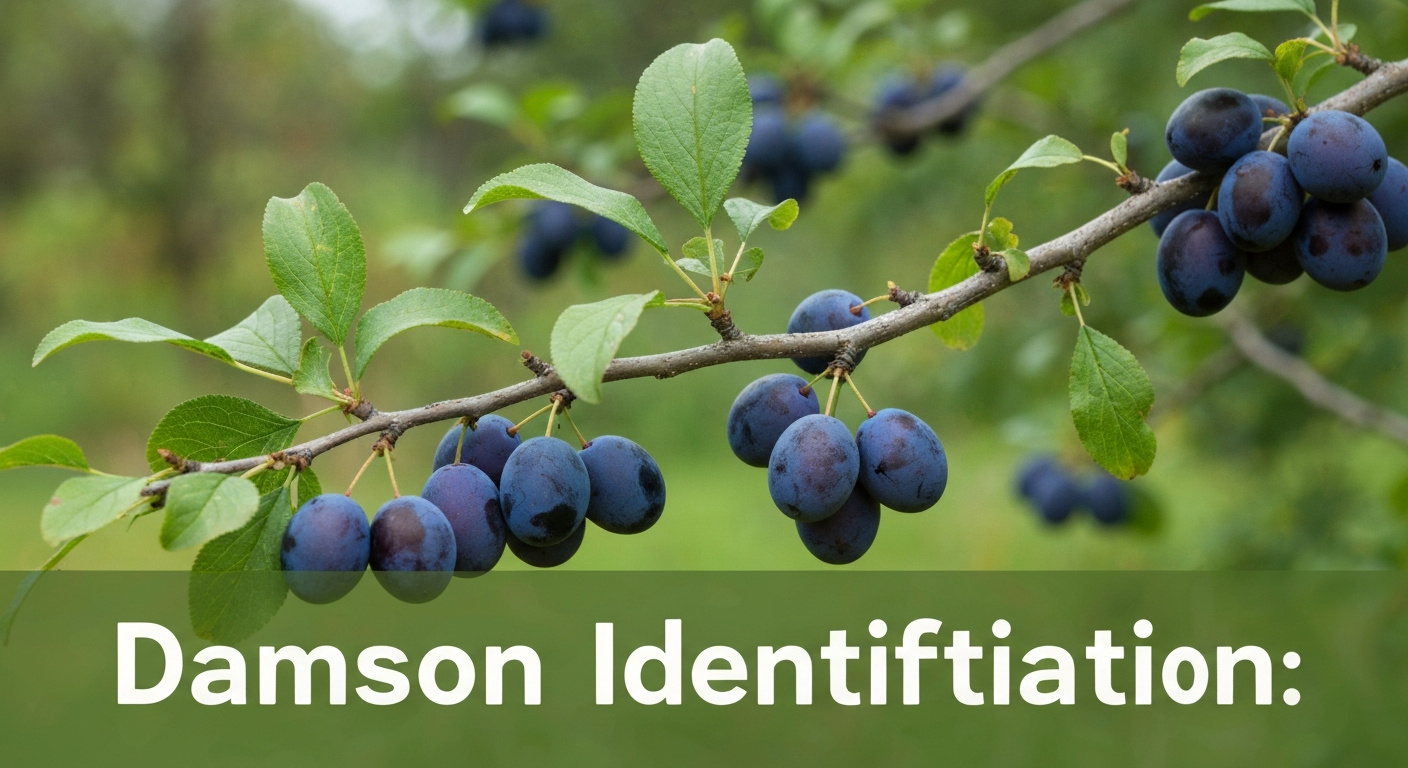
TL;DR: Damson identification targets Prunus domestica subspecies insititia — small oval blue-black plums with heavy bloom, tart yellow-green flesh, thornless twigs, and oval finely serrated leaves. Damsons differ from sloe/blackthorn (Prunus spinosa) which has smaller round fruit on fiercely thorny branches and flowers before leaves in March. Photograph fruit with leaves on the branch and confirm with the Tree Identifier app.
🟣 Damson vs sloe: Thornless twig + oval plum = damson. Thorns everywhere + tiny round berry = blackthorn sloe. Do not rely on fruit color alone — both are blue-black.
What is a damson?
Damsons are a traditional European plum — not a separate species but a subspecies or group within Prunus domestica, commonly labeled Prunus domestica subsp. insititia or Prunus insititia in older texts. Damson identification matters for foragers, orchard restorers, and cooks distinguishing damsons from sloes for jam, gin, and damson cheese.
Cultural footprint is strongest in the British Isles — Shropshire Prune damson, Westmorland damson, Lyth Valley damsons in Cumbria. Trees survive decades in hedgerows after orchards abandon, making damson identification a heritage skill as much as a botanical one.
Key damson traits at a glance:
- Fruit: Small, oval, blue-black with bloom, intensely tart raw.
- Twigs: Thornless — critical vs blackthorn.
- Leaves: Oval, finely serrated, 2 to 3 inches.
- Form: Small tree or large shrub, 10 to 20 feet, often multi-stemmed in hedges.
- Bark: Dark brown, horizontal lenticels on young wood — typical Prunus.
- Bloom: White flowers in spring with leaves emerging — unlike blackthorn.
Damson fruit identification
Fruit is the fastest damson identification character when in season (August–October in the UK).
Size and shape: About ¾ to 1 inch long — smaller than most garden dessert plums, distinctly oval or egg-shaped, not round like a sloe or bullace.
Color: Deep purple to blue-black with a pale waxy bloom (the "dust" that rubs off on fingers). Skin color is uniform; no strong red blush like many garden plums.
Flesh: Yellow-green, firm, sour and astringent raw — softens and sweetens somewhat when fully ripe on the tree or after frost, but damsons are fundamentally a cooking plum.
Stone: Oval, relatively large compared to flesh — clingstone or semi-cling depending on cultivar.
Cluster habit: Fruit on short spurs along older wood; not huge dangling clusters like cherry plums.
Photograph one fruit in hand next to a leaf for scale — damson identification posts on foraging forums often fail because fruit size is not shown.
Damson leaves and twigs
When fruit is absent, damson identification uses leaves and armature:
Leaves: Simple, alternate, oval to elliptic with a pointed tip and fine double serrations along the margin. Surface smooth, medium green. Petiole often with small glands near the blade base — a Prunus family trait shared with cherries and cultivated plums.
Twigs: Slender, gray-brown, no thorns. Winter buds are pointed, arranged alternately. Run your hand along a branch — smooth = damson or bullace; vicious spines = blackthorn.
Flowers: White, five-petaled, typical cherry-family bloom in April–May, usually with leaves partially out. Contrast blackthorn, which flowers on bare black stems in early March.
See Identify Trees by Leaf for alternate-leaf photography and margin terminology.
Damson vs sloe (blackthorn)
The most important damson identification comparison in British hedgerows:
Sloe — Prunus spinosa (blackthorn)
Thorns: Sharp, stiff spines ½ to 1 inch — blackthorn lives up to the name.
Fruit: Smaller, round, blue-black sloe berries — typically ½ inch or less, extremely astringent until after frost.
Flowering: Masses of white flowers on bare branches in late winter/early March — hedgerow snow before leaves.
Habit: Dense thorny scrub, heavily used in laid hedges.
Damson — Prunus domestica insititia
Thorns: Absent on typical damson wood.
Fruit: Larger, oval damson plums — still tart but the classic damson gin and jam fruit.
Flowering: Later, with foliage developing.
Habit: Small tree or hedgerow emergent — not a spiny thicket (unless grafted into mixed hedge — check individual shoots).
Field rule: If you bleed from the branch, it is not a damson — it is blackthorn. Sloe gin needs sloes; damson gin needs damsons. Damson identification saves recipes.
Damson vs bullace and garden plum
Bullace (Prunus domestica var. bullace): Another wild-type plum — fruit rounder, green to yellow or dark purple, often larger than damson. Flavor can be sweeter when dead ripe. Thorns absent. Local names confuse bullace and damson — measure fruit length and note oval vs round.
Garden dessert plums: 'Victoria', 'Opal', and commercial cultivars bear larger fruit (2+ inches), often with red blush, sweeter flesh, and more tree-like orchard form. Still thornless Prunus domestica — damson identification separates by small size, oval shape, and extreme tartness.
Cherry plum (Prunus cerasifera): Earlier fruit, often red or yellow, rounded, on sometimes thorny twigs — Myrobalan plum used as rootstock. Leaves can be purplish on red-leaf cultivars.
Bark and winter damson identification
Winter damson identification is harder — no fruit, no leaves. Use bark and bud architecture:
Bark: Gray-brown to dark brown, often with horizontal lenticel stripes on young stems — similar to wild cherry. Older trunks develop shallow fissures.
Buds: Alternate, pointed, closely pressed to twig — typical Rosaceae.
Form: Damson trees in old hedges often lean, multi-trunked, with gnarled spurs where fruit formed for years.
Without thorns, winter damson vs cherry plum may need summer fruit — mark the tree and return. For bark patterns on Prunus, see Identify Trees by Bark.
Regional damson varieties
Damson identification at cultivar level is local expertise:
Shropshire Prune: Classic small oval damson, deep purple, heavy cropping — standard reference for damson identification in England.
Westmorland damson: Cumbria heritage, similar small oval fruit, cold-tolerant.
Blue Violet: Larger than Shropshire Prune but still oval and tart — shows cultivar variation within damson type.
Orchard labels and local shows are the best cultivar keys — morphology overlaps.
Ecology and hedgerow context
Damsons persist where orchard culture left them — cottage gardens, farmyard edges, village greens. Birds spread stones into hedgerows; seedlings appear away from parent trees. Damson identification in a mixed hedge requires checking multiple shoots — blackthorn, hawthorn, and elder may share the same fence line.
Compare hawthorn's lobed leaves and haws vs damson oval leaves and plums. See Hawthorn Tree Identification if thorns are present but leaves are lobed, not oval.
Using damsons — why ID matters
Damson identification is not academic — wrong fruit ruins preserves:
- Damson jam and cheese: High pectin, tart base — needs true damson tartness.
- Damson gin: Pricks fruit, sugars vodka — oval damsons preferred over sloes for some recipes (sloe gin is its own tradition).
- Wild harvesting: Confirm thornless source — pesticide drift from farm edges matters on hedgerow fruit.
Never eat wild Prunus pits — stones contain cyanogenic compounds. Fruit flesh cooked is standard; raw tasting for ID should be a tiny nibble.
Photographing damsons for apps
Tree Identifier places damson in the European plum group when fruit and leaves appear together.
Best photos: One branch with two or three oval blue-black fruits and two leaves visible. Thornless twig in frame if possible. Avoid fruit-only on the ground — context matters.
Compare: If thorns show, app may lean blackthorn — photograph a thorn-free shoot.
See Best Photo for Tree ID and App to Identify Trees for general workflow tips.
Flowering and seasonal calendar
Damson identification follows a predictable annual calendar in British hedgerows:
- March: Blackthorn sloes bloom on bare thorny stems — not damson.
- April–May: Damson flowers open with young leaves — white five-petaled clusters, less showy than cherry blossom but abundant on spurs.
- June: Small green plums swell; thornless twigs confirm damson over blackthorn.
- August–September: Blue-black fruit with bloom — peak damson identification and harvest window.
- October: Leaves yellow and drop; fallen fruit ferments under the tree — follow the smell to forgotten damsons.
- Winter: Thornless spur architecture and gray-brown bark — mark trees for next summer.
Seasonal awareness prevents the classic mistake: returning to a blackthorn thicket in September expecting damsons because someone called the hedge "sloes and damsons" colloquially.
Mark damson trees with a ribbon in late summer when fruit is obvious — winter return trips for pruning or grafting stock are easier when you tagged the right thornless individual in the hedge line.
North American note
Damson identification queries are overwhelmingly British and European, but heritage damsons appear in North American colonial plantings and immigrant orchards — especially in New England and Ontario. Wild plums native to North America (Prunus americana, Prunus nigra) are different species — larger leaves, different fruit timing. If you are in the US, check whether the tree is a European damson planting vs native wild plum before applying UK damson rules.
In North America, Prunus americana wild plum bears larger red to yellow fruit, often in thickets, with leaves that are more variable and sometimes toothed more coarsely than damson. Damson heritage trees in old farmyards still show oval blue-black fruit and thornless wood — the same insititia characters as in Shropshire.
Frequently asked questions
How do you identify a damson tree?
Identify damson (Prunus domestica insititia) by small oval blue-black plums with heavy waxy bloom in late summer, oval leaves with fine serrations and pointed tips, thornless twigs, and dark brown bark with horizontal lenticels on young wood. Trees are often shrubby or small, 10 to 15 feet, in hedgerows and old orchards in the UK and Europe. Fruit is tart, astringent raw, classic for jam and gin.
What does damson fruit look like?
Damson fruit is small — about ¾ to 1 inch long — oval or slightly egg-shaped, blue-black to purple with a pale dusty bloom. Flesh is yellow-green, sour and astringent until cooked. The stone is oval and relatively large for fruit size. Damsons hang in small clusters on short spurs, ripening August to October depending on climate.
What is the difference between damson and sloe?
Damson (Prunus domestica insititia) has larger oval blue-black plums, thornless twigs, and orchard or hedgerow habit. Sloe or blackthorn (Prunus spinosa) has smaller round blue-black berries on fiercely thorny branches, earlier bloom in March before leaves, and smaller leaves. Sloes are painfully astringent; damsons are tart but usable in cooking. Thorn presence is the fastest field split.
What is the difference between damson and bullace?
Bullace (Prunus domestica var. bullace) is another wild plum type — fruit is rounder and often larger than damson, colors range green to dark purple, and flavor is milder or sweeter when fully ripe. Damsons are consistently smaller, oval, and intensely tart. Both lack blackthorn thorns. Local naming overlaps — photograph fruit shape and measure size.
What do damson leaves look like?
Damson leaves are oval to slightly elliptic, 2 to 3 inches long, with fine double serrations on the margin and a pointed tip. Leaf base is rounded or slightly wedge-shaped. Leaves alternate on twigs, bright green in summer, turning yellow in fall. Crush a leaf — faint almond scent from cyanogenic compounds, common in Prunus.
Where do damson trees grow?
Damsons are native to and culturally associated with the UK, Ireland, and parts of Europe — especially northwest England (Lyth Valley damsons) and Shropshire. They persist in old hedgerows, cottage gardens, and abandoned orchards. Planted historically for damson cheese, jam, and damson gin. Less common in North America but found in heritage orchards.
Can tree ID apps identify damson plums?
Yes when fruit, leaves, or bark photos are clear — apps place damson in Prunus domestica group. Fruit shape and thornless habit separate damson from blackthorn sloe. Photograph fruit on the branch with leaves visible. Tree Identifier handles European plum cultivars and wild insititia forms when diagnostic features show in the image.
Try Tree Identifier — free on iPhone
Photograph damson fruit and leaves and get a species match in seconds.
Download on the App Store