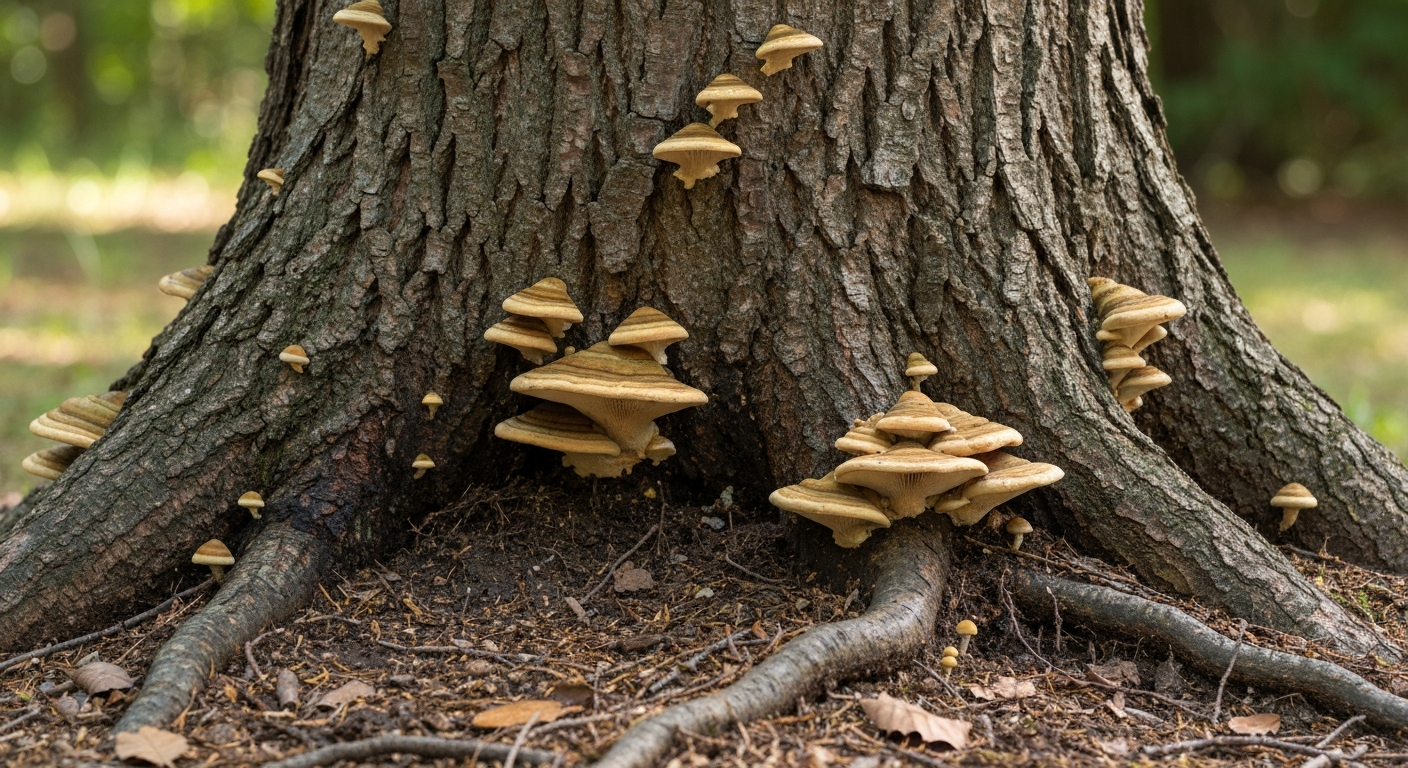
TL;DR: Identification white tree fungus starts with form. Thin, zoned, flexible shelves with a pale pore underside often point to turkey tail or related polypores. Thick woody shelves with a white, scratchable underside suggest artist’s conk. Chalky, stringy, bleached wood is white rot — decay in progress. Pale crusts on bark may be lichen, not a mushroom. Never eat wild fungi from trees. For root-zone mushrooms and butt rot concerns, read our tree root fungus guide. Identify the host with Tree Identifier, then call an arborist if the tree is large and near people or structures.
⚠️ Safety first: Do not eat wild shelf fungi, white conks, or anything growing on trees based on a blog or app match. Many polypores are inedible; deadly lookalikes exist among mushrooms generally. Tree fungi are for identification and tree-health awareness — not dinner.
What “white tree fungus” usually means
Homeowners search identification white tree fungus when they notice pale shelves on a trunk, white crusts on bark, or bleached rotting wood in a stump. “White” is a color clue, not a species. Several unrelated organisms can look pale:
- Polypore shelves with white or cream pore surfaces (turkey tail group, various brackets).
- Thick perennial conks such as artist’s conk with a white underside.
- White rot — wood that fungi have digested, leaving pale fibrous remains.
- Mycelial fans or sheets under bark (often cream) associated with decay.
- Lichens — pale crusts or leafy patches that are fungus + algae partnerships, usually not decaying the trunk like a pathogen.
A useful field habit: photograph the top and the underside of any shelf, note whether the wood is soft or sound, and identify the tree species. Host ID matters because some fungi prefer hardwoods, others conifers, and arborists interpret risk partly from species and location on the tree.
Turkey tail — pale underside, zoned top
Turkey tail (Trametes versicolor and lookalike Trametes species) is one of the most common answers when people find thin white-edged shelves on logs and stumps.
Top surface: Thin, leathery, fan-shaped brackets in dense overlapping rows. Concentric zones of brown, tan, rust, sometimes blue-green or gray — the “turkey tail” pattern.
Underside: Whitish to cream with very small pores (use a hand lens). Not gills. This pale pore surface is why turkey tail appears in identification white tree fungus searches even though the top is colorful.
Texture: Flexible when fresh; tougher when dry.
Habitat: Usually dead hardwood, wounds, or downed wood — a saprobe recycling nutrients. Dense turkey tail on a standing living trunk still warrants a look at overall tree vigor.
Caution: Several lookalikes exist (false turkey tail and other zonate shelves). Culinary or medicinal use requires expert confirmation — this article does not recommend foraging.
White shelf fungi — reading the bracket
“White shelf fungus” is a category, not a Latin name. When brackets look white overall or show white undersides, record these traits:
- Thickness: Paper-thin vs corky vs rock-hard perennial.
- Attachment: Broadly attached to wood vs narrowing to a short stem-like base.
- Pore surface: Color, whether it bruises, pore size.
- Host status: Dead log vs living tree with canopy dieback.
- Season: Annual soft shelves vs multi-year woody conks.
Many polypores have brown tops and white bottoms. Others are cream-colored throughout when young. Without underside photos, identification white tree fungus guesses stay vague. Related stump contexts appear in our fungus on tree stump guide.
Artist’s conk — white underside that bruises brown
Artist’s conk (Ganoderma applanatum) is a hard, shelf-like perennial fungus on hardwoods (and sometimes other hosts).
Top: Dull brown to gray-brown, often dusty, with subtle zoning; woody and long-lived.
Underside: Smooth white to cream pore surface. Scratch it with a stick and the mark turns brown — the classic “artist’s canvas” behavior that gives the common name.
Tree meaning: Artist’s conk is associated with significant internal decay. A large conk on a living yard tree is a reason to hire a certified arborist for a structural assessment — especially if the tree leans toward a house, driveway, or play set.
Do not confuse the attractive white underside with an edible soft mushroom. Artist’s conk is woody and not a food item.
Chalky white rot — when the wood itself turns pale
White rot is a decay type, not a single fungus species. White-rot fungi break down lignin (and often cellulose), leaving wood that looks bleached, stringy, or spongy — sometimes chalky white in advanced stages.
What you see:
- Pale, fibrous wood in wounds, cavities, or broken branches.
- Soft spots where a screwdriver sinks easily compared with sound wood.
- Possibly fruiting bodies (shelves or mushrooms) nearby — but white rot can be present before big conks appear.
Vs brown rot: Brown rot leaves darker, cubically cracking wood (common in some conifer decays). White rot looks lighter and more stringy.
Finding white rot does not always mean immediate tree failure, but it means strength is being lost. Document cavity size and get professional advice for large trees. Identification white tree fungus queries that show only crumbly white wood still benefit from host identification and an arborist visit.
Lichen vs fungus on bark
Pale patches on bark trigger fungus panic — and often they are lichens.
Lichens: Flat crusts, powdery spots, or leafy/fruticose forms in gray, white, pale green, or yellow. They grow on bark surfaces using the tree as a perch. They do not create soft white-rot cavities the way decay fungi do. Healthy trees often carry lichens, especially in clean air.
True fungi (decay context): Mushrooms, shelves with pores, mycelial mats under loose bark, and soft rotting wood.
Quick split: If you can peel up a mushroom shelf with a pore underside, that is fungus fruiting. If the pale growth is a thin paint-like or leafy crust stuck to bark without a mushroom body, think lichen first.
Learning bark and trunk features of the host still helps — see tree anatomy glossary and best photo for tree ID for clear documentation shots.
Root-zone and butt fungi — don’t ignore the base
White or pale mushrooms at the soil line, on surface roots, or in a circle around the trunk can signal root or butt decay — a different risk profile than turkey tail on a dead branch. Bondarzewia, some Armillaria stages, and various polypores appear near roots. For that scenario, follow our dedicated guide: how to identify tree root fungus.
Identification white tree fungus on the upper trunk and identification of root fungi overlap when decay columns connect — arborists treat them as whole-tree problems.
Safety rules (people and property)
People:
- Never eat wild fungi from trees based on this article, social media, or a casual app suggestion.
- Teach kids not to taste mushrooms outdoors.
- Wash hands after handling rotting wood if you have cuts or immune concerns.
- Spore sensitivity exists — avoid kicking dry conks into dust indoors.
Property and trees:
- Large conks on living trunks or roots near targets = professional inspection.
- Sudden lean, cracks, or mushroom flushes after storms raise urgency.
- Removing a fruiting body does not remove the decay fungus inside the wood.
How to photograph white fungus for better ID
- Wide shot: whole trunk or stump showing height and cluster pattern.
- Top of shelf: color zones and texture.
- Underside: pores vs gills — critical for polypores.
- Wood condition: soft white rot vs sound bark.
- Host leaves or needles: identify the tree with Tree Identifier or our leaf guide.
Apps that specialize in mushrooms may propose a genus; treat results as hypotheses. Tree Identifier tells you which tree is hosting the growth — essential context for what type of tree is this plus fungus questions. For general app options, see app to identify trees.
When white fungus is “normal” vs concerning
Often lower urgency: Turkey-tail-like shelves on a long-dead stump or stacked firewood; lichens on healthy bark; small brackets on a pruned dead stub with a strong remaining canopy.
Higher urgency: Artist’s conk or other large woody conks on a living street tree; white rot cavities at the base; pale mushrooms fruiting from major roots; cracking or hollowness in a high-value or high-target tree.
Yard context among common species is covered in common backyard trees in the US — knowing whether your host is oak, maple, or pine helps conversations with arborists.
Putting it together
Identification white tree fungus is a sorting problem: shelf vs crust vs rot vs lichen; thin turkey-tail type vs thick artist’s conk; dead wood recycler vs living-tree decay indicator. Use underside pores, thickness, host health, and location on the tree. Stay curious, stay cautious, and keep foraging off the table unless a qualified expert standing beside you says otherwise.
For foliage and host ID while you document fungi, browse tree foliage identification and keep root issues linked through the root fungus article whenever mushrooms appear at the soil line.
Frequently asked questions
What is the white fungus growing on my tree?
Identification white tree fungus depends on shape. Thin layered shelves with zones of color and a pale pore underside may be turkey tail or related polypores. Thick hoof-shaped conks with a white pore surface can be artist's conk or similar. Chalky white crumbly wood indicates white rot decay inside the tree. Crusty pale films may be fungus or lichen — lichens are symbiotic organisms, not wood-decay mushrooms. Photograph top and underside for better ID.
How do you identify turkey tail on trees?
Turkey tail (Trametes versicolor) forms thin, leathery, fan-shaped shelves in overlapping rows. The upper surface shows concentric color zones (browns, tans, sometimes blues or greens); the underside is pale whitish to cream with tiny pores — not gills. It usually grows on dead wood or wounds. True turkey tail is flexible when fresh; lookalikes exist, so do not eat based on casual ID.
What are white shelf fungi on trees?
White shelf fungi are bracket or polypore mushrooms that stick out from trunks or logs like shelves. Many have white or cream pore surfaces underneath even if the top is brown. Common groups include Trametes, Ganoderma (some species), and other polypores. Note thickness, flexibility, pore size, and whether the tree is living or dead. White shelves alone are not a species name — use underside and context.
What does artist's conk look like underneath?
Artist's conk (Ganoderma applanatum) is a hard, woody, perennial shelf fungus. The underside is smooth, white to cream when fresh, and bruises or marks brown when scratched — historically used like a drawing pad. The top is dull brown and zonate. It indicates significant wood decay in the host. Do not confuse the white underside with an edible mushroom.
Is white stuff on tree bark fungus or lichen?
Not always fungus. Pale crustose or foliose lichens can look white or gray on bark and are generally not eating the wood the way decay fungi do. True fungi causing white rot soften and bleach wood fibers. Powdery mildews are fungi on leaves, not thick shelves. If you see mushroom shelves, pores, or soft rotting wood, you are in fungus territory; flat paint-like crusts that are dry and leafy may be lichen.
Is white tree fungus dangerous to people or the tree?
For people: do not eat wild tree fungi — many are inedible or toxic, and lookalikes are common. Touching most shelf fungi is low risk for healthy people, but wash hands and avoid inhaling lots of spores if sensitive. For trees: white rot fungi can structurally weaken trunks and roots over years. Large conks on living trees warrant an arborist inspection, especially near targets like houses or play areas. See our root fungus guide for below-ground concerns.
Can an app identify white fungus on trees?
Mushroom ID apps can suggest polypore groups from clear top-and-underside photos, but tree health decisions need an arborist. Tree Identifier identifies the host tree so you know which species is affected; combine that with fungus photos and professional advice for safety. Never use any app result as permission to eat a wild fungus.
Try Tree Identifier — free on iPhone
Identify the host tree first — then photograph shelves top and underside when documenting white fungus for an arborist.
Download on the App Store