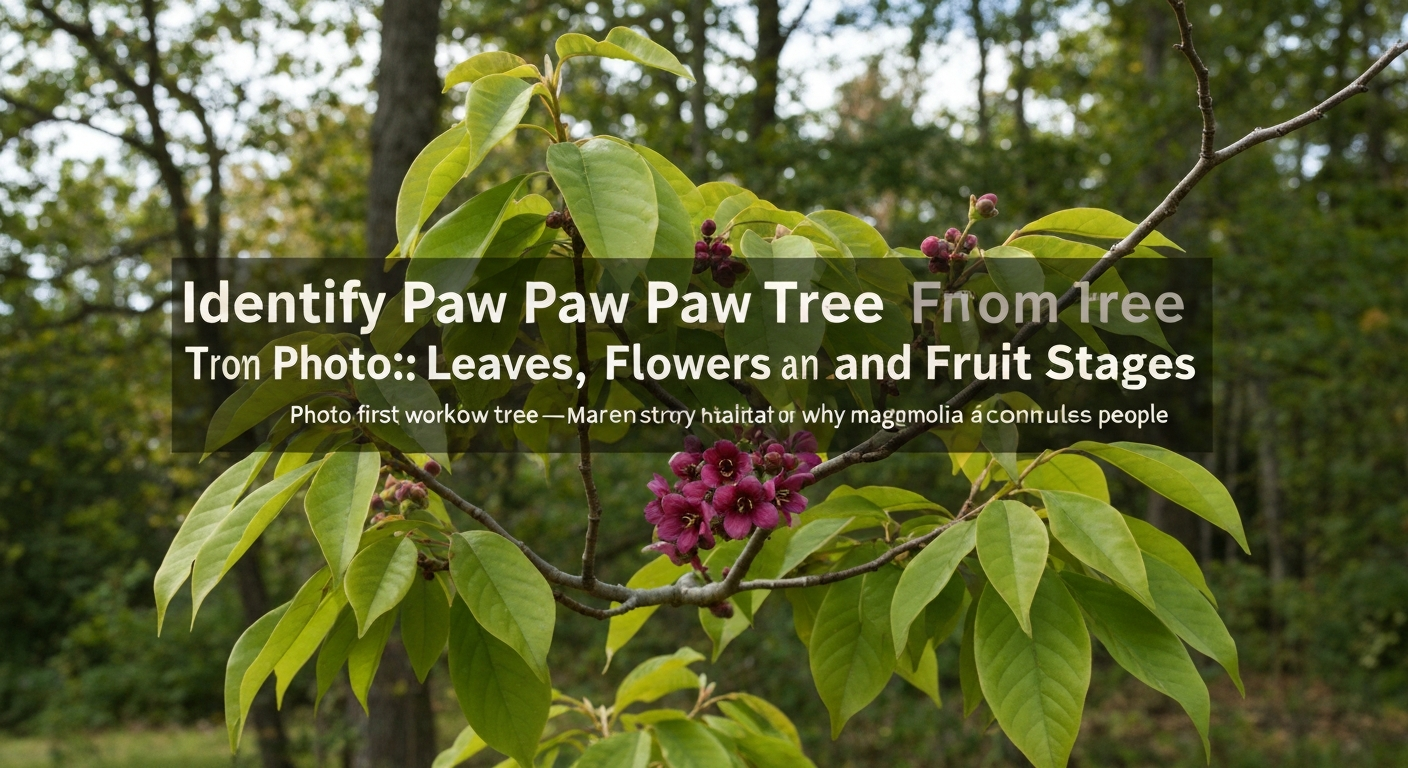
TL;DR: To identify paw paw tree from photos, start with a full leaf — large, simple, untoothed, drooping — then add a maroon hanging flower in spring or a green-to-soft mango-like fruit in late summer. Shoot understory context (shade thicket along a moist woods) and rule out planted magnolias via flower color and fruit type. Use Tree Identifier on sharp leaf or fruit frames for a fast Asimina triloba check.
🔴 Photo order that wins: (1) one entire leaf filling the frame, (2) twig showing alternate leaves, (3) flower or fruit if present, (4) stand-back shot of the understory patch. Skip tiny blurry leaflet corners — pawpaw ID loves whole blades.
How to identify paw paw tree with a phone (workflow)
This guide is photo-first. You do not need a press kit or a flora key open on the trail — you need four deliberate shots and a habit of checking habitat. Asimina triloba, the common pawpaw (also written paw paw or paw-paw), is the northernmost member of the tropical custard-apple family. That ancestry shows in oversized leaves that look out of place under temperate oaks.
Step through this workflow every time you try to identify paw paw tree in the field:
- Take a stand-back photo of the patch — clonal stems, shaded forest floor, nearby creek if present.
- Photograph one full leaf held flat or hanging naturally with the tip and base both visible.
- Shoot the twig node to prove leaves are alternate and simple (not opposite, not compound).
- Add flower or fruit if the season allows — these end debates with magnolia.
- Optional: bark mid-trunk + a companion plant for site context.
Photography craft matters as much as botany. Flat midday shade under the canopy is perfect for pawpaw leaves; avoid backlight that burns the blade white. More general advice lives in Best Photo for Tree ID and Identify Trees From Photo Guide.
Leaf photo features that identify paw paw tree
Leaves carry most of the ID load from late spring through autumn.
- Size: Often 6 to 12 inches long — among the largest simple leaves in eastern understories.
- Margin: Entire (smooth, no teeth, no lobes).
- Shape: Oblong to obovate — widest toward the tip, tapering to a short petiole.
- Venation: Pinnate; secondary veins curve forward and fade toward the margin.
- Texture / hang: Soft, slightly drooping tropical look; crushed leaves can smell green and peppery.
- Arrangement: Alternate on the twig — one leaf per node, not paired.
When you crop for an app, keep the petiole and tip. Apps that see only the mid-blade may return other large-leaved species. If you are building a personal album, shoot both upper and lower surfaces — the underside is often paler.
Compare foliage patterns more broadly in Tree Foliage Identification Guide and beginner leaf keys in Identify Trees by Leaf.
Flower stage — the maroon cup
Early spring is the cleanest season for flowering characters. Pawpaw flowers open before or as leaves expand.
What to shoot:
- Color: deep maroon, burgundy, or almost chocolate-purple — not white or pale pink like many garden magnolias.
- Form: fleshy cup with six petals (two whorls of three), hanging below the twig.
- Angle: one frame looking slightly upward into the cup; one side profile showing the stalk.
Pollination ecology is quirky — flies and beetles are attracted to the faintly fermented odor — but you only need the color and hanging posture for ID. If leaves are already out and flowers finished, search the ground for dropped petals or look for tiny fruit set.
Flower photos alone can identify paw paw tree even when leaf blades are torn by insects later in the year.
Fruit stages — green, soft, and seed-filled
Fruit develops through summer and ripens late summer to early fall, timing varying by latitude and heat.
Stage A — young green fruit
Small, firm, green, often in clusters of several fused ovaries from one flower. Looks vaguely like small mangoes or green potatoes hanging in the shade.
Stage B — mid-season enlarging fruit
Fruit swells; skin stays mostly green. Wildlife may begin checking trees. Photograph a cluster with a leaf for scale.
Stage C — ripe fruit
Softens, may develop yellow tones or dark blotches, and yields to gentle pressure. Ripe pawpaws can drop overnight. Split one only after positive species ID: creamy pulp, banana–mango aroma, large brown seeds.
Foraging ethics: confirm Asimina triloba, avoid sprayed roadsides, and leave fruit for wildlife when patches are small. Seed and pod confusion more generally is covered in Identify Seed Pods From Trees — pawpaw’s large seeds are distinctive once the fruit is open.
Understory habitat as a free ID clue
Wild pawpaw is a shade specialist. Expect:
- Moist, rich woods — floodplain terraces, coves, and streamside forests.
- Clonal patches — multiple slender stems of similar size spreading from root sprouts.
- Sparse midstory competition in the patch interior; leaves form a layered tropical roof.
- Rarely a lone isolated stem in deep lawn sun unless planted.
Habitat does not replace leaf characters, but a sunny parking-lot “pawpaw” with glossy stiff leaves deserves magnolia suspicion. Conversely, a clonal throng of drooping entire leaves over ferns and spicebush is classic pawpaw country. Hikers can fold this into broader trail ID habits from Tree Identification for Hikers.
Magnolia confusion — and how photos separate them
Large entire leaves invite magnolia mix-ups, especially southern and planted species.
Leaf feel: Many evergreen magnolias are thicker, stiffer, and glossier; pawpaw is thinner and more pliable. Deciduous magnolias vary, so do not rely on thickness alone.
Flowers: White, cream, or pink upright cups/stars on common ornamentals vs pawpaw’s dark hanging cups.
Fruit: Magnolia “cones” are aggregates of dry follicles with dangling red seeds when open; pawpaw is a soft fleshy berry-like fruit with embedded seeds.
Planting context: Ornamental magnolias hug foundations and street plantings; wild pawpaw hugs moist woods unless you are in a dedicated pawpaw orchard.
When the app returns both families, send a flower or fruit frame next — that usually settles identify paw paw tree vs magnolia in one extra shot.
Bark, winter form, and dormant twigs
Winter ID is harder but not impossible. Bark is relatively smooth and gray-brown with pale blotches on younger stems; older trunks develop shallow fissures. Twigs show alternate buds; leaf scars are crescent-shaped. Clonal thickets of similar-diameter stems remain a strong structural clue when leaves are gone.
Photograph bark + twig tip + any persistent fruit ghosts on the ground. Pair with bark methods in Identify Trees by Bark.
Using Tree Identifier on pawpaw photos
Tree Identifier responds best to uncluttered organ shots.
- Leaf: Whole blade, focused veins, shade lighting.
- Flower: Fill the frame with one maroon flower.
- Fruit: Cluster against a leaf for scale; avoid extreme underexposure under canopy.
If results waffle between Annonaceae relatives and other large-leaved trees, add the stand-back habitat photo for your own notes — models primarily use the organ crop. Offline use helps deep woodland hollows where reception drops.
Once you have identified paw paw tree successfully once, the silhouette becomes unmistakable: tropical leaves in a temperate understory, maroon spring cups, and custard fruit in late season.
Frequently asked questions
How do you identify paw paw tree from a leaf photo?
Shoot a full leaf showing the large simple blade (often 6–12 inches), untoothed entire margin, and pinnate veins that curve toward the tip. Pawpaw leaves droop in a tropical-looking layer in shade. Include a twig shot with alternate simple leaves — no lobes, no teeth — and note understory habitat. Those traits usually let apps and keys identify paw paw tree as Asimina triloba.
What do pawpaw flowers look like?
Pawpaw flowers are maroon to dark purple, cup- or bell-shaped, with six fleshy petals in two sets of three. They hang downward on short stalks before leaves fully expand in spring. Smell is often faintly yeasty or fermented. Photograph one open flower from below and from the side for best ID.
How do you know pawpaw fruit is ripe?
Unripe fruit is firm and green; ripe fruit softens, may show yellow blush or dark mottling, and gives slightly when pressed like an avocado. Fruit may fall when ready. Inside, creamy yellow pulp surrounds large bean-like brown seeds. Never forage without positive ID of Asimina triloba.
Where do pawpaw trees grow?
Pawpaw is native to eastern North America in rich, moist understory woodlands, floodplain forests, and shaded stream edges. It spreads as clonal thickets from roots. Full sun orchards also grow it, but wild trees mostly stay beneath taller canopy.
Can pawpaw be confused with magnolia?
Yes from a distance — both have large simple leaves. Magnolia leaves are thicker and often glossier; many magnolias are planted ornamentals. Pawpaw flowers are dark maroon and hang down; typical cultivated magnolias have large pale flowers upright or terminal. Fruit of pawpaw is a soft berry cluster; magnolias form cones with individual follicles.
Is pawpaw a tree or a shrub?
Both forms appear — often a large shrub or small tree 15–30 feet, sometimes taller in good sites. Clonal patches of slender stems are common. People search identify paw paw tree because mature stems are tree-like trunks under the canopy.
Can Tree Identifier ID pawpaw from a phone photo?
Yes when the photo shows a full leaf (margin and venation visible) or a distinctive flower or fruit. Blurry partial blades are harder. Tree Identifier works well on clear leaf and fruit shots in the native range.
Try Tree Identifier — free on iPhone
Photograph pawpaw leaves, flowers, or fruit and get a species match in seconds.
Download on the App Store