TL;DR: Serviceberry identification means recognizing Amelanchier under the name most landscapers and eastern naturalists use. Look for a multi-stem shrub or small tree with alternate simple leaves that have fine, neat serrations; smooth gray bark on young stems; early white five-petaled flowers; and edible berries that ripen in early summer. Compare carefully with blueberry (lower shrub, urn flowers) and hawthorn (thorns, often lobed leaves). Photograph leaf teeth and bark, then confirm with Tree Identifier.
🌿 Serviceberry searches usually want leaf serration + bark + regional name. Same genus as juneberry and saskatoon — but this guide centers the word serviceberry, eastern vs western species cues, and the blueberry/hawthorn splits foragers miss.
Why “serviceberry” is the ID search that matters
People type serviceberry identification when they see a nursery tag, a landscaping catalog, or an eastern trail sign labeled serviceberry — not juneberry. Nurseries sell Amelanchier cultivars as serviceberry; municipal plantings use the same word. The plant is still genus Amelanchier in the rose family (Rosaceae), but the search intent is name-first: “Is this the serviceberry I planted?” or “What serviceberry species grows here?”
Regional common names still orbit the same shrubs and small trees:
- Serviceberry / sarvis — dominant eastern and Midwestern label for landscaping and field guides.
- Juneberry — emphasizes early-summer fruit timing; covered in depth in our juneberry identification guide.
- Shadbush / shadblow — blooms when shad run in eastern rivers.
- Saskatoon — especially prairie and western Canada for Amelanchier alnifolia.
Species lines inside Amelanchier blur with hybridization. For practical serviceberry tree identification, nail the genus with leaves, bark, flowers, and fruit — then refine eastern vs western species with range and leaf texture.
Serviceberry leaf identification — the serration story
Serviceberry leaf identification is the most reliable year-round character once flowers fade. Leaves are simple and alternate — one leaf per node, not compound — typically 1 to 3 inches long and oval, elliptic, or slightly oblong.
Margin (the key): Fine, sharp, regular teeth run along most of the leaf edge. Teeth are neat and small — not the deep lobes of many hawthorns, not the coarse irregular teeth of some cherries. Under a phone macro shot, serrations look like a fine saw blade.
Tip and base: Tips range from abruptly pointed to rounded; bases are rounded to slightly heart-shaped. Veins are pinnate; the underside may be slightly paler.
Young vs mature: Expanding leaves on eastern species may emerge bronze, copper, or softly hairy (downy serviceberry). Allegheny serviceberry often shows bronzy smooth young foliage. By midsummer, leaves settle to medium green with teeth still visible. Autumn color can be yellow, orange, or red — attractive but not unique enough alone for ID.
Serviceberry leaf identification checklist:
- Confirm simple and alternate (not opposite like dogwood; not compound like ash).
- Confirm fine serration on an unlobed blade.
- Note size in the 1–3 inch band for typical wild and landscape plants.
- Photograph one leaf flat so the entire margin shows — see Best Photo for Tree ID.
Leaf terms (alternate, serrate, simple) are defined in the Tree Anatomy Glossary. For general leaf method across species, use Identify Trees by Leaf.
Bark and winter form — gray multi-stem clues
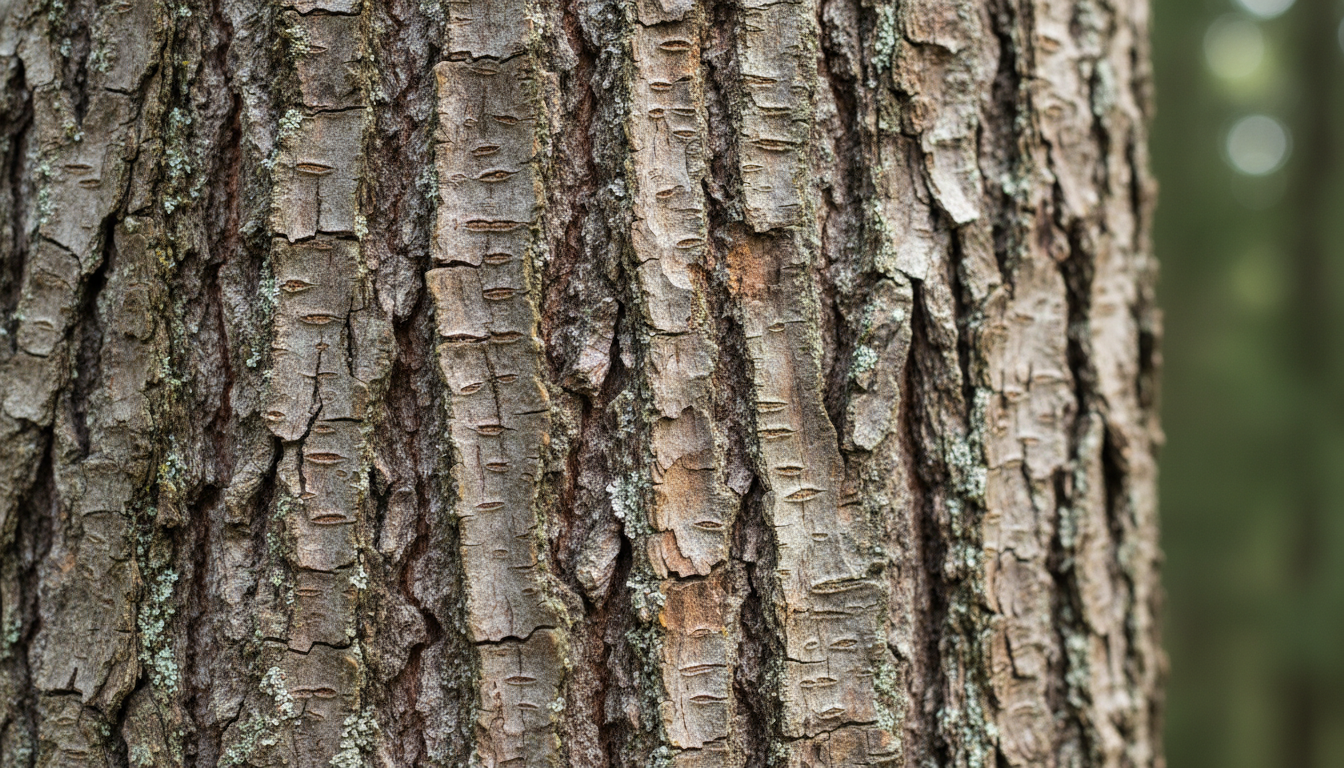
Bark is underused in serviceberry identification and it should not be. Young stems are smooth gray to gray-brown, often with subtle lenticels or faint longitudinal striping. The look is clean — “pencil bark” on vigorous shoots — not shaggy, not deeply plated like mature oaks.
Older stems and trunks may develop shallow fissures, slight ridges, or darker gray patches, but serviceberry rarely peels in papery curls the way many birches do. If your mystery tree is shedding white paper bark, you are probably not looking at serviceberry — compare with birch tree identification.
Multi-stem architecture: Serviceberry typically rises as a clump of several to many stems from the root crown, 10 to 25 feet tall in many yards, sometimes taller in rich woodland edges. Landscape cultivars may be trained to a few leaders, but the multi-stem habit remains common. In winter, a graceful fountain of smooth gray stems with fine twigs is a strong serviceberry tree identification silhouette.
Buds are slender and pointed; flower buds may look slightly plumper before spring bloom. Without leaves, combine bark texture with last year’s fruit stalks or remnant dried pomes if any remain.
Eastern vs western serviceberry species
Eastern serviceberry tree identification often lands on one of several overlapping woodland species:
- Downy serviceberry (Amelanchier arborea) — eastern woods and slopes; young leaves and twigs often downy; can become more tree-like with a clear trunk.
- Canadian serviceberry (A. canadensis) — eastern thickets and moist edges; multi-stem shrub form common; widely planted.
- Allegheny serviceberry (A. laevis) — eastern mountains and northern woods; young leaves often bronzy and relatively smooth (less downy).
Western and prairie contexts shift the name and the plant:
- Saskatoon / western serviceberry (Amelanchier alnifolia) — northern plains, Rockies, Pacific Northwest, and prairie provinces; often grown for larger edible berries; leaves may be more rounded and teeth sometimes less conspicuous near the base.
Hybrids and named cultivars (often sold simply as “serviceberry”) blur species labels in suburbs. For ID apps and field notes, genus-level Amelanchier plus region is usually enough. If you need the juneberry common-name path through the same plants, read How to Identify Juneberry.
Habitat spans woodland edges, streambanks, rocky openings, and sunny yards. Fruiting is heavier in full sun. Among other small yard trees, place serviceberry with the multi-stem fruiting set in common backyard trees in the US.
Flowers and fruit — spring white, early summer berries
Serviceberry flowers are early: clusters of white blossoms with five narrow petals, often opening before leaves are fully expanded or just as they unfold. The display is a soft white foam on still-thin foliage — a classic eastern spring signature and a landscaping reason nurseries push the serviceberry name.
Each flower is open and rose-like, not urn-shaped. That flower architecture is critical when fruit later turns blue-purple and beginners shout “blueberry.”
Fruit are small pomes (related to apples), ripening from red through purple to nearly black depending on species and stage. Ripening often peaks in June in many eastern sites — hence the juneberry alias — but serviceberry identification in catalogs still leads with the serviceberry label. Birds strip ripe fruit quickly. Edible when ripe and positively identified; use only soft dark fruit, not hard underripe red berries.
Serviceberry vs blueberry
Fruit color alone fails. Both can look blue-purple when ripe. Use structure:
- Height and wood: Serviceberry is a shrub-tree with thicker gray stems; blueberry is usually a lower Ericaceous shrub with thinner twigs.
- Flowers: Serviceberry = open five petals. Blueberry = urn or bell flowers.
- Leaves: Serviceberry leaves are larger with fine serrations on a rose-family blade; many blueberries have smaller, often smoother-edged or differently textured leaves.
- Fruit type: Serviceberry pomes feel and cut more like tiny apples; blueberry fruits are classic blueberries on short racemes of a low shrub.
When someone asks “what type of tree is this” holding a blue berry from a 15-foot multi-stem, start with serviceberry, not blueberry — see also What Type of Tree Is This?.
Serviceberry vs hawthorn
Both are rose-family plants with white spring flowers and reddish fruit. The split is usually decisive:
- Thorns: Hawthorn has stout sharp thorns. Serviceberry does not have hawthorn-style spines.
- Leaves: Hawthorn often lobed or coarsely toothed; serviceberry leaves are unlobed with fine serration.
- Fruit: Haws are firmer with a stony core; ripe serviceberries are softer edible pomes.
Full hawthorn contrast: hawthorn tree identification.
Using Tree Identifier for serviceberry
Tree Identifier recognizes serviceberry / Amelanchier from leaf, flower, fruit, and multi-stem bark photos across eastern and western ranges.
Best photo set:
- One leaf flat showing fine teeth (serviceberry leaf identification priority).
- One stem or trunk showing smooth gray bark and multi-stem form.
- Flower cluster in spring or fruit cluster in early summer when available.
Apps may return genus rather than a precise Latin species — that is normal and useful. For broader app workflows, see App to Identify Trees.
Serviceberry identification rewards slow looking at leaf margins and bark. Once those lock in, the blueberry and hawthorn lookalikes drop away, and the regional names — serviceberry, juneberry, shadbush, saskatoon — all point to the same beautiful Amelanchier you already found.
Frequently asked questions
How do you identify a serviceberry tree?
Serviceberry identification starts with Amelanchier: a multi-stem shrub or small tree with alternate simple leaves that have fine, sharp teeth; smooth gray bark on young stems; clusters of white five-petaled flowers in early spring; and edible berries that ripen red to purple-blue in early summer. It lacks hawthorn thorns. Photograph a leaf showing serration plus bark or flowers for confirmation.
What does serviceberry leaf identification look like?
Serviceberry leaf identification uses simple alternate leaves, usually 1 to 3 inches long, oval to elliptic, with neat fine serrations along the entire margin — not deep lobes. Tips are pointed to rounded; bases rounded to slightly cordate. Young leaves may be bronze, reddish, or softly downy depending on species. Midsummer leaves are typically medium green with visible teeth under close look.
What does serviceberry bark look like?
Young serviceberry stems have smooth gray to gray-brown bark, sometimes with faint lighter streaks or lenticels. Older trunks may develop shallow fissures or slight striping but rarely peel in papery sheets like birch. Multi-stem clumps show many smooth gray leaders rising from the base — a key serviceberry tree identification cue in winter.
What are other names for serviceberry?
Serviceberry, juneberry, shadbush, shadblow, sarvis, and saskatoon are regional common names for Amelanchier. Eastern landscapers and naturalists often say serviceberry; prairie and western Canada growers often say saskatoon for Amelanchier alnifolia. Same genus — different search terms. For the juneberry naming angle, see our juneberry identification guide.
How do you tell serviceberry from blueberry?
Blueberry (Vaccinium) is usually a low Ericaceous shrub with urn- or bell-shaped flowers and smaller, often leathery leaves. Serviceberry is a taller woody Amelanchier with open five-petaled rose-family flowers, smoother gray bark on thicker stems, and fruit that are small pomes (tiny apple-like) rather than classic blueberries. Plant height and flower shape split them faster than fruit color alone.
How do you tell serviceberry from hawthorn?
Hawthorn has stout sharp thorns and often lobed or coarsely toothed leaves; serviceberry is essentially thornless with unlobed, finely serrated leaves. Hawthorn fruit (haws) are firmer with a stony core; serviceberry pomes are softer when ripe. White spring flowers can look similar from a distance — check thorns and leaf margin for serviceberry tree identification.
Can tree ID apps identify serviceberry?
Yes when photos show finely toothed alternate leaves, early white flower clusters, fruiting stems, or smooth gray multi-stem bark. Apps often return Amelanchier at genus level or a regional species. Tree Identifier works well for serviceberry leaf identification and spring bloom photos; add a bark or whole-plant shot for multi-stem context.
Try Tree Identifier — free on iPhone
Photograph serviceberry leaves, bark, or spring flowers and get a species match in seconds.
Download on the App Store