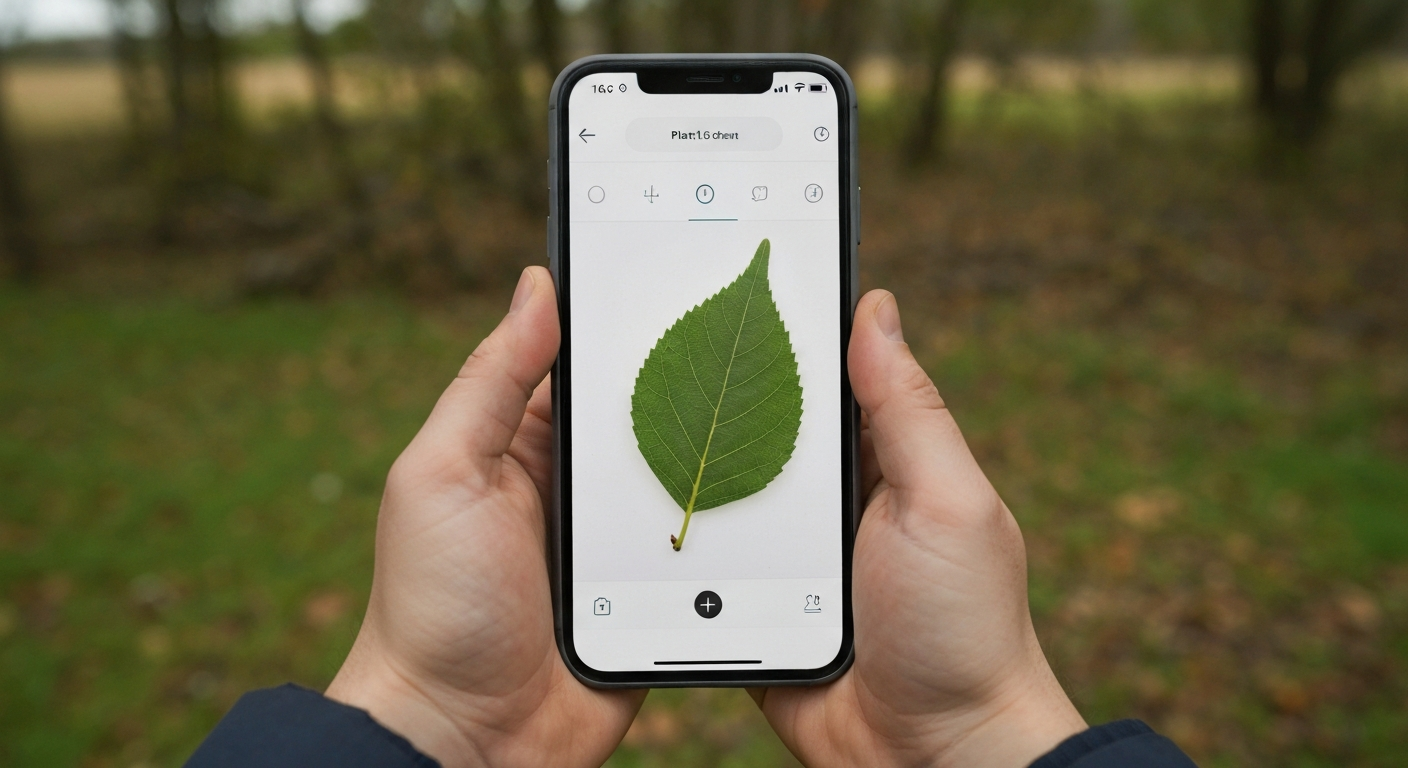
TL;DR: Osage orange tree identification is botanical, not historical: look for glossy alternate leaves with smooth margins, milky latex in broken twigs, sharp axillary thorns on many shoots, deeply furrowed bark with orange underwood, and — on female trees — softball-sized bumpy green hedge apples. It sits in the mulberry family but does not make soft edible mulberries. Confirm with photos in Tree Identifier.
🔴 Field shortcut: if you find a green “brain fruit” the size of a softball under a thorny tree with milky twigs, you have Maclura pomifera. No other common US landscape tree pairs that fruit with those spines.
Species overview — Maclura pomifera
Osage orange (Maclura pomifera) is a medium deciduous tree native originally to a limited south-central US range and spread widely as living fences and windbreaks. Common names include hedge apple, horse apple, and bois d’arc. Despite “orange” in the name, it is not a citrus; the fruit is a large multiple fruit in the mulberry family (Moraceae).
This guide focuses on plant characters you can verify with eyes and a phone: leaf, bark, thorn, sap, and fruit. Fence history and prairie lore are interesting background, but osage orange tree identification outdoors is decided by organs — the same method used for mulberry and other Moraceae.
Dioecious habit matters: male and female flowers usually grow on separate trees. Only females produce the famous hedge apples. Male trees still show leaves, thorns, sap, and bark, so learn vegetative ID rather than waiting for fruit every autumn.
Leaf characters
Osage orange leaves are:
- Simple and alternate — one blade per petiole, staggered on the twig.
- Shape: Ovate to lance-ovate with a pointed tip.
- Margin: Entire (untoothed), sometimes slightly wavy.
- Surface: Glossy dark green above in summer; yellow fall color can be striking.
- Petiole: Often with a short thorn nearby at the axil on young wood.
Compare carefully with mulberry leaves, which frequently lobed and toothed — see Mulberry Tree Identification. Paper mulberry and white mulberry variability can still confuse beginners; entire glossy Maclura leaves are more consistent.
Photograph a full leaf plus the axillary thorn when present. Leaf photography tips appear in Identify Trees by Leaf.
Thorns — sharp and often decisive
Many osage orange shoots bear stout, sharp spines at leaf axils — typically ½ to 1 inch, straight, and dangerous in hedges. Thorn density varies: browsed or older interior branches may be nearly unarmed, while fence-line rejuvenation sprouts are heavily armed.
Use thorns as positive evidence when present. Absence of thorns does not eliminate the species if hedge apples and orange wood match. Wear gloves when collecting branch samples — spines puncture deeply.
Other thorns trees (hawthorn, locust) can share spine risk but not the hedge-apple fruit. Hawthorn ID is covered in Hawthorn Tree Identification; locust comparison lives in Locust Tree Identification.
Milky sap — Moraceae clue
Break a fresh green twig or leaf petiole: a white latex often beads out. Mulberries share milky sap, so latex alone does not finish osage orange tree identification — it narrows you to Moraceae candidates. Combine sap with fruit type or thorn + bark.
Latex can irritate skin for sensitive people; wipe tools and hands after sampling. The sticky white juice inside crushed hedge apples is the same latex family chemistry concentrated in fruit tissue.
Bark and wood color
Mature bark is among the most distinctive parts of Maclura:
- Deep, irregular furrows and interlacing ridges.
- Outer surface orange-brown to grayish brown.
- Underbark and heartwood show vivid yellow to orange — “bois d’arc” wood prized historically for bows and fence posts.
A careful scrape on fallen wood or a fresh pruning cut reveals the color without injuring a healthy trunk deeply. Photograph mid-trunk furrows in dry weather; wet bark darkens and loses orange contrast. Bark methods expand in Identify Trees by Bark.
Wood density and rot resistance explain why posts last decades — useful context, not required for ID.
Hedge apple fruit — the definitive female character
Female trees produce multiple fruits that merge into a large spherical compound structure:
- Size: Often 3–6 inches diameter.
- Surface: Deeply convoluted, brain-like or bumpy green skin.
- Interior: Fibrous pulp with sticky white latex and numerous seeds.
- Season: Late summer into fall; fruit drops heavily beneath the crown.
Fallen hedge apples litter sidewalks and pastures, making autumn osage orange tree identification trivial even without climbing. Male trees need vegetative characters. Do not expect citrus segments — there is no edible orange flesh inside.
Seed and fruit structures for other species appear in Tree Seed Pods Guide and Identify Seed Pods From Trees for comparison of very different diaspores.
Vs other mulberry-family trees
Family Moraceae includes mulberry (Morus), fig (Ficus), and paper mulberry (Broussonetia). Shared milky sap creates beginner mistakes.
Mulberry: Soft aggregate fruits (white, red, or black) that stain fingers; leaves variable, often lobed/toothed; generally unarmed. Detail guide: mulberry identification.
Paper mulberry: Often lobed fuzzy leaves; different fruit; weedy in some cities.
Osage orange: Unlobed glossy leaves, thorns common, giant green compound fruit, orange wood.
If your “mulberry” drops green softballs and stabs your sleeve, it is Maclura.
Form, habitat, and planted range
Form is often short-trunked with a broad irregular crown, or multi-stemmed after cutting. Historic hedge rows created linear walls of thorny sprouts. Today you find trees along field edges, old farmsteads, rights-of-way, and urban lots far outside the original Ozarks–Texas core because settlers planted them widely.
Drought tolerance and tough wood keep remnants in places where gentler trees fail. Spiny thickets still deter livestock — that ecological role does not change the botanical checklist above.
Backyard species lists such as common backyard trees may omit Maclura in cities, yet rural properties host it frequently.
Winter ID without fruit
After leaf drop, rely on:
- Persistent thorns on younger twigs.
- Zigzag twigs with alternate buds.
- Furrowed bark and orange wood at cuts.
- Mummified or rotting hedge apples under female trees into winter.
Winter is also when fence-line architecture shows clearly — a row of similar trunks along a property line is a cultural clue supporting the organ ID.
Using Tree Identifier for Maclura
Tree Identifier matches osage orange reliably from:
- Hedge-apple close-ups (best single photo).
- Leaf + thorn pairs.
- Bark when orange tones and furrows are clear.
Male trees without fruit may need two-organ photo sets. Offline farm walks benefit from on-device recognition when cell service is weak.
Once you lock osage orange tree identification through fruit and thorns, you will recognize Maclura at roadside drop sites for the rest of the fall — latex, spines, and bright wood complete the picture on any remaining doubt.
Frequently asked questions
How do you identify an osage orange tree?
Osage orange tree identification uses glossy simple leaves with entire margins, milky sap from broken twigs, sharp axillary thorns on many shoots, deeply furrowed bark with orange inner tones, and large bumpy green hedge-apple fruit on female trees. Leaves are alternate. The combination of thorns plus softball-sized green fruit is nearly unique in the US landscape.
What is a hedge apple?
Hedge apple is the common name for the large spherical compound fruit of osage orange (Maclura pomifera). Fruit is green, heavily wrinkled, 3 to 6 inches across, and filled with sticky white latex. It is not a true orange citrus. Female trees bear fruit; males do not.
Does osage orange have thorns?
Yes on many trees — stout, sharp spines often grow at leaf axils, especially on young vigorous shoots and hedge-trained plants. Some cultivars and older canopy branches may show fewer thorns, so absence of a spine does not always rule the species out if fruit and bark match.
How is osage orange different from mulberry?
Both are in the mulberry family (Moraceae) and can show milky sap. Mulberry leaves are often lobed and toothed with edible blackberry-like fruit. Osage orange leaves are typically unlobed and entire; fruit is a giant green hedge apple, not a soft mulberry aggregate. Osage orange wood is denser and yellower; thorns are more prominent.
What does osage orange bark look like?
Mature bark is orange-brown to gray-brown, deeply furrowed into interlacing ridges. Cutting or scraping may reveal vivid orange-yellow underbark and wood — a strong ID character. Young bark is smoother and lighter.
Is osage orange fruit edible?
Humans generally do not eat the raw fruit — it is bitter, latex-filled, and hard. Historically seeds were used in limited ways; today fruit is mainly decorative or wildlife-related. Livestock may nibble fallen fruit. Do not confuse with edible mulberries on related trees.
Can tree ID apps identify osage orange?
Yes, especially from hedge-apple fruit photos or clear leaf-plus-thorn frames. Bark-only photos may be less certain. Tree Identifier recognizes Maclura pomifera from fruit and foliage across its planted and native-extended range.
Try Tree Identifier — free on iPhone
Photograph hedge apples, thorny twigs, or glossy leaves and get a Maclura match in seconds.
Download on the App Store